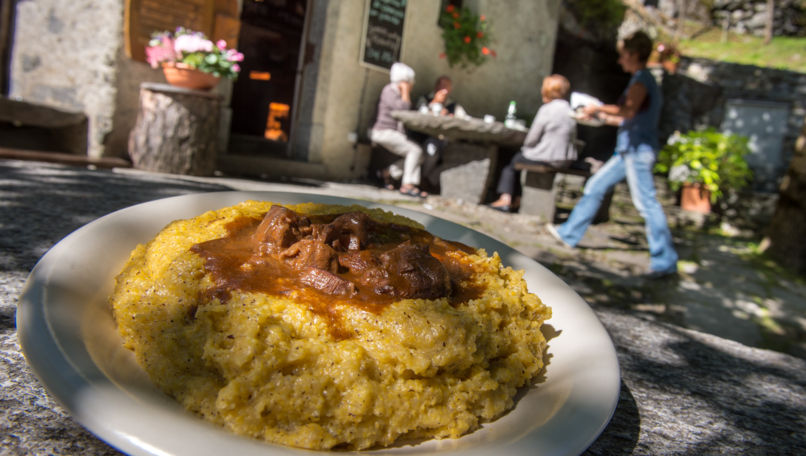
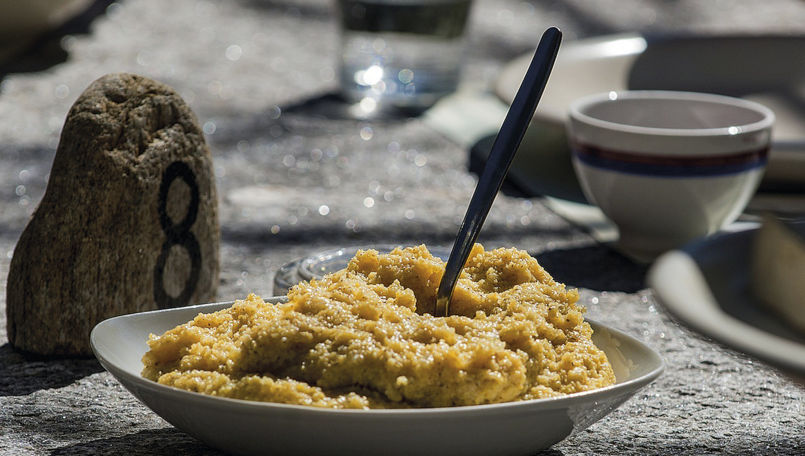
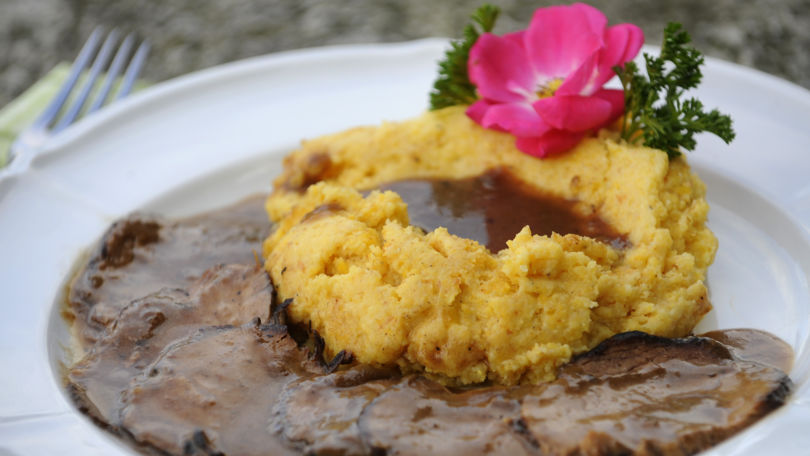
Golden, steaming and fragrant with the delicate smokiness of a wood fire -- nothing says Ticino quite like a freshly poured slab of polenta. In Switzerland, the very word polenta conjures images of this sun-drenched southern canton, where for centuries cornmeal mush, alongside chestnuts and potatoes, formed the backbone of daily sustenance. Though the regional cuisine has since absorbed flavours and recipes from Northern Italy and the countries to which Ticinese emigrated, its soul remains unchanged: genuine ingredients, bold flavours and a rustic simplicity rooted in the land. The most celebrated pairing? Polenta with local cheeses, cured meats and hearty dishes like braised beef, rich stews or slow-cooked game.
The roots of polenta stretch back to the Greeks and Romans. In Ticino, corn-based polenta spread relatively slowly from the 1800s onward, accompanied by colourful legends. The corn plant, called Carlon in local dialect, is at the centre of one particularly charming tale: San Carlo Borromeo, moved by the suffering of the Ticinese during a famine, is said to have transformed a poisonous cereal into an edible plant.
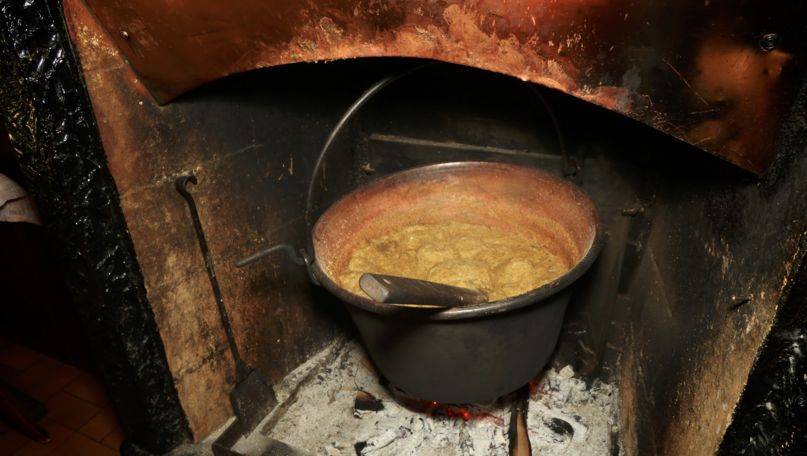
While some fine-dining restaurants have reimagined polenta with elegant, modern interpretations, it remains at heart a rustic dish. The finest version is stirred by hand and cooked slowly over a chimney fire, where it absorbs the wood's delicate aroma. Today, a good polenta can also be achieved on an electric stove using a cauldron fitted with an electric stirring arm -- convenience that delivers surprisingly authentic results.
The traditional recipe
Ingredients for 6 people 2 l salted water 500 g corn flour
Preparation In a copper cauldron over a chimney fire, bring 1 litre of salted water to a boil (reserve the second litre for adding as it cooks). Slowly pour in 350 grams of polenta flour, stirring constantly with a long wooden ladle. After fifteen minutes, add the remaining flour and half a glass of boiling water. Continue stirring, adding the remaining water a little at a time. Keep at it for approximately one hour, until the polenta pulls cleanly away from the sides of the pot. Pour the steaming polenta onto a wooden board and slice it. It should always be served hot.
Ticino flour
A great polenta begins with exceptional corn flour. In the past, corn cobs in Ticino were grown mainly as livestock forage, but that has changed dramatically. Agronomist Paolo Bassetti and the Terreni alla Maggia farm now produce outstanding corn flour from cobs grown on the Magadino plain and in Ascona, available at larger grocery stores and many Ticino food shops.
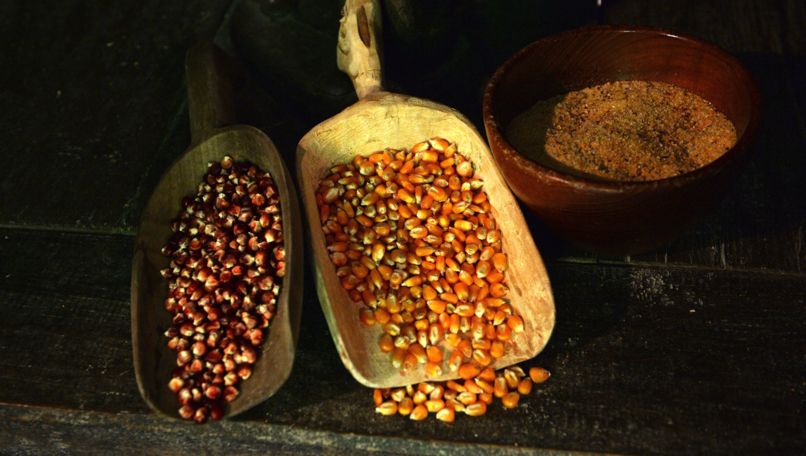
"Our farm is focused on product quality," explains Paolo Bassetti. "The cobs are first peeled and undergo a careful visual-manual selection to remove any defective or mouldy parts before drying. Our flour is packaged in its natural state, exactly as it comes from the mill -- we don't separate the finer particles, which carry the flavour, from the coarser ones, which give body. This yields a polenta with wonderful texture. We also offer products blended with rye for an extra depth of flavour." The crown jewel of Bassetti's range is the Rossa del Ticino, an ancient native variety with red grains, saved and selected by ProSpecieRara. It costs three times more than standard corn, "but it results in a very special polenta," he concludes. Every variety is also available in an organic version.
From the cobs harvested in the fields of Terreni alla Maggia and ground in the Bassetti mills come not only the classic yellow and red flours but also a white polenta -- traditionally Venetian -- and a black variety widespread in north-western Spain. A distinctive feature of all flours produced by Terreni alla Maggia: they are entirely gluten-free.
You might also like
Specialties
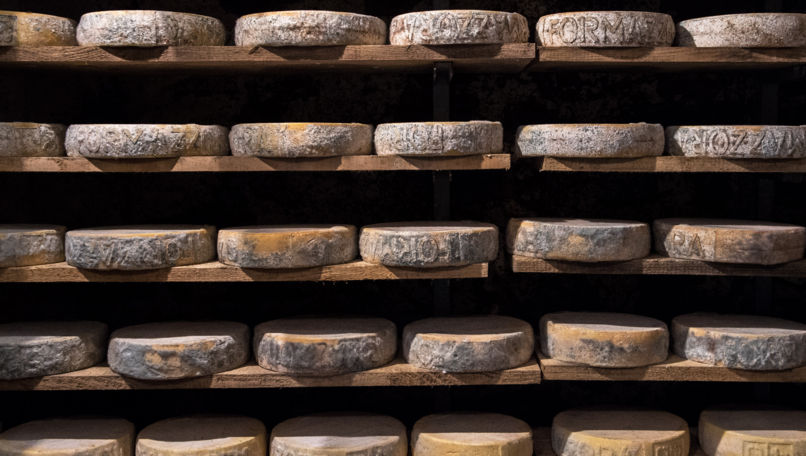
Cheese
From the poor role of polenta-garnish in traditional dishes of yesteryear, Ticino's cheese has become a delicacy served in luxurious restaurants with audacious garnishes like honey, candied fruit condiments, sweet or straw wines.
Specialties
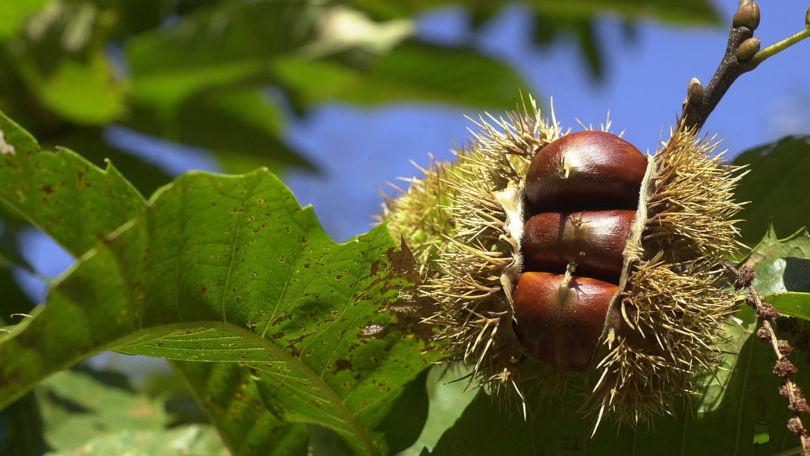
Chestnuts
In Ticino, for centuries, chestnuts were an important staple food for peasants.
Specialties
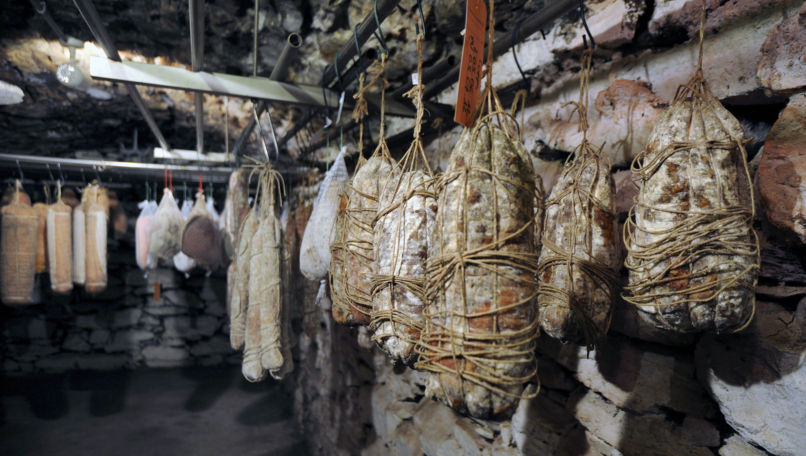
Cured meats
One of Ticino's most deep-rooted traditions is the "mazza" (the processing of pork, but also goat's meat and beef), a tradition that used to bring together families and village communities.