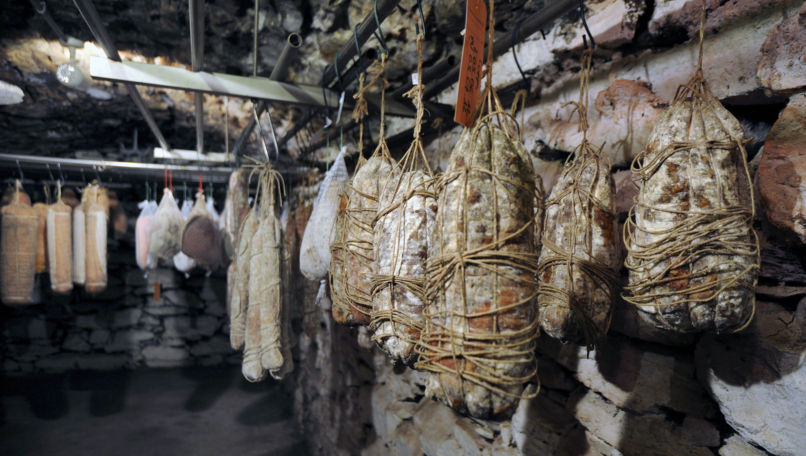
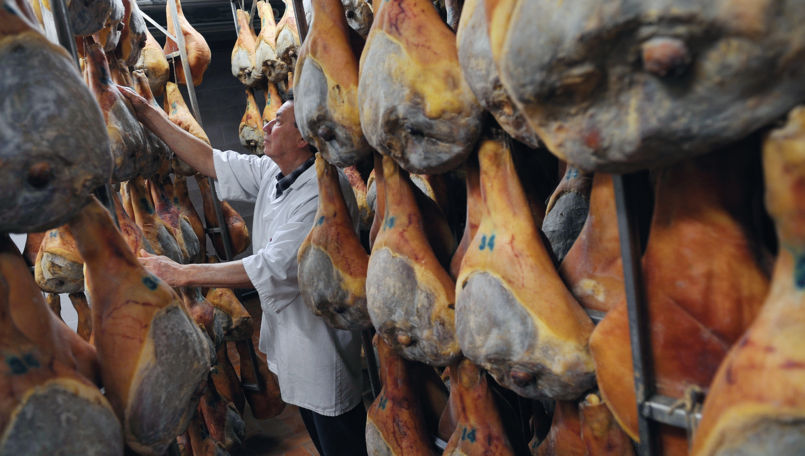
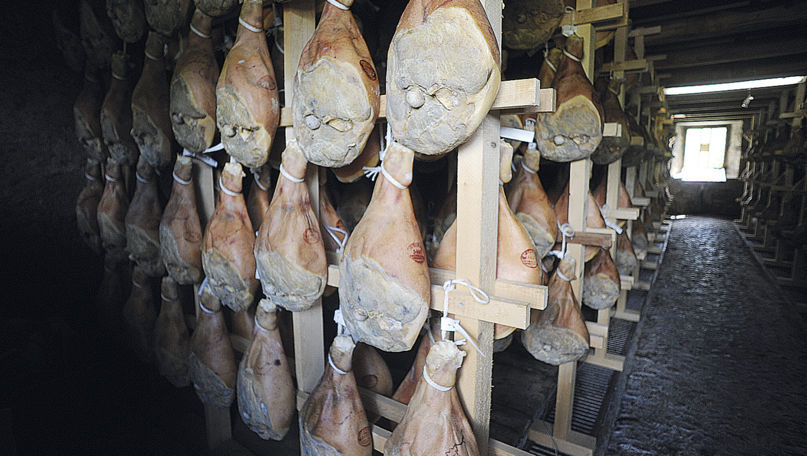
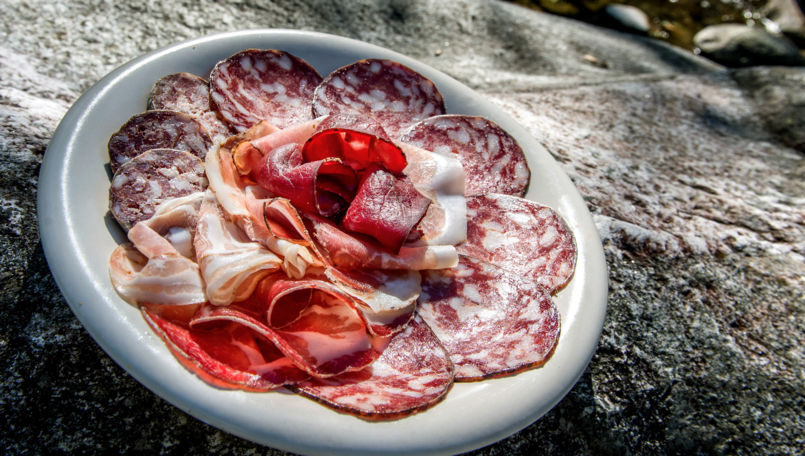
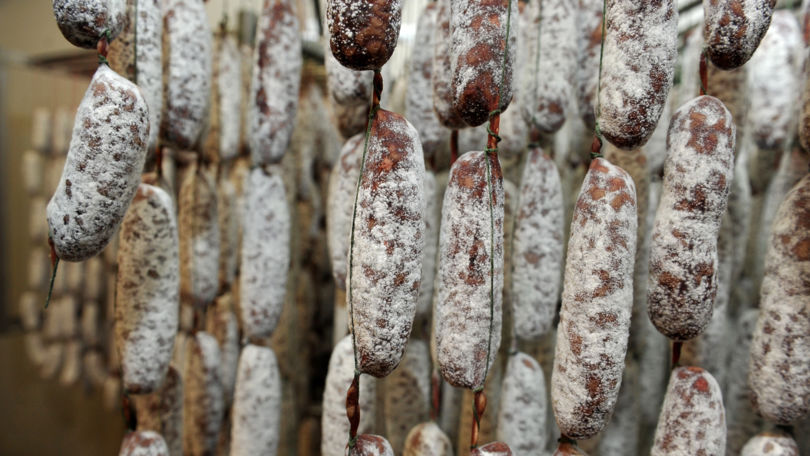
Slice into a well-aged Ticino salami and the aroma alone tells the story: pepper, garlic, a breath of local red wine, and the unmistakable depth that only months of patient curing can impart. The mazza -- the traditional processing of pork, goat and beef -- is one of Ticino's most deeply rooted customs, a communal ritual that once brought entire families and villages together at the onset of winter. While modern food regulations have shifted production from farmyards to licensed facilities, the flavours and know-how remain gloriously intact. Today the region offers an exceptional range of artisan products: salami, dried meat, coppa, lard, bacon, luganiga, and a host of local specialties that reward every bite.
The Products
In times past, the mazza -- the slaughtering of pigs and the processing of their meat -- was a family event that marked the start of winter. Though the ritual has evolved, skilled artisans continue to produce cured meats and sausages according to techniques handed down through generations. Here is a guide to the principal specialties.
Luganiga is a cured sausage made with pork, lard, salt, pepper, spices, garlic and Ticino wine. The grind is slightly coarser than ordinary minced meat, and the mixture is stuffed into beef intestine casings. After cooking in boiling water, luganiga is traditionally served with boiled potatoes or risotto. Grilled, it is equally irresistible.
Luganighetta, though similar in spirit, contains no garlic. Thinner and typically coiled into a spiral, it is prized in risotto, on the grill, in stews and sauces, or as a companion to polenta.
Zampone (stuffed pig trotter) is produced using the foreleg of the pig. After gutting and salting, it is filled with a rich blend of pork meat, bacon rind, lard, spices, salt, pepper, wine, garlic and a splash of Marsala.
Cotechino (cooked pork sausage) closely resembles zampone but uses less bacon rind, yielding a slightly lighter texture.
Liver Mortadella, a distinctive Ticino creation, is prepared with pork, lard, spices and pork liver. A generous measure of vin brule (mulled wine) gives it an unmistakable warmth and depth. Served with beans or polenta, it is deeply satisfying; when aged like a salami, it can also be enjoyed raw.
Salami is crafted from pork leg, pork shoulder and lard, seasoned with salt, aromatics, spices and local red wine. After stuffing, it dries for about a week and then cures for 20 to 70 days depending on size.
Bacon, rolled or flat, is made from cuts of pork loin or belly, immersed multiple times in salt, pepper, spices and wine, then dried and cured for over a month.
Coppa is prepared from meat taken from the pig's neck. After salting and spicing, it is stuffed into a casing and left to dry and age for one month.
Lard is typically made from the pig's loin. Salted, spiced and soaked in red wine, it is hung and dried for a couple of weeks.
Raw ham is obtained from the pig's thigh. The thighs are trimmed to their traditional shape, then repeatedly salted and washed. After several months, the lean surface is rubbed with a paste of pork fat, rice flour, salt and pepper -- a treatment repeated throughout the curing process, which can last from three months to a year or more.
Dried meat (Bresaola) is made from a single muscle of beef -- rump, round steak or haunch. After salting, it is seasoned with pepper and sometimes wine and spices, then rubbed, sealed, dried and cured for two to four months.
You might also like
Specialties
Cheese
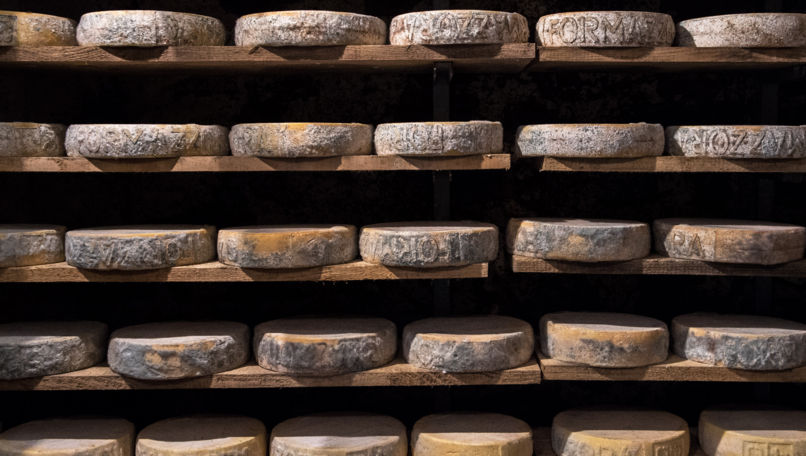
From the poor role of polenta-garnish in traditional dishes of yesteryear, Ticino's cheese has become a delicacy served in luxurious restaurants with audacious garnishes like honey, candied fruit condiments, sweet or straw wines.
Specialties
Chestnuts
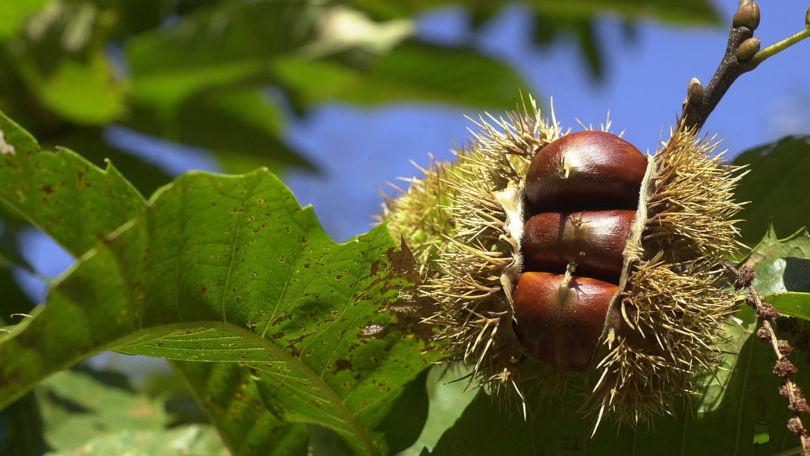
In Ticino, for centuries, chestnuts were an important staple food for peasants.
Specialties
Farina Bóna
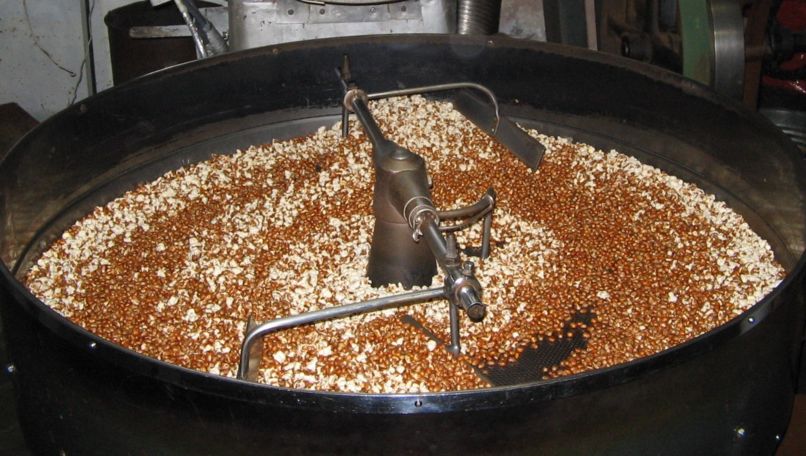
The "farina bóna" (flour) is a traditional product of the Onsernone Valley.