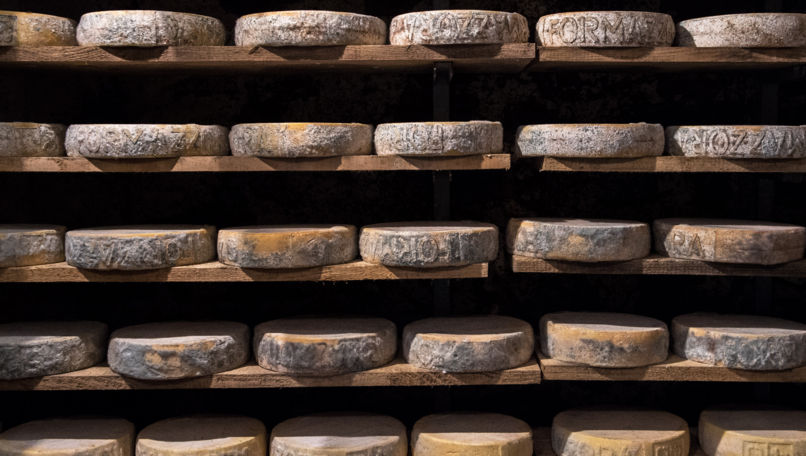
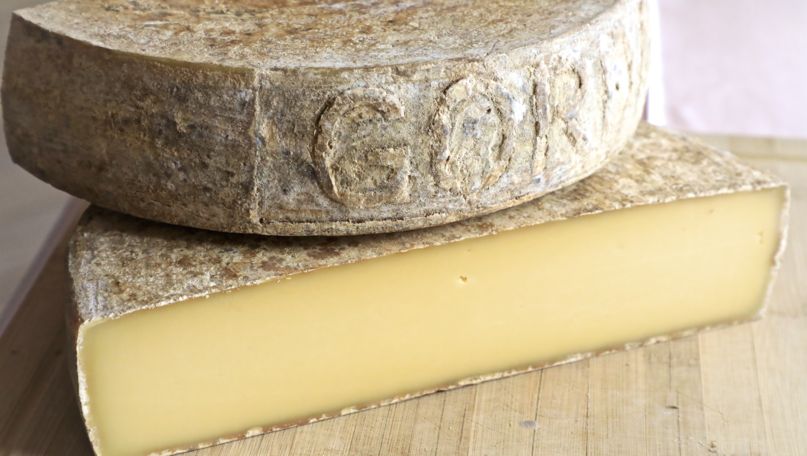
Close your eyes, take a bite, and taste the Alpine meadow itself -- the wild herbs, the sun-warmed grasses, the crystalline air above the treeline. Ticino's cheese has undergone an extraordinary transformation: once a humble polenta garnish in the traditional dishes of yesteryear, it now graces the finest restaurant tables alongside audacious pairings of honey, candied-fruit condiments, sweet wines and straw wines. Its secret lies in an inseparable bond with the land -- the mountains, the Alpine pastures, and the fragrance of the flowers and herbs that grow in these high meadows. To discover this connection firsthand, follow a comfortable trail from pasture to pasture along the Strada degli alpi of the Bedretto Valley.
Like Ticino wine, the region's cheese has undergone a quiet revolution over recent decades, rising from a homemade staple to a modern, handcrafted product of exceptional quality. Much of the credit belongs to the men and women who spend their summers on the high pastures. Although conditions are more comfortable than in the past, life on the alp remains demanding -- far removed from any romantic cliche. Professionalism, respect for tradition and a deep connection to the landscape are the pillars on which Ticino's cheesemaking reputation rests.
Mountain pasture cheese
Alpine pasture cheese is protected by a Designation of Protected Origin (DOP). Each wheel carries within it stories of hardship, solitude and risk, but also of vast, pristine spaces, gestures passed down through generations and knowledge that has, thankfully, never been lost. Producers have struck a careful balance between embracing modern standards and legislation, innovating where necessary, and perpetuating an activity that ties human labour to the rhythms of nature.
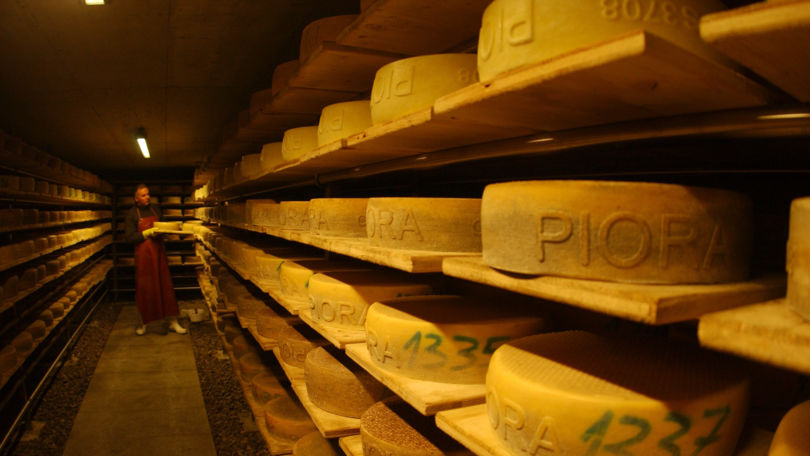
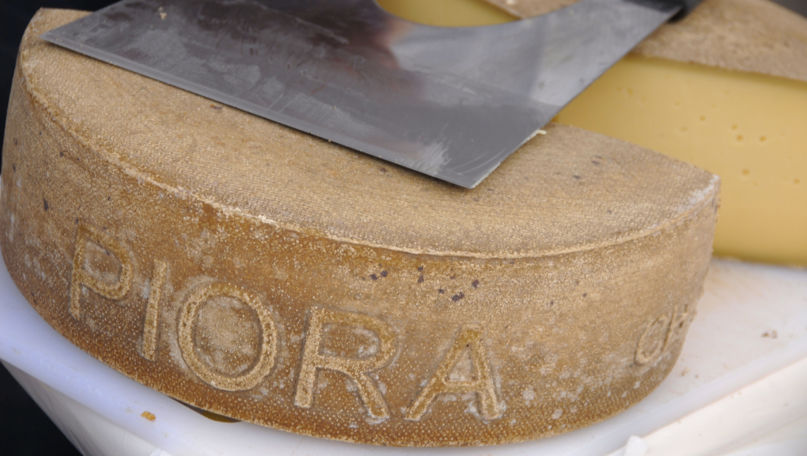
Several dozen DOP mountain pastures currently operate, most of them in northern Ticino. Some are renowned for the sheer excellence of their product. The Piora -- highly sought-after despite its premium price -- leads the way. Equally distinguished are cheeses from the Leventina Valley, such as Sorescia, Pontino and Pescium; from the Blenio Valley, Camadra and Pertusio; from the Maggia Valley, Campo la Torba; and from the Verzasca Valley, Fumegna. A speciality with roots stretching into the distant past is the formaggio della paglia ("cheese of hay") from the Maggia Valley -- a softer variety so named because it was traditionally wrapped in hay during ageing. The formaggio ubriaco ("drunken cheese") is a more recent discovery in Ticino: a semi-hard cow's milk cheese sharpened in vinacce, the pomace left over from the grape-pressing process.
Soft goat cheese
In recent years, soft cheeses -- predominantly from goat's milk -- have enjoyed a remarkable renaissance. Particularly prized are those from the Muggio Valley, often flavoured with herbs or pepper. The much sought-after Zincarlin is a local treasure, alongside the Robiola (soft-ripened cheese), available fresh or aged, and the delicate Ricotta.
Itinerary: Road of the Pastures (4h, see map)
Deeply rewarding yet accessible to all, the Strada degli alpi (Road of the Pastures) in the Bedretto Valley is not the steep mountain trail its name might suggest, but a gentle course that winds from pasture to pasture along much of the valley at an elevation of roughly 1,700-1,800 metres. The climb from Airolo (1,141 m) to Pescium (1,745 m), the starting point, is effortlessly covered by a cableway easily reached by car from Airolo.
Pescium, a well-known ski area, is the departure point for this clearly signposted itinerary, also suitable for mountain bikes. The trail stretches 14 kilometres through meadows and shrubs at the edge of the larch forest -- a comfortable 4-hour walk. Informative panels in four languages accompany the journey.
The first pasture you encounter is Pescium, followed by Ruino. These mountain lands are almost all owned by the Patriziati, bodies that unite people of the same community and administer shared assets such as land and forests. The herdsmen, united in a cooperative, manage the pastures collectively; at the end of the season, the cheese production is divided in proportion to each member's livestock and their milk yield.
Walkers who follow the trail between July and August have the chance to observe the everyday routines of herdsmen, shepherds and dairymaids -- tending cows in the pastures, working in the stables and crafting cheese in the small dairies. The cheese is not usually sold on site but can be purchased in Airolo at the Caseificio del Gottardo (Gotthard Dairy).
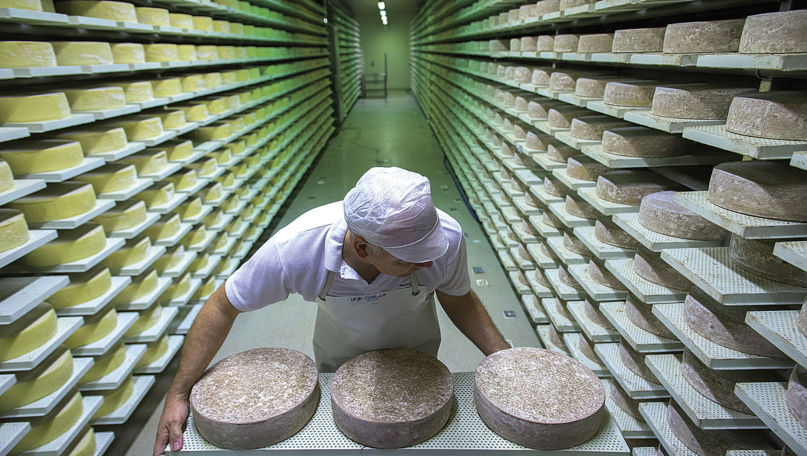
Further along the route lie the pastures of Cristallina, Stabiello, Folcra (at the highest point: 1,900 metres) and Valleggia. From these intimate Alpine clearings, rich in wildflowers and fragrant grasses, cheeses of extraordinary depth and flavour are born -- sold from four to six months of ageing, or ripened for twelve months and beyond. Precious, sought-after butter is also produced here.
The trail descends to the village of Ronco (1,480 m), from where a bus returns you to Airolo, stopping at the cableway car park. No day in this region is complete without a visit to the Caseificio del Gottardo -- a combined restaurant (serving cheese specialties and more), production facility, shop stocked with the finest products of Ticino's gastronomy, and home to the Alpine Museum. It stands right beside the cableway departure station.
Info: Tourist Office Leventina, Via Stazione 22, Airolo Tel. +41 91 869 15 33 www.bellinzonaevalli.ch - [email protected]
You might also like
Specialties
Chestnuts
In Ticino, for centuries, chestnuts were an important staple food for peasants.
Specialties
Cured meats
One of Ticino's most deep-rooted traditions is the "mazza" (the processing of pork, but also goat's meat and beef), a tradition that used to bring together families and village communities.
Specialties
Farina Bóna
The "farina bóna" (flour) is a traditional product of the Onsernone Valley.