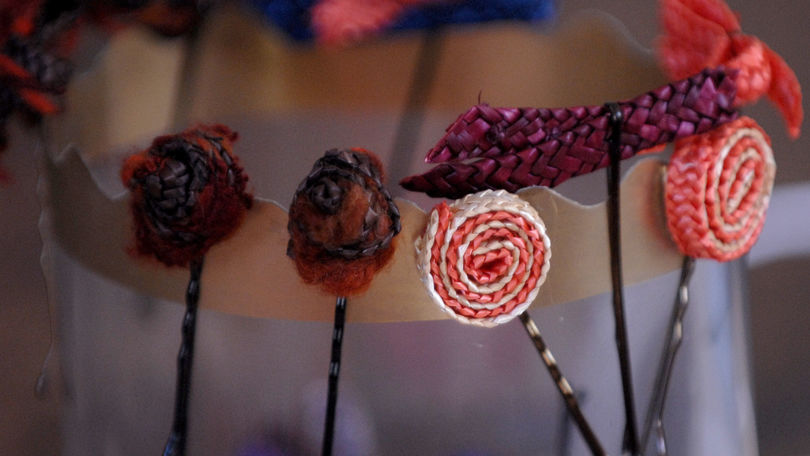
Run your fingers over a hand-woven straw hat from the Onsernone Valley, hold a smooth soapstone bowl carved in the High Maggia Valley, or wrap yourself in a woollen scarf dyed with pigments mixed in a centuries-old village ritual -- and you touch something deeper than craft. Handicraft, like folklore, reflects the very soul of a region. In Ticino, the age-old working of wool, straw, wood and stone speaks of manual dexterity, artistic sensibility and an unwavering attention to form, function and colour. Traces of these traditions fill the canton's ethnographic museums, while specialist shops and workshops offer authentic contemporary pieces -- and sometimes you can watch the artisans at work.
The evolution of crafts and new tendencies
Like many Alpine regions, Ticino underwent rapid socio-economic change around the middle of the 20th century. Rural livelihoods gave way to factory work, construction and the services industry. The abandonment of agropastoral life, the depopulation of the valleys, access to new markets and the appearance of new habits all precipitated a crisis in traditional craftsmanship. Yet the sector proved resilient, reinventing itself through fresh forms and vibrant colours.
A renewed appreciation for rural life, a taste for beauty and admiration for skilled hands have fuelled demand for objects that radiate regional authenticity. Wool, straw, wood, ceramics, copper, clothing, jewellery, gifts and decorative pieces are available in specialist stores and at local markets.
Stores:
Negozio dell'artigianato e Casa della lana Sonogno Tel. 091 746 12 13 www.proverzasca.ch
Artis Artigianato e Sapori locali Al Crosell 2, Maggia Tel. 091 754 18 16 www.artisvallemaggia.ch
Casa dell'artigianato Via Lucomagno 82, Dongio Tel. 077 429 97 36 www.casadellartigianato.ch
Pagliarte Berzona Tel. 091 797 10 22 www.pagliarte.ch
Historic Handicraft
Wool and Hemp
The rural economy was largely self-sufficient: nearly everything needed for daily life was produced at home. Farming and hemp cultivation provided fabric for clothing and linens, while sheep's wool was washed, dyed, carded and spun into socks, sweaters, scarves and blankets.
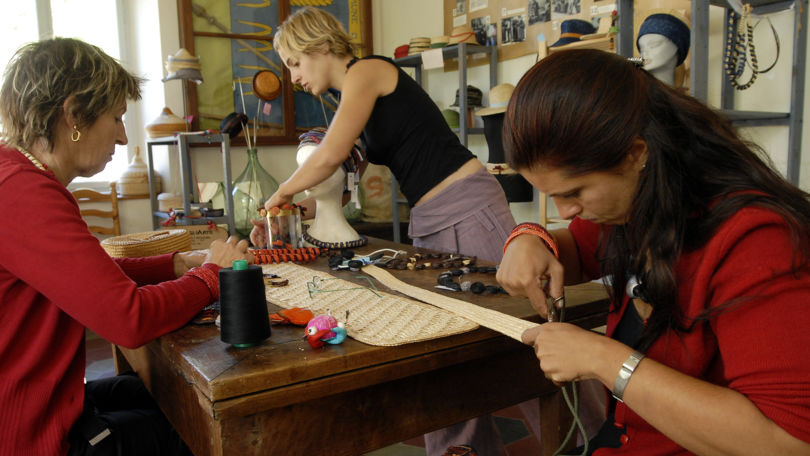
The wool and hemp production processes are vividly illustrated in several of Ticino's ethnographic museums, particularly the Verzasca Valley Museum in Sonogno, which stands directly opposite a handicraft store and the Casa della lana (House of Wool). In this village -- home to Pro Verzasca, an association founded in 1933 to support local handmade production -- the traditional wool-dyeing ritual is repeated twice a year (May and October), and visitors are warmly welcomed to observe.
The peduli
Peduli were once tailored from leftover fabric: footwear with soles made from overlapping layers of cloth, stitched together to achieve several centimetres of thickness, then sewn to an upper also fashioned from fabric using hemp string. This typically feminine craft is beautifully documented at the Centovalli and Pedemonte Museum in Intragna.
Weaving
Baskets and conical wicker containers -- everyday objects in rural Ticino -- were skillfully woven from particularly supple branches, especially those of the hazel tree. Talented artisans still practise this craft and offer their creations at city markets.
Straw
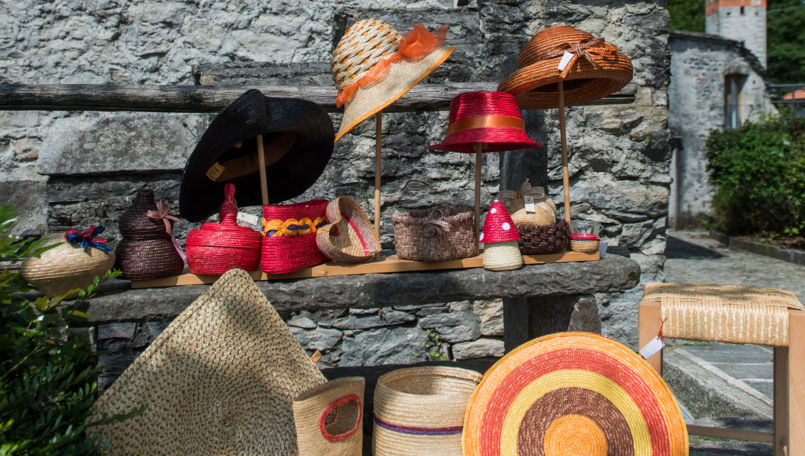
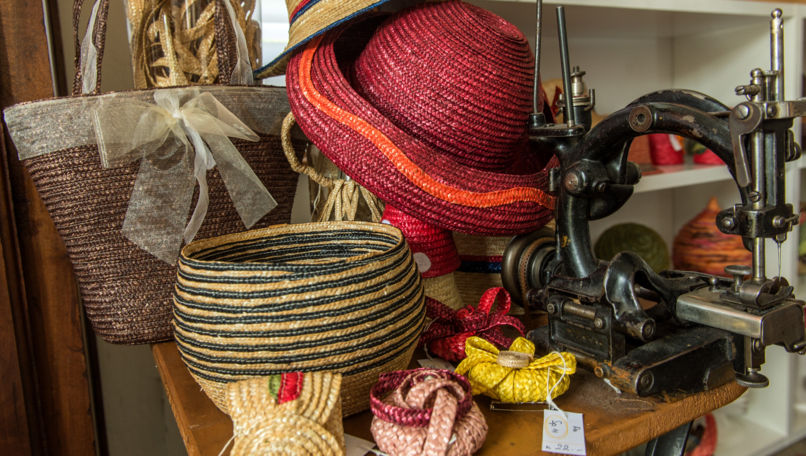
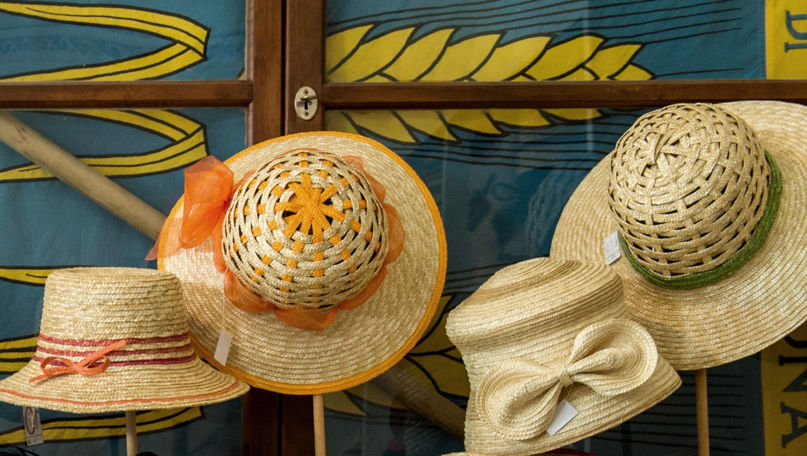
Straw-making was a proud tradition of the Onsernone Valley, where the activity developed as early as the 16th century, occupying much of the population until the end of the 1800s. Rye straw, harvested in summer and dried like hemp, had its stems macerated to yield a raw material that was plaited into a braid called binda, from which hats and bags were fashioned and sold, even abroad.
The art of straw processing is thoroughly documented at the Ethnographic Museum in Loco. For several years now, the Pagliarte workshop in Berzona has kept the tradition alive, creating hats, bags and accessories in contemporary styles.
Wood
Countless everyday objects were once fashioned at home from local timber: the cadola (a special chest for carrying firewood), moulds for cookies or butter, goat collars, polenta plates, infant cradles, and chests that safeguarded a bride's dowry. Chestnut, walnut and ash were the woods of choice. The remarkable variety of this woodworking tradition can be admired across Ticino's ethnographic museums.
Soapstone
Soapstone carving was characteristic of the High Maggia Valley. At the museum in Cevio, you can discover each phase of the process -- used especially to produce cooking and storage vessels, lamps, tubs and the traditional Alpine stoves known as pigne.
You might also like
Specialties
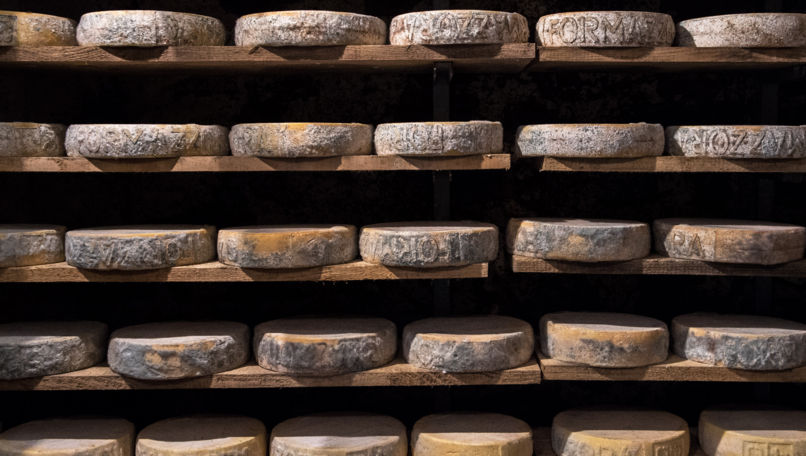
Cheese
From the poor role of polenta-garnish in traditional dishes of yesteryear, Ticino's cheese has become a delicacy served in luxurious restaurants with audacious garnishes like honey, candied fruit condiments, sweet or straw wines.
Specialties
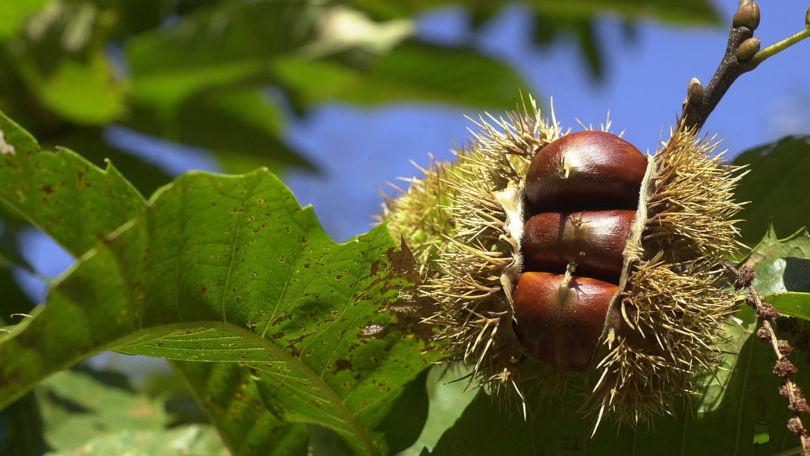
Chestnuts
In Ticino, for centuries, chestnuts were an important staple food for peasants.
Specialties
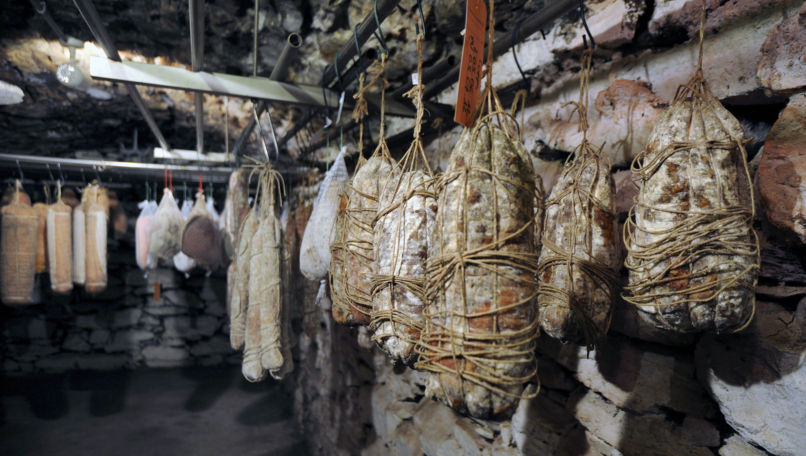
Cured meats
One of Ticino's most deep-rooted traditions is the "mazza" (the processing of pork, but also goat's meat and beef), a tradition that used to bring together families and village communities.