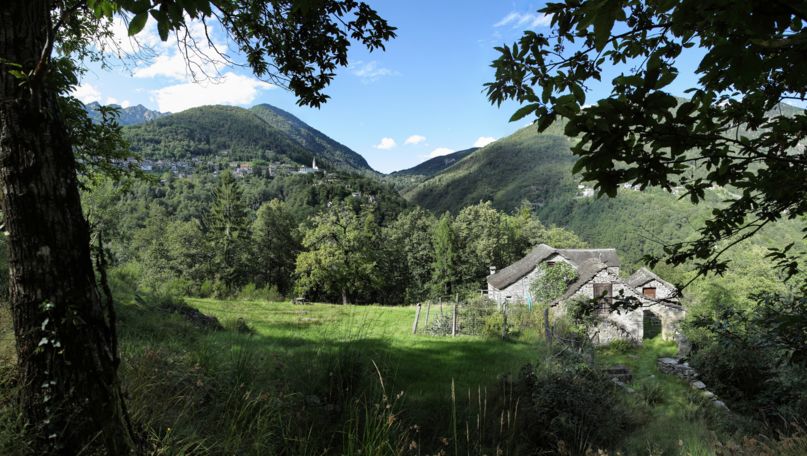
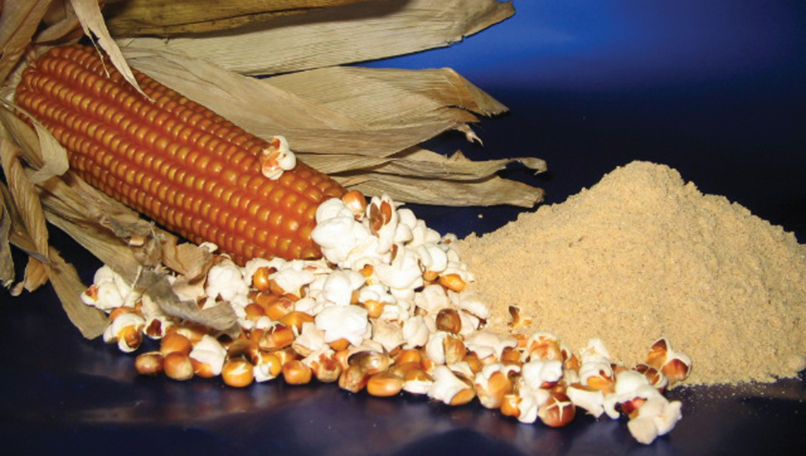
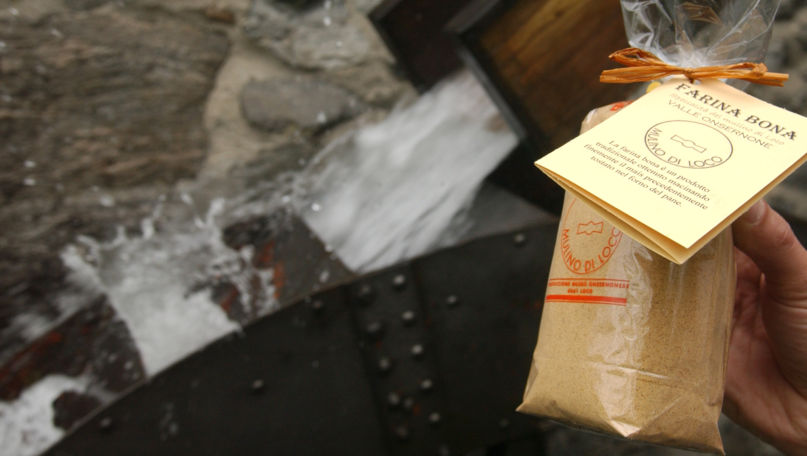
Deep in the Onsernone Valley, where the sound of rushing water and birdsong is the only soundtrack, a forgotten flour has been brought back to life. Farina bona -- "good flour" -- is a velvety maize flour (Zea mais) produced by grinding lightly toasted grain to a fine, fragrant powder. For centuries, it sustained the valley's inhabitants, mixed simply with milk, water or wine as a daily staple. The upheaval in eating habits after World War II saw its importance fade, and by the end of the 1960s production ceased entirely when the last local millers -- Annunciata Terribilini and Remigio Meletta -- laid down their stones.
But the story did not end there. In 1991, the restoration of the Loco mill by the Onsernonese Museum sparked a revival, recovering the memory of this ancient product and cautiously restarting production. A decade later, a mention in Slow Food's prestigious "Ark of Taste" and the dedicated efforts of a local teacher -- who enlisted the valley's school children in the research -- deepened the historical understanding and led to the restoration of the Vergeletto mill in 2013, where farina bona is produced today. Production has since expanded, along with an inventive range of by-products: macaroons, biscuits, bonella, beer, gallette and more, bringing this remarkable flour to tables far beyond the Onsernone Valley.
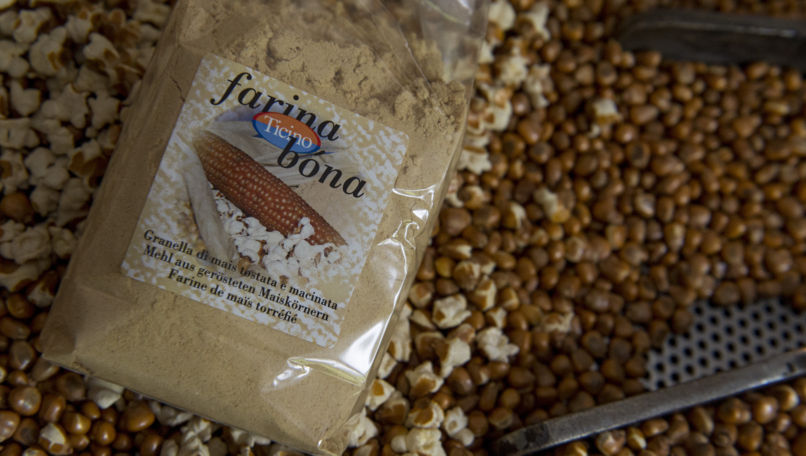
Farina bona is on sale at the mill and the Onsernonese Museum in Loco, as well as in numerous shops across Ticino.
The mill of Loco
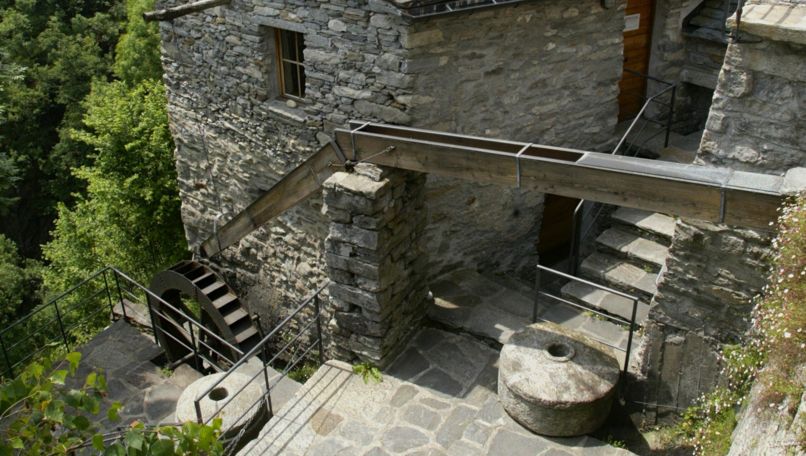
Perched above a cliff overlooking the spectacular waterfall of the Bordione stream, the Loco water mill -- with its original stone millstones dating to the 18th century -- underwent extensive restoration and has been grinding once more since 1991. This revival made it possible to restart the milling of maize for polenta flour and set the stage for the rediscovery of farina bona.
Together with the Vergeletto mill, the Loco mill stands as a living testament to the milling tradition of the entire Onsernone Valley, which at the end of the 19th century counted as many as 27 working mills -- nearly all of them now vanished or silent.
On the upper floor, an educational exhibition traces the history and techniques of cereal milling. On the lower floor, the production room houses the stone millstones, powered by the external water wheel.
Open from April to October: Thursday, 2 - 5 PM Saturday/Sunday, 10 AM - 12 PM / 2 - 5 PM
Vergeletto Mill Park
Vergeletto's historic mills can be visited year-round along the Park trail, where informative panels recount the history of the mills and the surrounding village. Guided tours are also available, offering a deeper look at the story of farina bona.
Mulin di Uluc (owls' mill) This mill operated for only about thirty years. Its sole surviving "milling memory" is the millstone displayed outside.
Mulin di Venenzi (mill of the Venanzi family) On the lower floor, old tools are on display. Upstairs, the miller's room has been refurbished and decorated with traditional straw objects. A hole in the floor once allowed the miller to monitor the millstone and refill the hopper without stepping outside.
Mulin di Sindig'ui Active until 1957 -- when the miller Annunciata Terribilini, a true specialist of farina bona, passed away -- this mill was equipped with two millstones, one reportedly for rye and the other for maize. In 2013, one was brought back to life for the production of farina bona.
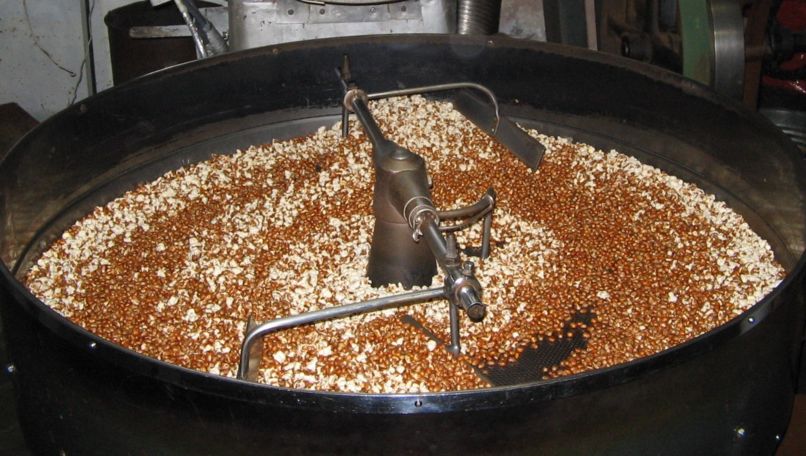
Farina bona workshop Once the school gymnasium (until 1980), this building now houses a roasting machine, several stone mills with electric motors, a vibrating sieve and other machinery. It serves as the primary production site for farina bona when water levels at the Sindig'ui mill are too low.
Info: Museo Onsernonese, Loco Tel. +41 91 797 10 70 www.museonsernonese.ch - [email protected]