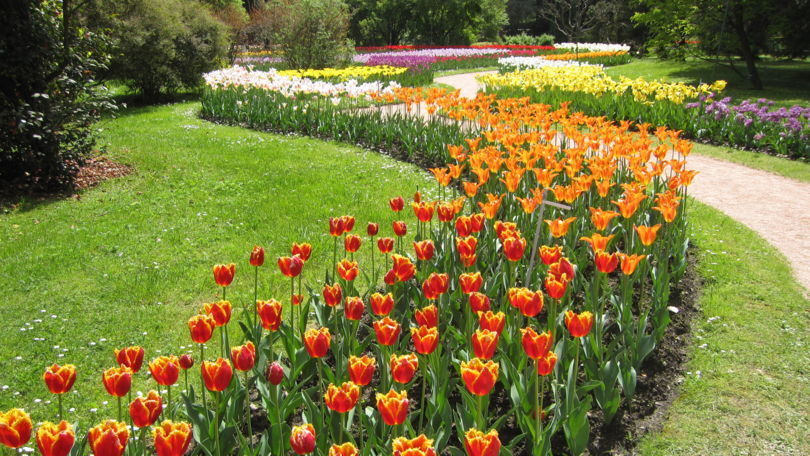
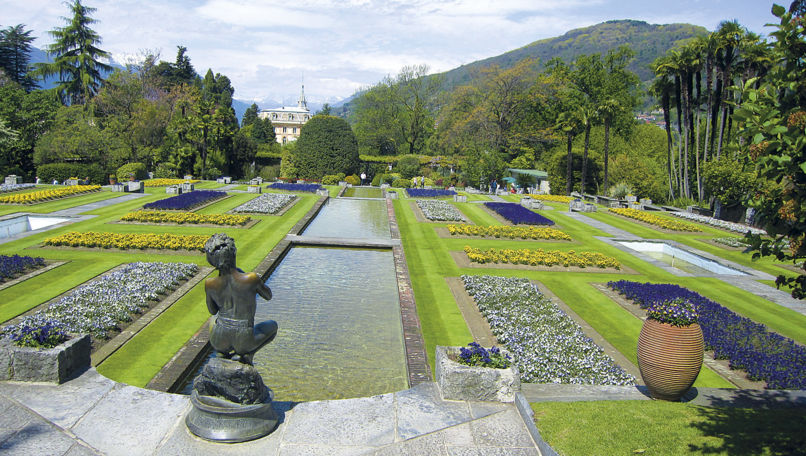
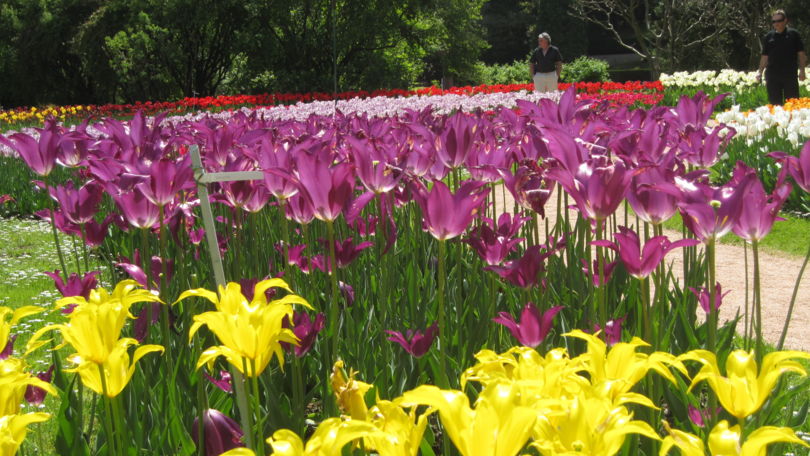
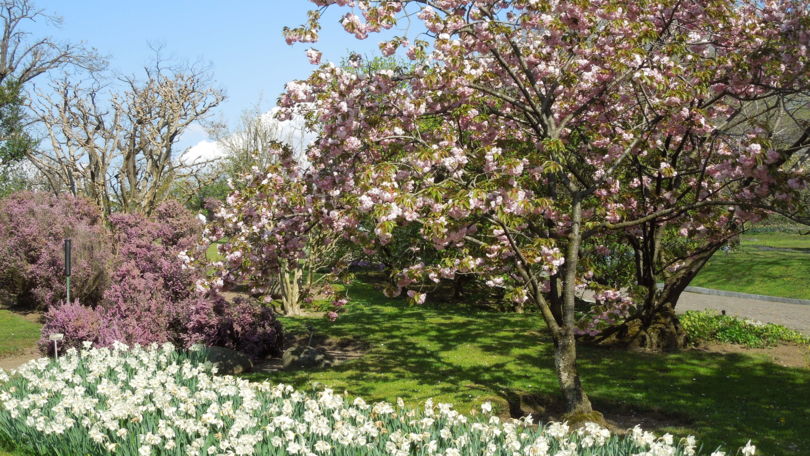
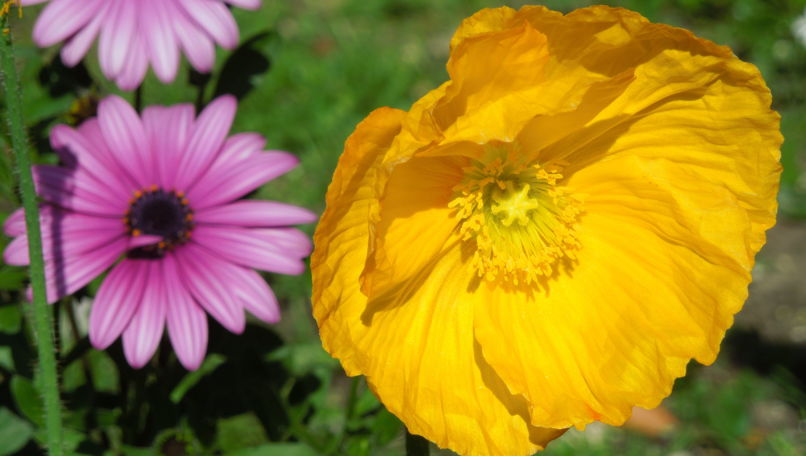
To walk the 7 kilometres of winding paths through Villa Taranto's gardens is to journey through the flora of distant continents without ever leaving the shores of Lake Maggiore. Nestled on the Italian bank in Verbania-Pallanza and easily reached by car or boat from Locarno, this 20-hectare park shelters one of Europe's most extraordinary collections of exotic species. Assembled during the early 1900s by its globe-trotting Scottish founder, Captain Neil Boyd McEacharn, the gardens burst into lavish bloom each spring against the shimmering backdrop of the lake -- a spectacle that leaves visitors breathless.
The Park
"A beautiful garden does not have to be large, but rather the realization of a cherished dream, even if it is only a couple of square metres wide and situated on a balcony." This was the vision that inspired Captain Neil Boyd McEacharn -- academic, horticulturalist, and member of the Royal Company of Archers -- to create this magnificent park in 1931. Conceived as a perfect English Garden in Italy, his ambition was to build an environment capable of housing the richest possible collection of precious exotic plants, respecting the biological needs of each species while satisfying both aesthetic and botanical aspirations. The property was reshaped with terracing and excavation to accommodate his dream: shade-loving plants were placed in a protected, artificial valley sheltered from the wind, while sun-hungry species claimed the terraced gardens above. A remarkable 8-kilometre pipeline was engineered to pump water directly from the lake, ensuring the abundant supply these plants demand.
The resulting collection is staggeringly rich: over one thousand foreign plants and nearly 20,000 varieties and species of significant botanical importance. Visitors can admire magnolias, eucalypti, rare tropical specimens, lotus flowers, chestnut and beech trees, birches, tulips, dahlias, Indian paintbrushes, azaleas, narcissi, rhododendrons, and hydrangeas, alongside exceptional individual specimens. Terraces, manicured lawns, gentle waterfalls, and reflective ponds punctuate the stroll at every turn.
Historical Background
It was 1931 when Captain Neil Boyd McEacharn read an advertisement in the London Times announcing that the Marquise of Sant'Elia intended to sell her estate "La Crocetta" in Pallanza, on Lake Maggiore. The property seemed ideal for McEacharn's lifelong dream: the creation of one of the world's most beautiful botanical parks. He had already undertaken a similar challenge renovating the vast grounds of Galloway House, his family's castle in Scotland. Negotiations with the Marquise concluded swiftly, and transformation began that same year.
McEacharn came from a wealthy Scottish family of extraordinary means. His father was an Anglo-Australian shipping magnate, and his wife's family owned rich iron and coal mines in Australia, as well as a vast sheep-farming estate boasting over one million sheep that supplied wool to England. Neil first visited Italy at the tender age of eight, docking in Livorno during a cruise on his father's yacht -- and by his own account, it was love at first sight. Even while studying at Eton and Oxford, he spent his holidays on the Mediterranean, painting Italian landscapes in the manner of the era's elite. He embarked on his first voyage around the world at just sixteen, eventually repeating the journey five more times, scouring every continent for rare and unknown plant species to cultivate at his marvellous gardens.
McEacharn lived at Villa Taranto until his death in 1964, aged 80. His remains rest in a chapel-mausoleum expressly built within the gardens he devoted his life to creating. In 1938, he donated the park to the Italian State while retaining life estate. Villa Taranto's Botanical Gardens have been open to the public since 1952.
You might also like
Parks
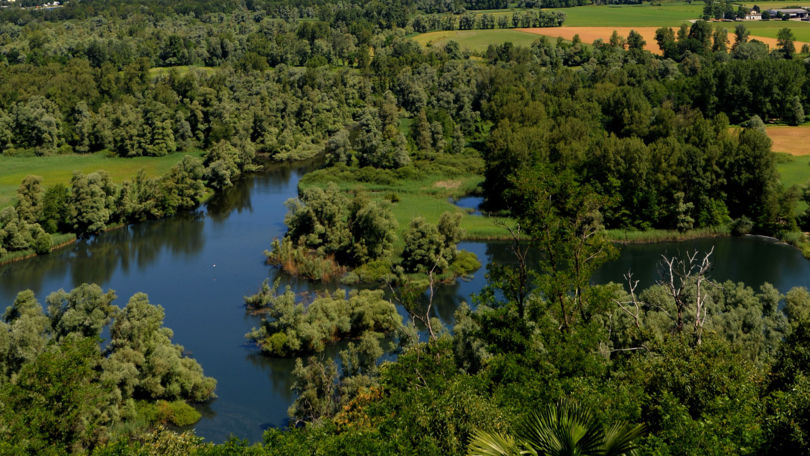
Bolle di Magadino
Marshland, reeds, sand holms and floodplain forests (willows, poplars, white alders) are what forms the Bolle di Magadino landscape, a protected area around the mouths of the rivers Ticino and Verzasca.
Parks
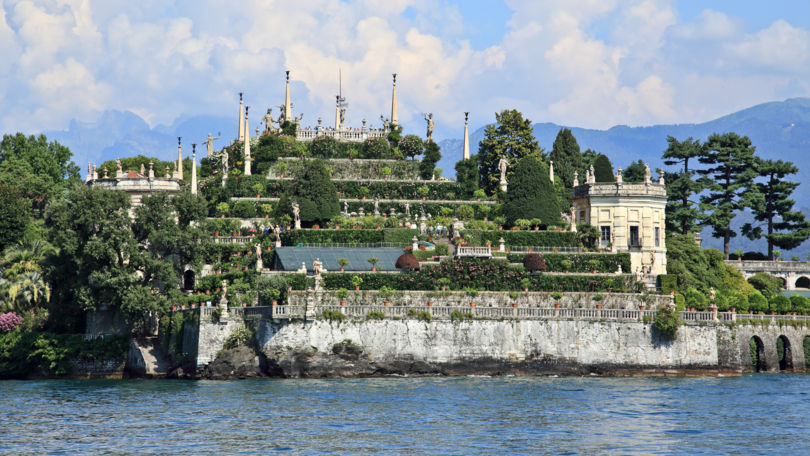
Borromean Islands
In addition to millions of tourists, the Borromean Islands also enchanted Stendhal, Liszt, and Mendelssohn.
Parks
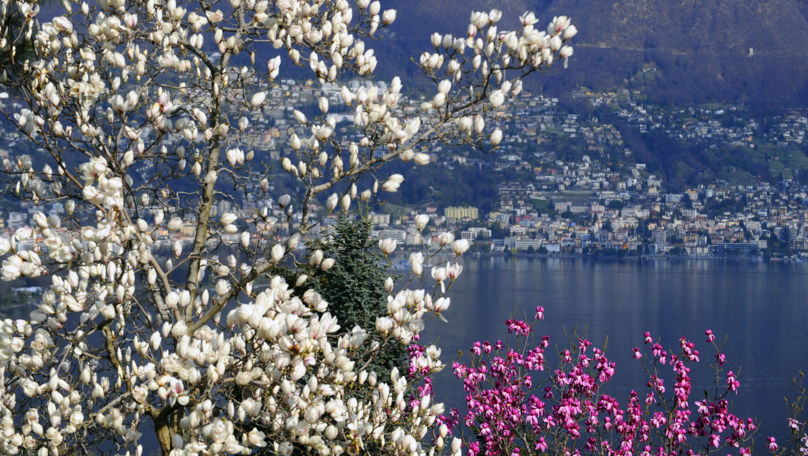
Botanical Park Gambarogno
The Botanical Park Gambarogno is located in Vairano-San Nazzaro and is well known for its collection of camellias and magnolias, one of the richest in Europe.