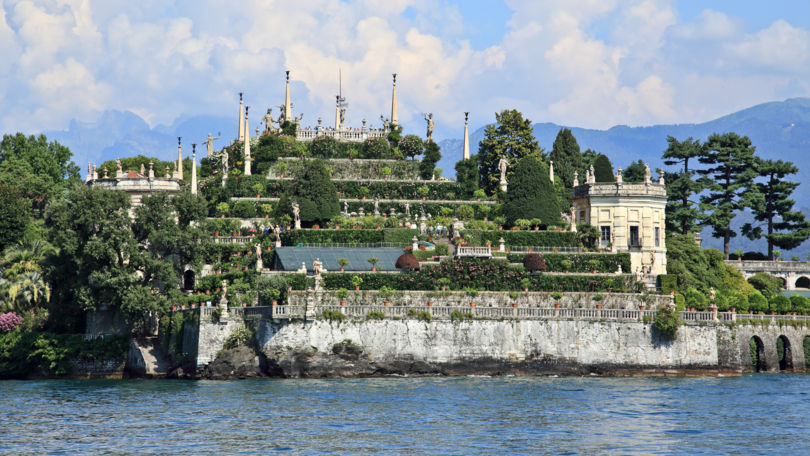
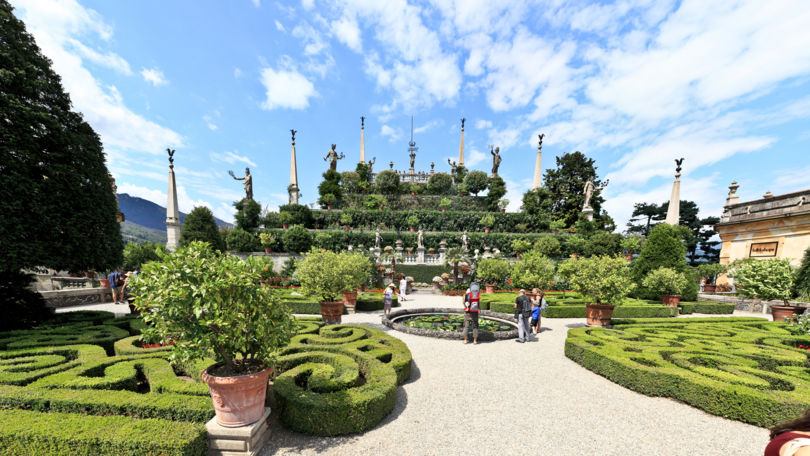
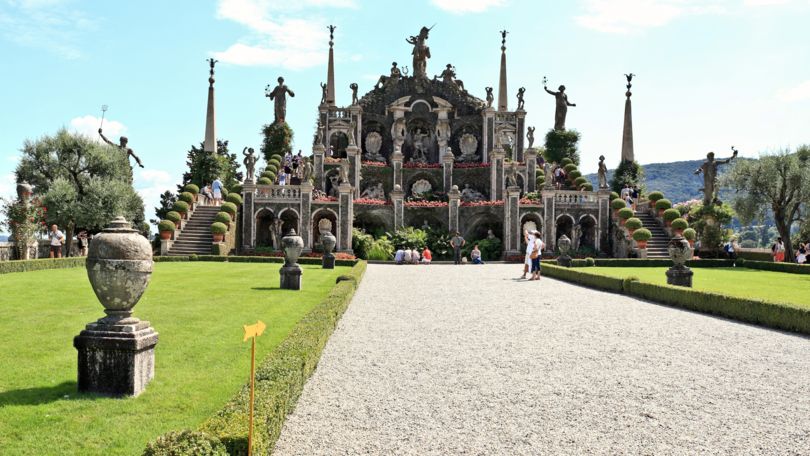
Few places on Lake Maggiore stir the imagination quite like the Borromean Islands. Rising from the glittering waters just offshore from Stresa, this archipelago has captivated the hearts of Stendhal, Liszt, and Mendelssohn. Dumas immortalized them in The Count of Montecristo, Turner and Corot rendered their beauty in oil paintings and watercolours, and D'Annunzio was so taken that he tried to rent one for himself. Easily accessible by boat from Locarno or Ascona, the three islands each offer a distinct world: Isola Bella with its grandiose mansion and terraced gardens, Isola Madre with its luxurious English park, and Isola dei Pescatori, a timeless fishing village where the air still carries whispers of centuries past.
Background
For these splendid island treasures, we owe thanks to the Borromeo counts, whose descendants remain the owners of Isola Bella and Isola Madre to this day. Originally from San Miniato in Florence, the Borromeo family was exiled to Milan in the mid-14th century, where they amassed great wealth as bankers. They held prominent public roles in service to the Visconti and later the Sforza families, who rewarded their loyalty with lands on Lake Maggiore and a noble title. The family also rose to the highest echelons of the Church, producing bishops, cardinals -- including Cardinal Federico, famously portrayed in Alessandro Manzoni's The Betrothed -- a pope (Pius IV), and even a saint, San Carlo.
Isola Madre was purchased at the beginning of the 16th century and Isola Bella during the first half of the 17th century, marking the start of their remarkable transformation. Soil was transported to cover bare rock, palaces were erected, and gardens ornamented with painstaking artistry. These works spanned three centuries and drew on the talents of dozens of renowned architects, painters, and sculptors, including Ticino-born Vincenzo Vela.
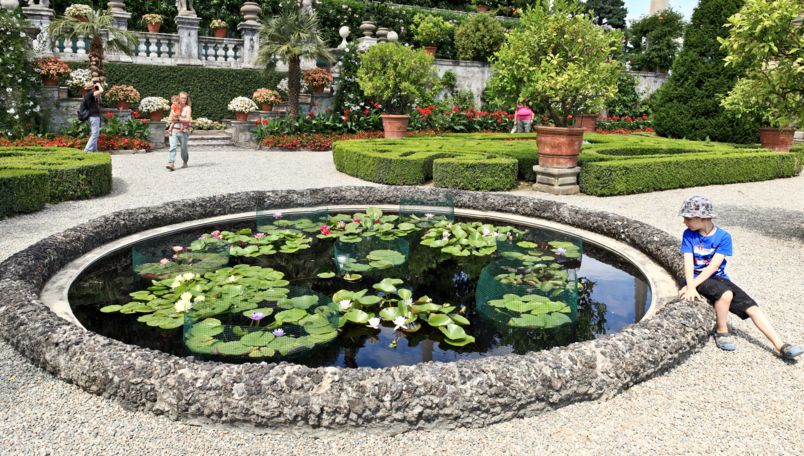
Isola Bella dazzles with its grandiose mansion, a sumptuous interplay of Baroque and Neoclassical styles shaped by successive architects, among them Fontana, summoned from Rome. It was here that the (ultimately futile) peace conference between Italy, France, and England took place in 1935. Inside, the magnificent hall -- designed with the involvement of Bernini, one of the most celebrated architects of the Italian Renaissance -- houses treasures of European art spanning the 17th to 19th centuries: paintings, sculptures, fine furniture, crystal chandeliers, and Flemish tapestries. Descending to the cool grottoes at lake level, visitors discover a stunning sleeping Venus reminiscent of Canova's famous Sleeping Nymph. Above, the scenic garden unfolds across ten hanging terraces, culminating in the Teatro Massimo and a panoramic terrace where Stendhal himself loved to linger, lost in contemplation.
Isola Madre enchants with a different kind of beauty: a luxurious English-style park bursting with rare plants and exotic flowers. Visitors stroll along shady, scented paths while free-roaming peacocks and golden pheasants cross their way. Legend holds that Napoleon himself rested beneath the island's majestic Kashmir cypress -- the largest in Europe and perhaps the world -- while his soldiers sent terrified pheasants scattering. Inside the richly adorned palace, a delightful puppet theatre intrigues every newcomer. Giacomo Casanova, who visited with a friend and two beautiful sisters from Lugano, stayed in one of the guest bedrooms known as the "Yellow Bedroom" and the "Green Bedroom." "It is impossible to perfectly describe these fortunate islands," he wrote. "You simply must see them. They are very beautiful and the climate is absolutely wonderful, an eternal spring."
Isola dei Pescatori is the most intimate of the three -- a quaint fishing village of narrow, winding lanes flanked by souvenir shops and restaurants serving exquisite lake fish specialties. Measuring just 300 metres in length and 100 metres in width, the island also harbours the romantic Hotel Verbano. Massimo d'Azeglio, Italian Prime Minister in the era of Cavour and a gifted painter, captured the island in several oil paintings, rowing out from his nearby villa in Cannobio. And the writer Piero Chiara, who celebrated his beloved Lake Maggiore in novels and short stories, chose this small patch of paradise as his final resting place.
You might also like
Parks
Bolle di Magadino
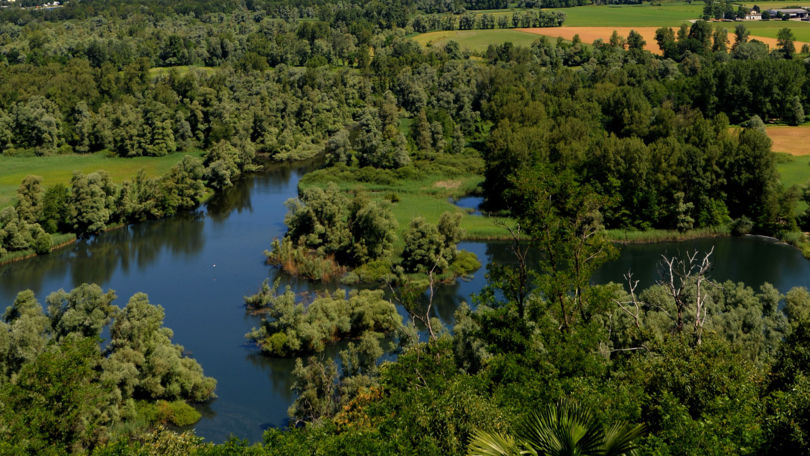
Marshland, reeds, sand holms and floodplain forests (willows, poplars, white alders) are what forms the Bolle di Magadino landscape, a protected area around the mouths of the rivers Ticino and Verzasca.
Parks
Botanical Park Gambarogno
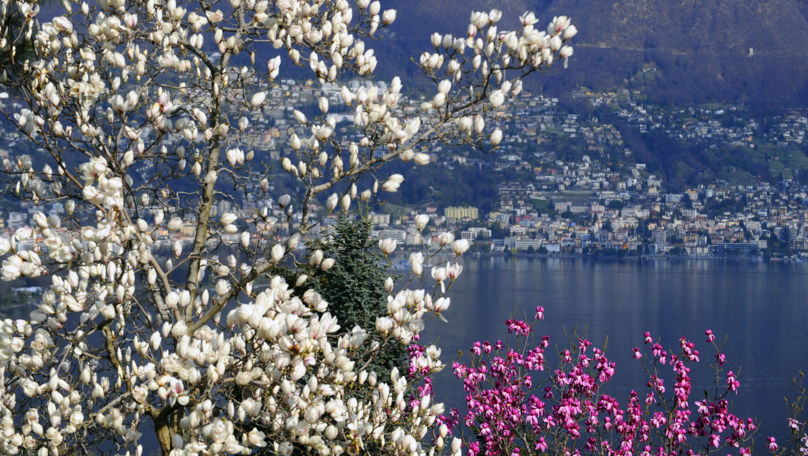
The Botanical Park Gambarogno is located in Vairano-San Nazzaro and is well known for its collection of camellias and magnolias, one of the richest in Europe.
Parks
Brissago Islands
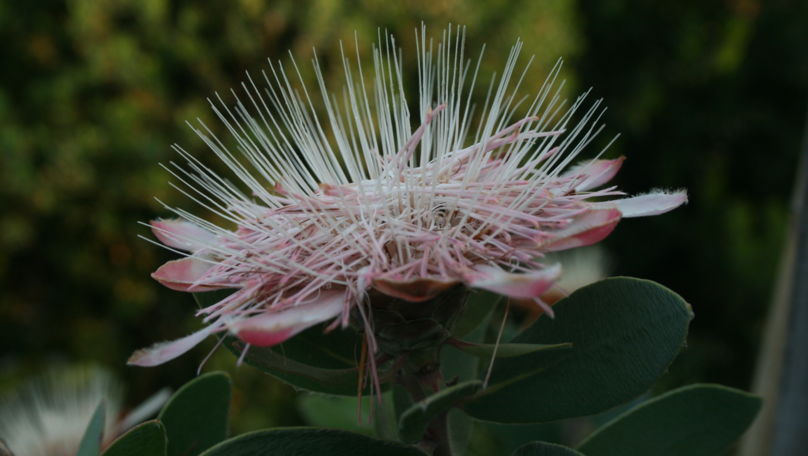
The Brissago Islands are one of Ticino's most magical places - a small subtropical paradise on Lake Maggiore that is easily accessible by boat.