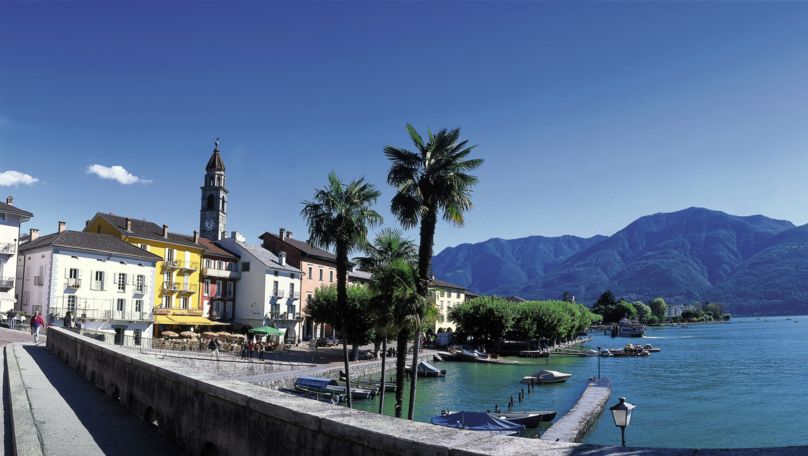
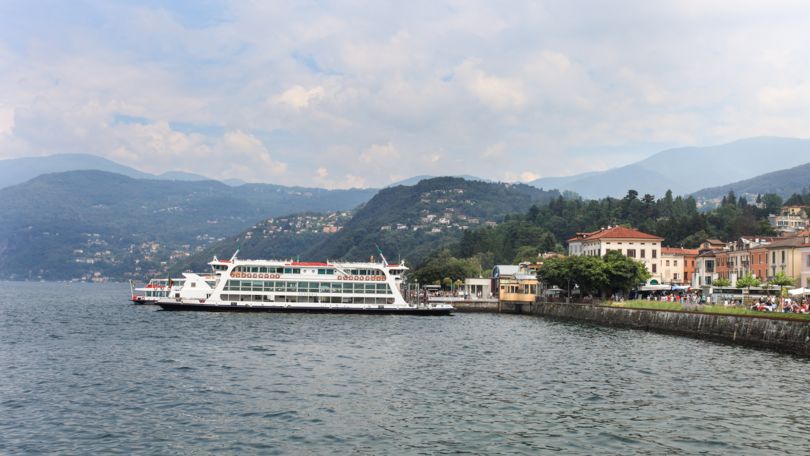
There is something irresistible about arriving at a bustling Italian market by boat. The weekly markets along the Italian shore of Lake Maggiore -- Luino on Wednesdays, Verbania-Intra on Saturdays, and Cannobio on Sundays -- are easily reached from Locarno or Ascona, transforming a simple shopping excursion into a full lakeside experience. For years, Luino in particular has drawn bargain hunters from as far as Bavaria and Austria. But beyond the treasures you might carry home, the real reward is the journey itself: a leisurely cruise across what Stendhal called "one of the most beautiful places in the world."
As the boat glides across the great dolphin-shaped lake, the Brissago Islands appear with their exotic canopy of trees, followed by Cannobio with its majestic Santuario della Pieta. The ruins of the Cannero castles -- where the perilous Mazzarditi brothers, a band of robbers, once took refuge -- loom from their rocky islets. On the Piedmont bank, the villages of Oggebbio and Ghiffa come into view, and finally Verbania, the largest town on the lake, facing Laveno and renowned for its flowering gardens. At day's end, laden with bags and impressions, the return voyage across twilight waters provides the perfect closing chapter.
Luino (every Wednesday, from 8.30 am to 5 pm)
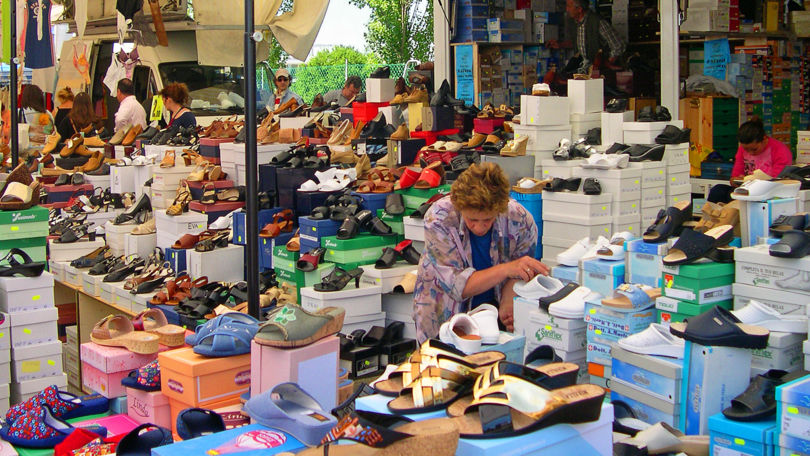
Luino's market is the most famous on Lake Maggiore, its history stretching back nearly five centuries to 1541, when Emperor Charles V granted "market rights" to the townspeople. The writer Piero Chiara (1913-1986), born and raised in Luino, captured the atmosphere half a century ago: "Merchants of every kind used to convene, and still convene, at Luino market. Sellers of poultry, cheese, fruit and vegetables settled their stalls in the shade of the trees of Piazza Mercato, while others displayed handbags, fabrics, shoes, trinkets, umbrellas, seeds, grains and farm equipment. There even was a bookseller with his stall set on a car. They all scattered in the streets, invading every available space until the entire town was taken over."
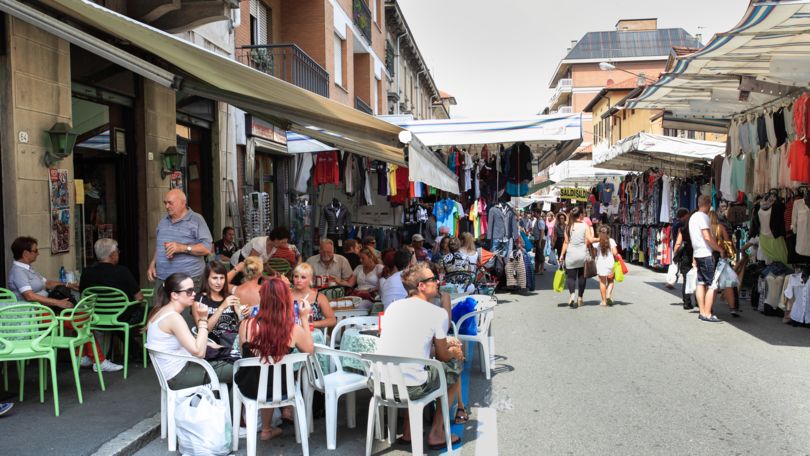
Today the tradition thrives with nearly four hundred stalls selling shirts and clothing, leather goods, haberdashery with rare threads and ribbons for sewing and embroidery, plates and tableware, and vibrant fruit and vegetable displays.
Cannobio (every Sunday, from 8 am to 1 pm)
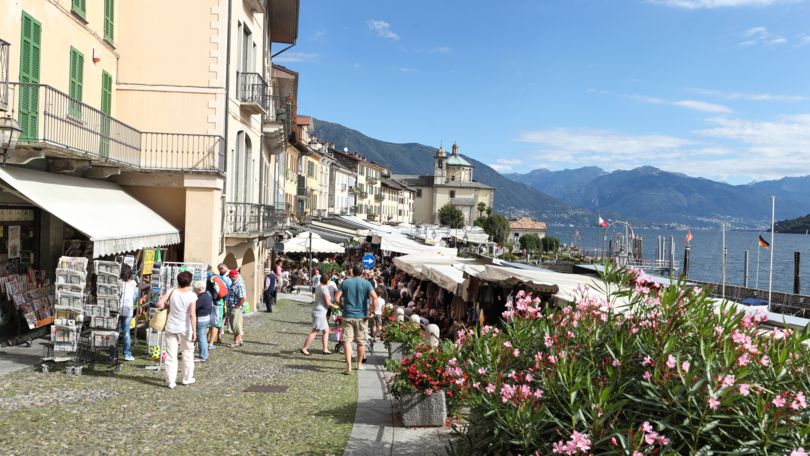
Four centuries ago, Friar Morigia wrote of Cannobio: "In this noble Hamlet honourable and noble wool workers flourished. Now they do great trade here in leather and thick woollen blankets, and every two weeks there is a market visited by a great deal of people on Thursdays." Today's market fills the main rectangular, porticoed square every Sunday, with a charming vintage pier overlooking the lake. On the north side, the majestic Santuario della Pieta -- enlarged by San Carlo Borromeo -- houses Gaudenzio Ferrari's Road to Calvary above the altar and the miraculous weeping painting of the Virgin Mary known as the "Pieta" on the dais.
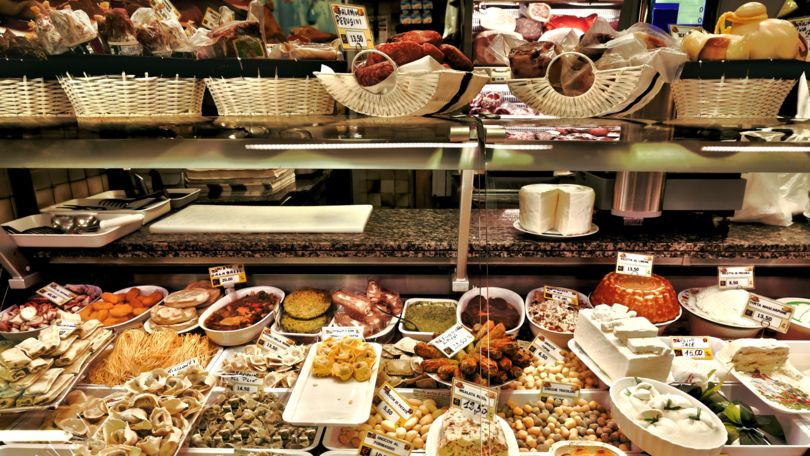
The picturesque market -- also popular with locals and tourists staying in the Locarno region -- offers fruit, vegetables, and flowers from the surrounding hills, locally produced cheeses and salamis, leather jackets, handbags, jerseys, shirts, shoes, hats, handmade crafts, and other goods, spread across some three hundred stalls.
Verbania-Intra (every Saturday, from 8 am to 5 pm)
Market regulations first appeared in Intra's communal statutes of 1393, and the market has flourished here ever since. Two centuries later, the monk Morigia described it: "One does not pay duties or tolls in this village. Every two weeks, a large market is held on Saturdays and visited by the inhabitants of the area as well as by people from far away villages, attracted mainly by the presence of various kinds of livestock. Livestock that comes from the Canton of Valais (Switzerland) and other German-speaking areas, renowned for their great variety of cheese." In those days, the market alternated Saturdays with nearby Pallanza.
Today, 240 stalls line four squares in Intra's historic centre every Saturday. The offerings are wonderfully varied: cheeses and cured meats, fresh fish from lake and sea, fruit and vegetables from local hillside producers, alongside shoes, clothing, leather jackets, handbags, belts, socks, hats, and fabrics in cotton, linen, silk, and worsted wool.