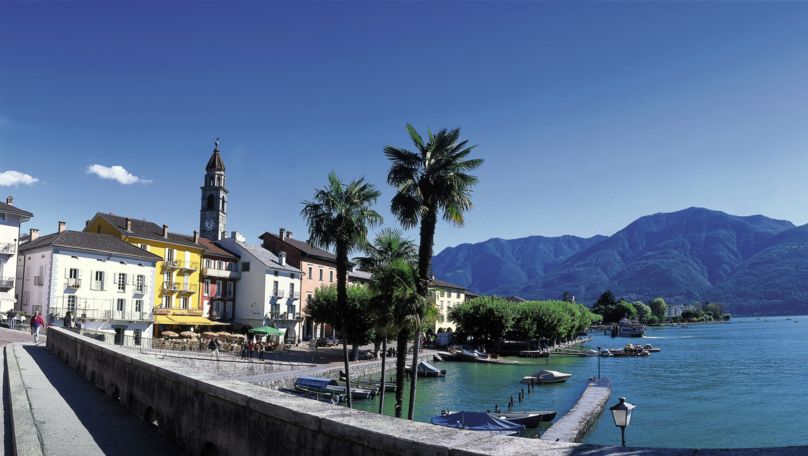
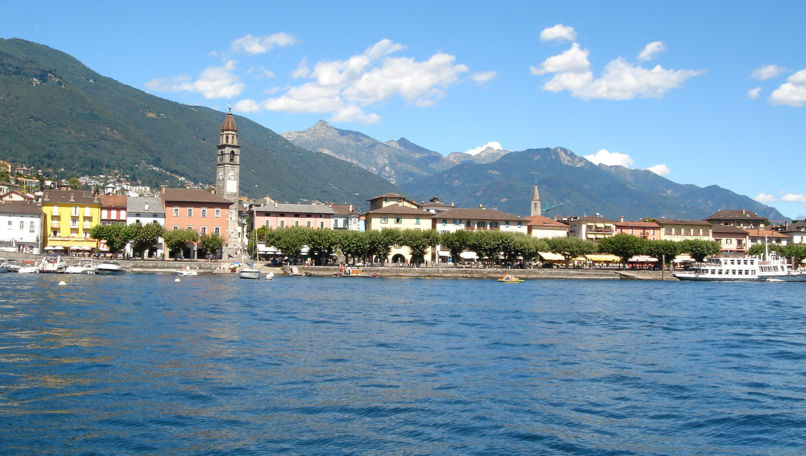
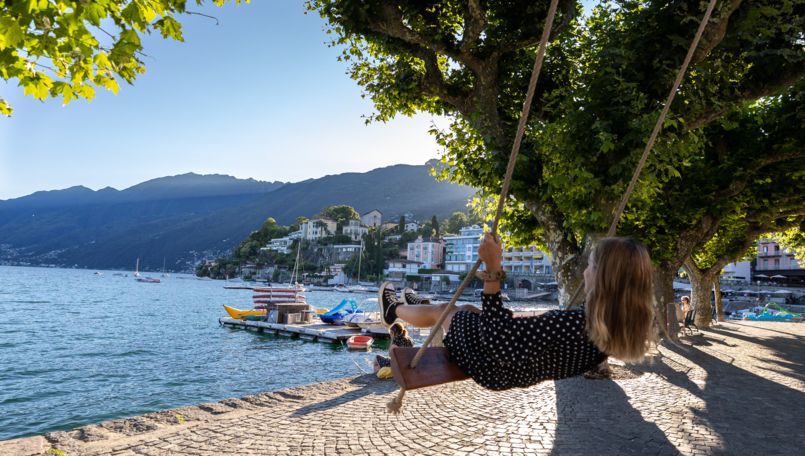
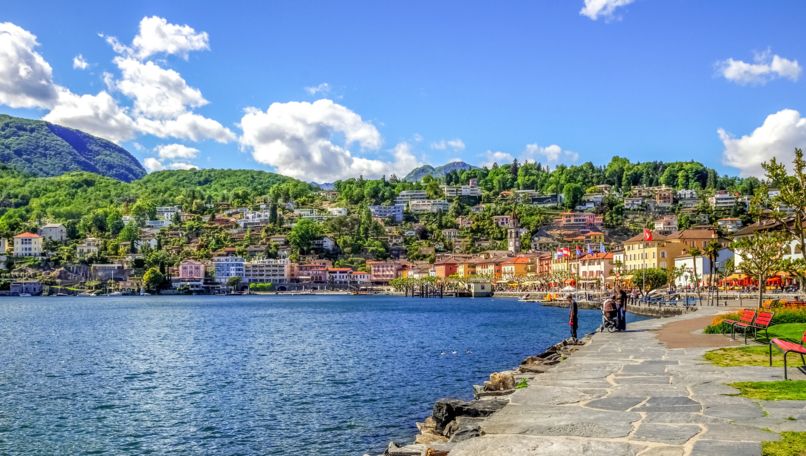
Refined, picturesque, elegant, and irresistibly romantic -- Ascona is all of these and more. Stroll through the historic centre's pedestrian alleys, lined with boutiques, art galleries, inviting restaurants, and treasure-filled antique shops. Along the lakeside promenade, where fishermen once mended their nets, the warm light and gentle lapping of Lake Maggiore create a holiday atmosphere that feels like pure joie de vivre. Ascona is also the birthplace of Giovanni Antonio Serodine, one of the greatest Italian painters of the 1600s, whose most precious works remain in the town. From the early 1900s onward, Ascona became a crossroads for Central European culture, drawing prominent intellectuals and artists to its shores.
Itinerary: Ascona's Historic Centre (2h, see map)
Begin your walk at the parish church of San Pietro e Paolo (Saints Peter and Paul), whose slender bell tower has become Ascona's emblem. Inside, the famous altarpiece of the Virgin -- one of Giovanni Serodine's masterpieces (1600-1630) -- commands the eye with its luminous intensity.
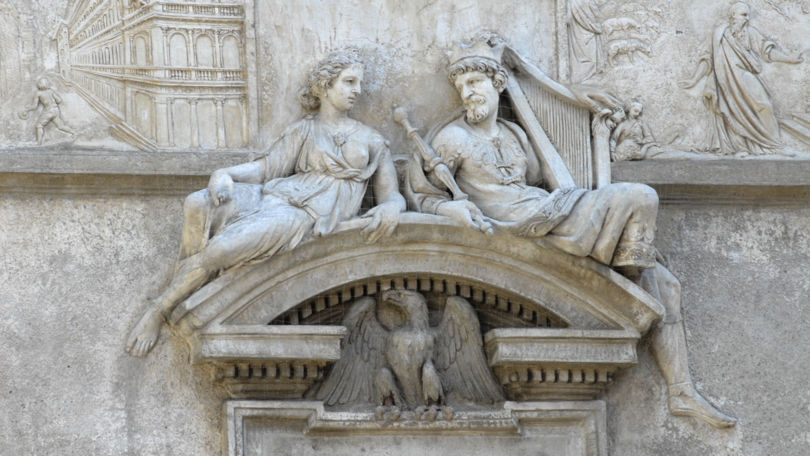
After absorbing the painting, step outside to find traces of the Serodine genius on the facade of the paternal home, the 17th-century Casa Serodine, which faces the small square before the church. Though it remains uncertain whether Giovanni himself participated in the decoration, the stuccoes -- attributed to his brother Giovan Battista -- display exquisite craftsmanship that repays close study.
Continue to the lakefront and follow the promenade, the same waterside path that captivated artists and academics who, from the 1800s onward, chose Ascona as a place for holidays and creative inspiration. Just before the Hotel Seeschloss, turn left into the Vicolo dei Ghiriglioni and continue left toward the Oratorio dei Santi Fabiano e Sebastiano (Oratory of Saints Fabien and Sebastian), now home to a museum of sacred art.
Facing the Oratory, take the tree-lined avenue leading to the Collegio Papio and the church of Santa Maria della Misericordia. Inside, valuable late-Gothic frescoes adorn the choir alongside an altarpiece by A. De Lagaia (1519). The church also hosts chamber concerts during the Settimane Musicali di Ascona (Ascona Music Weeks). The beautiful Renaissance cloister, distinguished by two floors of Lombard-style loggias, still houses students of the private institute. Exit onto Via Collegio, which runs parallel to the walls surrounding the complex -- commissioned by the Ascona-born Bartolomeo Papio in 1584 -- then turn left to return to the heart of the historic centre.
Follow the Carra dei Nasi and then Via Borgo to the Museo comunale d'arte moderna (Communal Museum of Modern Art), which exhibits works by important artists connected to Ascona's cultural life: Werefkin, Jawlensky, Seewald, Arp, Bissier, Richter, and Valenti, among others. From there, the Contrada Maggiore leads you back to the Piazzetta San Pietro, completing the circuit.
A visit to the town's cemetery, just outside the historic centre, is particularly rewarding. Here rest numerous literary figures, artists, and prominent personalities who made Ascona their home. Among them: painters Italo Valenti, Marianne Werefkin, Julius Bissier, Otto Bachmann, and Robert J. Schurch; architect Carl Weidemeyer (who built the San Materno Theatre) and ballet dancer Charlotte Bara; actors Ivan Desny and his wife Ghislaine, muse to leading Paris fashion houses from Dior to Chanel; the founders of the utopian Monte Verita movement Carlo Vester and Vilhelm A. de Beauclair; Maya and Werner Muller, parents of the beloved clown Dimitri; authors Emil Ludwig and Hans Habe; Aline Valangin, former student of Carl Gustav Jung; antique dealer Vladimir Rosenbaum; Hungarian philologist Karoly Kerenyi and doctor Boris Luban-Plozza; Lello Bianda, creator of Ascona's airport project; and the celebrated international referee Guido Pancaldi. Works of art throughout the cemetery make the visit as much an aesthetic experience as a historical one. A small but detailed guide (in Italian and German) is available at the Ascona tourist office.