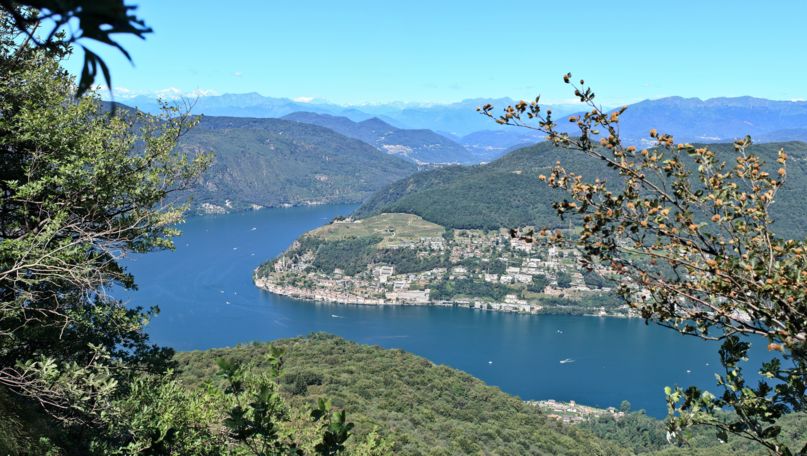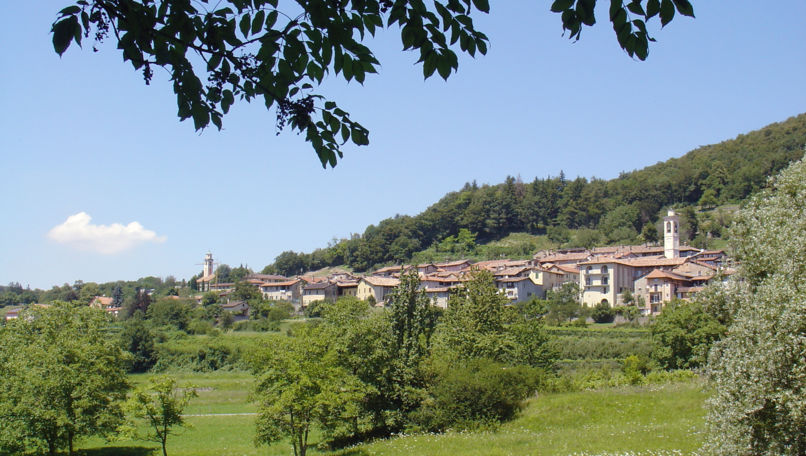
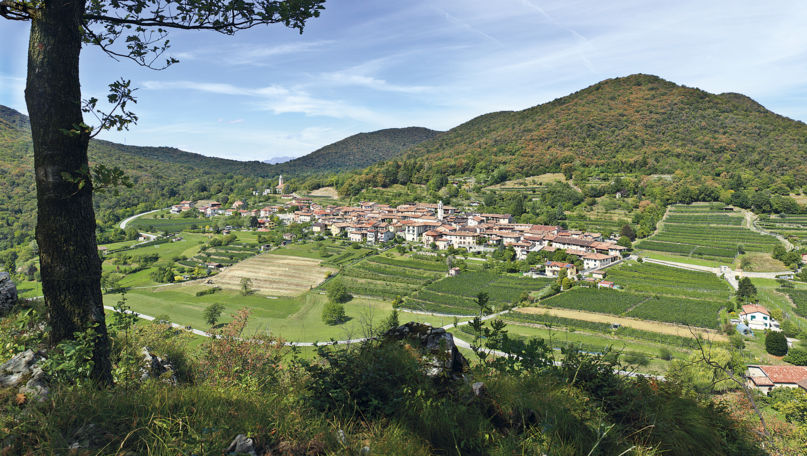
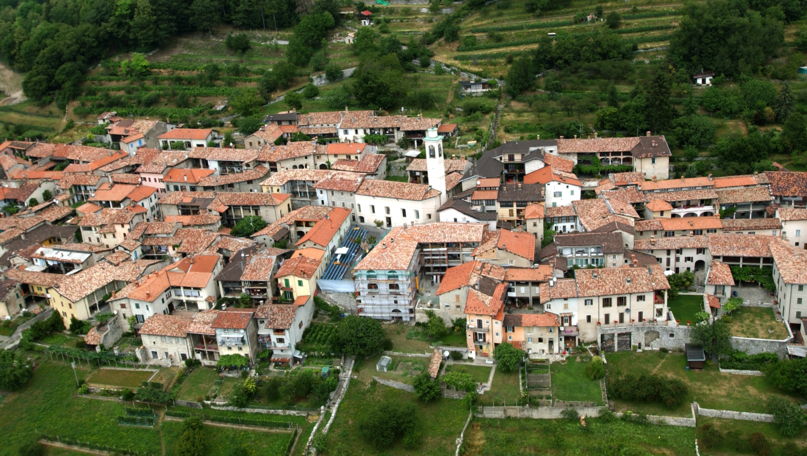
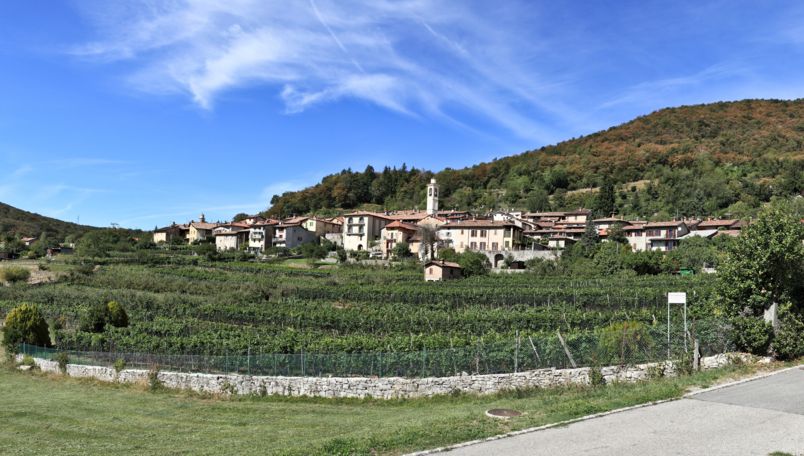
Rolling hills brushed with vineyards and orchards, terracotta rooftops glowing in the afternoon sun -- the Mendrisiotto region carries a gentle echo of Tuscany that catches visitors off guard. At the heart of this landscape lies Meride, the most beautifully preserved village in the area, where compact medieval structures line up along narrow alleys that branch from a single main street. Above the village rises Monte San Giorgio, a UNESCO World Heritage site renowned for fossils over 200 million years old and home to a striking modern museum nestled in Meride's medieval core that presents the paleontological heritage of the region.
The visit
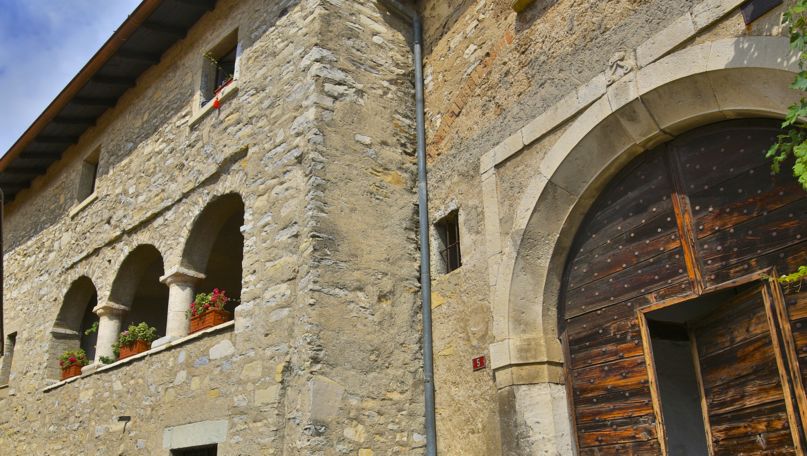
"The village of Meride preserves many traces of a glorious past. Walking along the one main street, you are faced with a harmonious conglomeration of houses, some very old, of regional and national importance. Elegant gates from the 1500s, spacious courtyards and breezy loggias supported by columns made from Saltrio stone, offer a valuable and noble perspective." With these words, inscribed on a large information panel, the commune greets its visitors -- and the reality more than lives up to the promise.
Meride's unexpected grandeur is the legacy of the famous Mastri, generations of master artisans trained by a centuries-old tradition of artistic emigration. It is remarkable that so small a village could produce such a prolific stream of talent: sculptors, painters, and stucco craftsmen who left Mendrisiotto to help shape the face of Europe, presenting their works in Italy, France, Germany, Poland, and as far as Saint Petersburg. They spent summers labouring in great European cities and returned each winter to build their own homes, channelling the skills acquired abroad into the stone and plaster of their native village.
The houses align along a narrow main road -- the backbone of the settlement. Behind the high walls and solid portals facing the street dedicated to Bernhard Peyer (discoverer of the San Giorgio fossils), a hidden world of rooftops, loggias, and courtyards unfolds, once interconnected from within. A web of alleys traces the medieval heart of the historic centre, where the important and modern Museum of Fossils of Monte San Giorgio invites exploration.
Halfway along the main street, a small square opens before the church of San Rocco (17th century), offering a sweeping view across the vast plateau below: broad stretches of vineyards, orchards, gardens, and golden fields of corn and wheat. On a gentle ridge to the west of the village, the graceful little church of San Silvestro (16th century) stands within its small cemetery. Step inside and you are enveloped by frescoes depicting the life of San Silvestro, the work of local painter Francesco Antonio Giorgioli (1655-1725).