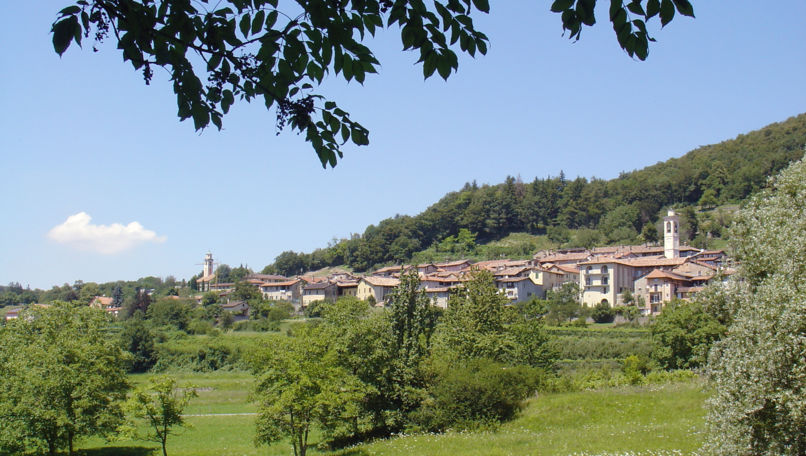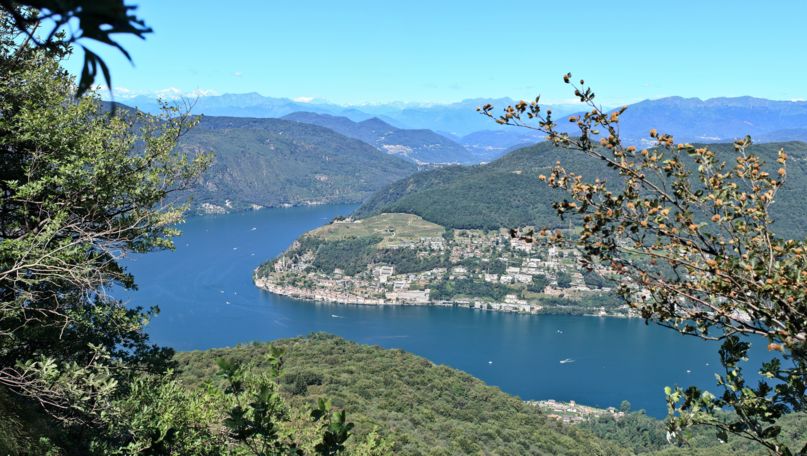
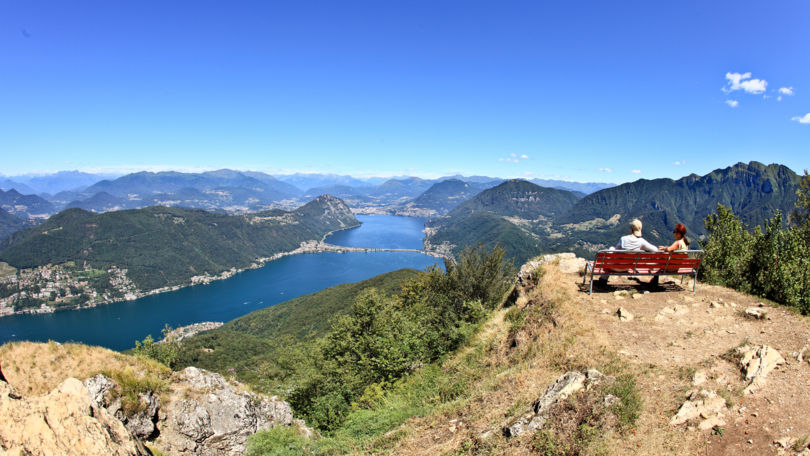
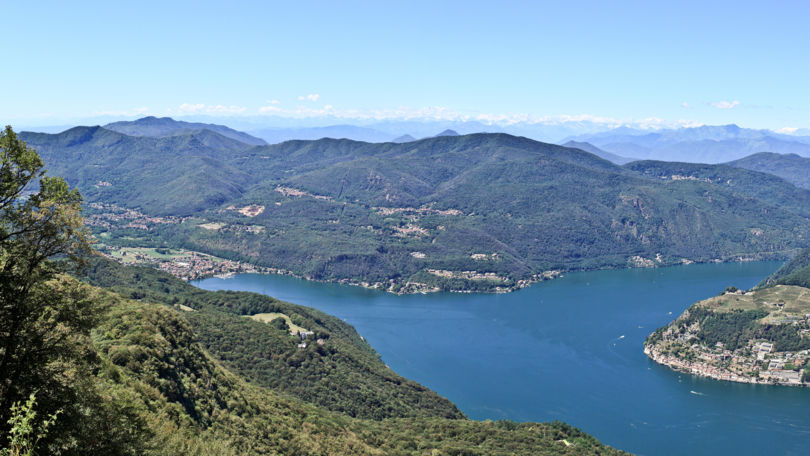
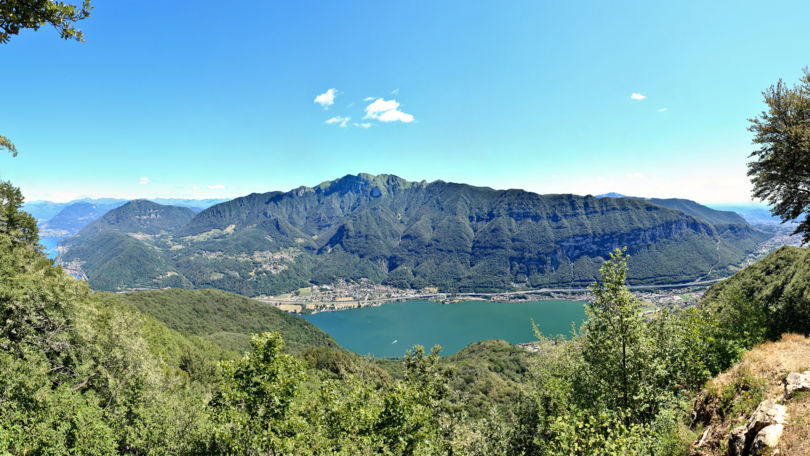
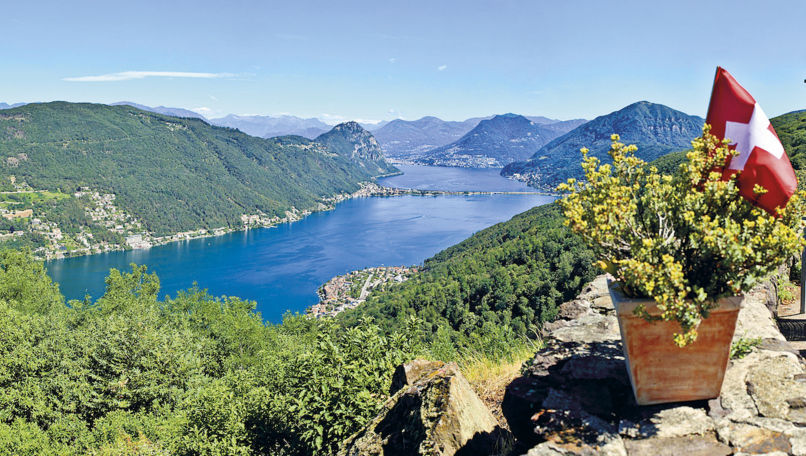
Where sweeping lake views meet a 240-million-year-old story written in stone, Monte San Giorgio is one of Ticino's most extraordinary day trips. Rising to 1,000 m in southern Ticino, this UNESCO World Heritage Site rewards hikers with a magnificent panorama over the shimmering branches of Lake Lugano and the surrounding mountains. But its greatest treasure lies beneath the surface: a fossil record of such richness and scientific importance that it earned the mountain global recognition. The fossils are beautifully displayed at the Museum in Meride, designed by Ticino architect Mario Botta. From Meride, a couple of hours' walk brings you to the summit, and the descent along the western Geo-paleontological path transforms the return journey into a walk through deep time.
Itinerary: Meride - Monte San Giorgio (3.5h, see map)
On a clear day, the Monte San Giorgio excursion is nothing short of magical -- the views from above are matched only by the paleontological wonders at the mountain's base. Fossil enthusiasts can begin or end the day at the museum in Meride, where some of the most remarkable archaeological findings are on display.
Several routes lead to the summit. The most comfortable and direct departs from the church of San Silvestro in Meride -- peek inside if the doors are open, as the interior is well worth a moment's pause. The trail begins as a broad paved mule track, shaded by thick forest that keeps the air cool even on warm days. The path gradually levels out, and in about 45 minutes you reach Cassina, where a chapel and shelter stand in a peaceful clearing.
From the chapel, a trail climbing to the right leads in just a few minutes to the fossil excavation site -- a tangible connection to the ancient creatures that once inhabited this landscape. Return to the chapel and follow the yellow signs for San Giorgio. Another 35 minutes of walking -- with a steeper final push -- brings you to the summit, crowned by a small church. The panorama is spectacular: the shores of Lake Lugano with their Swiss and Italian towns clearly visible, the rolling green of the Malcantone, the distinctive profile of Morcote, the Arbostora, San Salvatore, and the villages of Rovio and Arogno.
For the descent, follow the yellow signs toward Serpiano, Crocifisso, and Meride. This route adds roughly an hour but leads through one of the most fascinating sections of the Geo-paleontological path. Rich with illustrated panels, the trail winds around Monte San Giorgio and onto the Italian-facing slopes. The first panel you encounter, number 9, stands before a mine pierced at the beginning of the 1900s. Its five tunnels, each about 400 metres long, were dug to extract bituminous schist -- a rock transported to Meride and processed to yield oil and therapeutic ointments. These mines proved rich in more than minerals: in 1907, Bernhard Peyer and his assistant discovered they were a treasure trove of fossils. Systematic excavations followed, unearthing complete animal skeletons of such scientific importance that San Giorgio became known as the "Monte dei sauri" -- Dinosaur Mountain. A little further along the trail, you reach Acqua del Ghiffo, where Peyer discovered a large reptile he named Ceresiosaurus calcagnii in 1931.
As you approach Meride, the old factory chimney comes into view -- the place where bituminous schist was once transformed into medicinal oil and ointment. Inaugurated in 1910, the factory operated until 1950. Nearby, another panel introduces the Val Mara, where four different excavation sites yielded fossils of fish, crustaceans, land plants, and -- for the first time -- two insects. From here, Meride is just minutes away. Continue the paleontological journey with a visit to the Museum of Fossils, designed by architect Mario Botta. Through models and multimedia displays, you can immerse yourself in the San Giorgio of 240 million years ago: a warm lagoon teeming with creatures now long extinct.
After the museum, wander through the village's sun-dappled alleyways -- Meride is one of Ticino's most charming settlements. Consider ending the day at Grotto Fossati, where Ticinese culinary specialties are served alongside authentic polenta cooked over an open fire, and a generous wine list showcases the region's excellent oenological heritage.