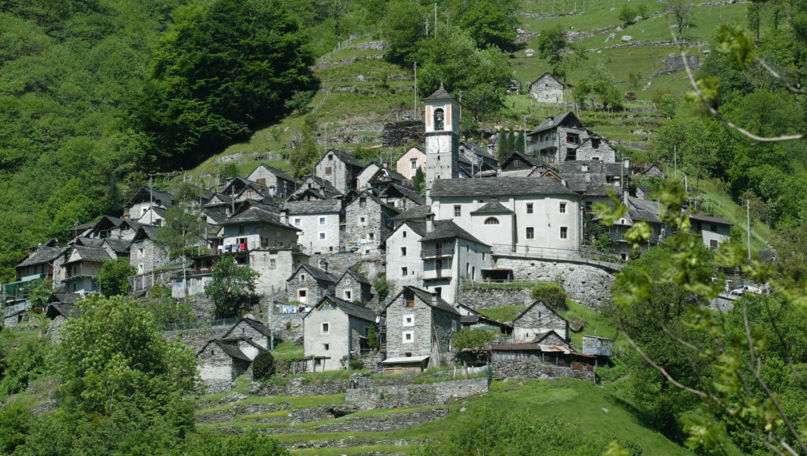
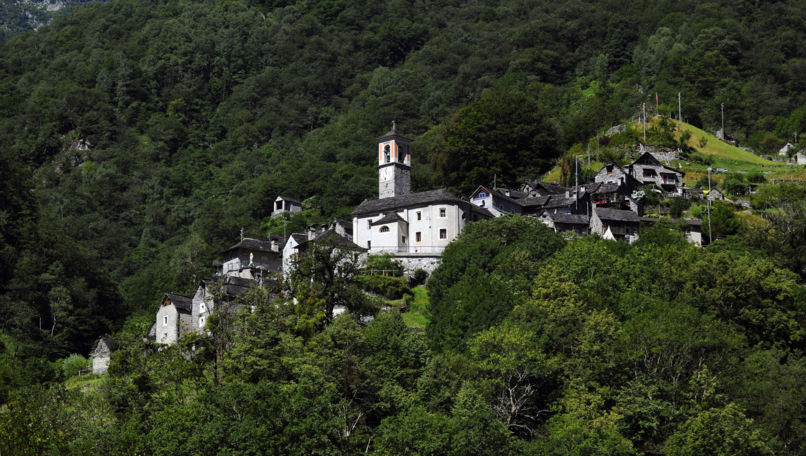
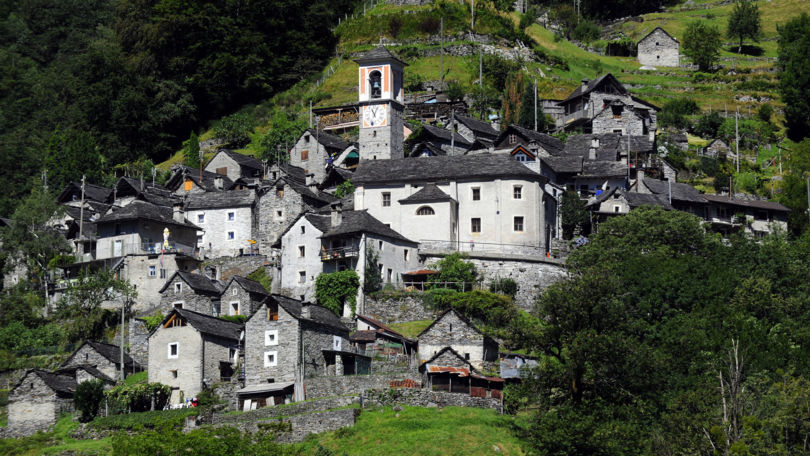
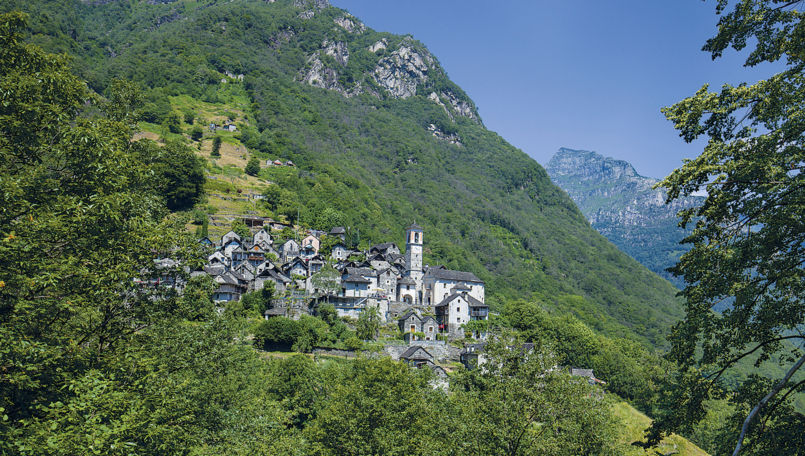
Perched on a steep slope in the Verzasca Valley, Corippo is a place that steals your breath -- first with its beauty, then with its silence. Before the aggregation of the municipalities in the Verzasca Valley, it held the title of Switzerland's smallest village, but its fame extends far beyond that curiosity. This harmonious cluster of stone and slate, surrounded by emerald meadows and dense woods, has preserved its rural character so faithfully that it feels like an open-air museum, drawing visitors from around the world. Since 1975, the village has been protected at the national level for its uniqueness, and a dedicated foundation works tirelessly to safeguard its character.
Located about 15 km from the entrance to the Verzasca Valley, Corippo is reached via a carriage road built at the end of the 19th century that branches off from the main road. Parking is scarce, so arriving at "Bivio di Corippo" by public transport is recommended.
The visit
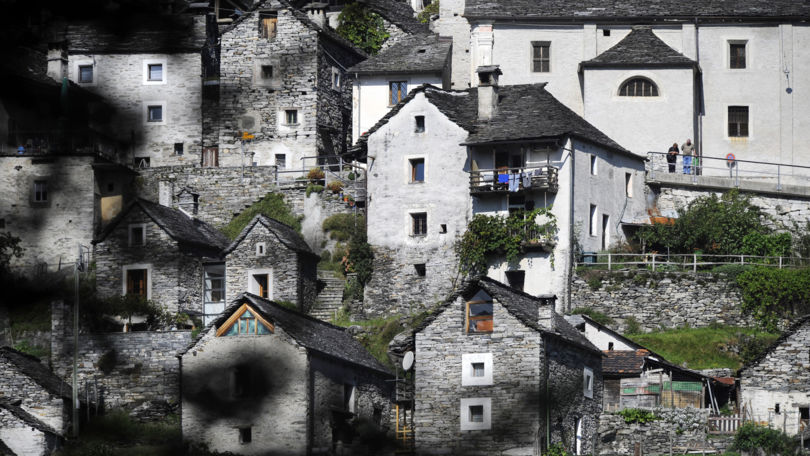
From the small village square, overlooked by the church dedicated to Our Lady of Mount Carmel, narrow lanes thread between rustic stone buildings crowned with stone-slab roofs. Windows are small, bordered with white lime, and the houses press close to one another -- born of the need to preserve every precious metre of land for agriculture and pastoralism.
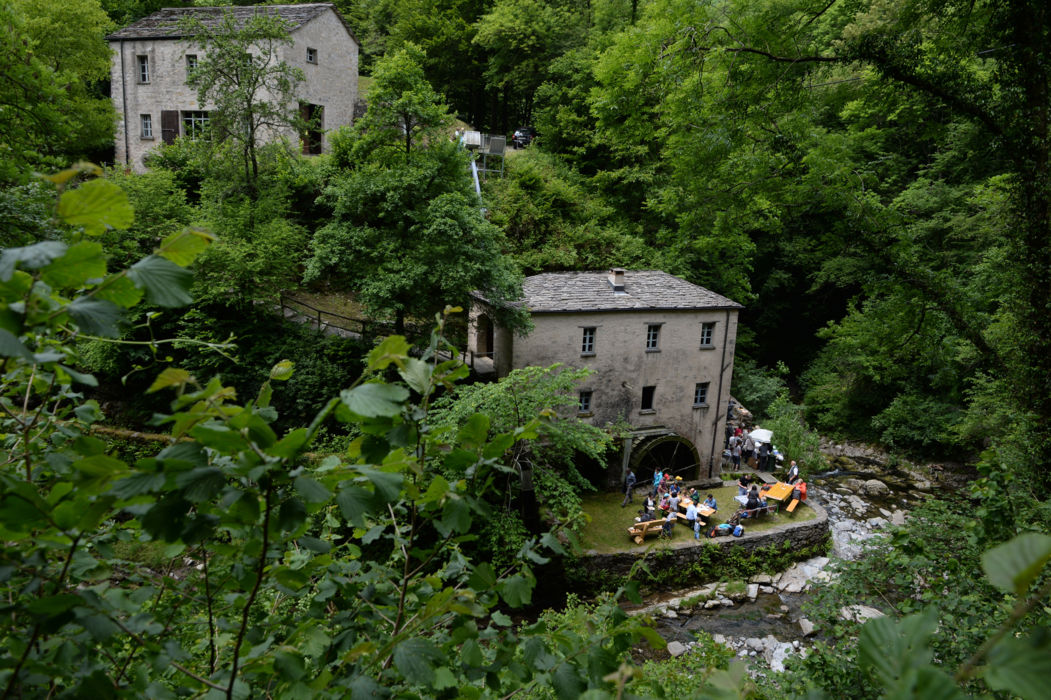
Life here revolved around the earth. Numerous dry stone walls surrounding the village mark the terraces where rye and hemp were once cultivated, and the Corippesi practised transhumance for survival, descending to the Magadino plain in winter -- particularly to Quartino -- where grazing land was more generous. Wander the narrow streets and you will discover devotional wall paintings on building facades. Below the main core, an old mill, a beautiful stone bridge, and a chapel housing a striking Crucifixion reward the curious visitor.
Yet even the most resourceful community cannot hold out forever against scarcity. Emigration -- first seasonal, as chimney sweeps left in winter to ply their trade -- and later permanent, especially overseas to Australia and then America, steadily drained the village. Where nearly 300 inhabitants lived in the 19th century, today only about ten remain year-round.
In 2022, a charming "Albergo diffuso" opened its doors, inviting visitors to sleep in carefully restored rustic buildings and experience firsthand this extraordinary village -- a living symbol of a farming world that has all but vanished.