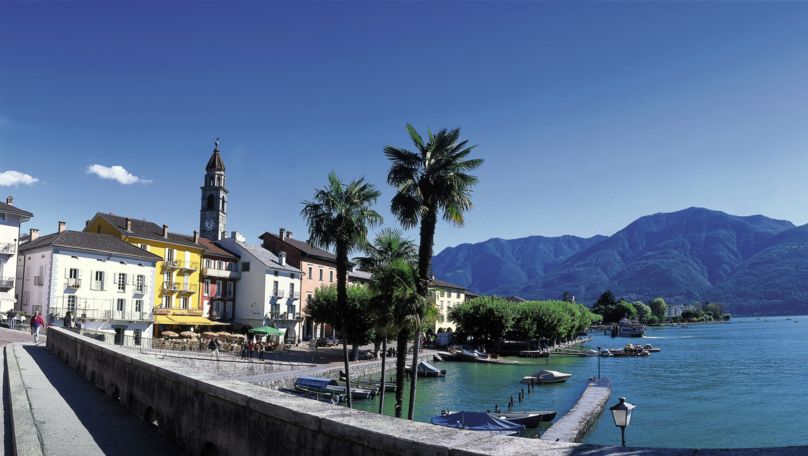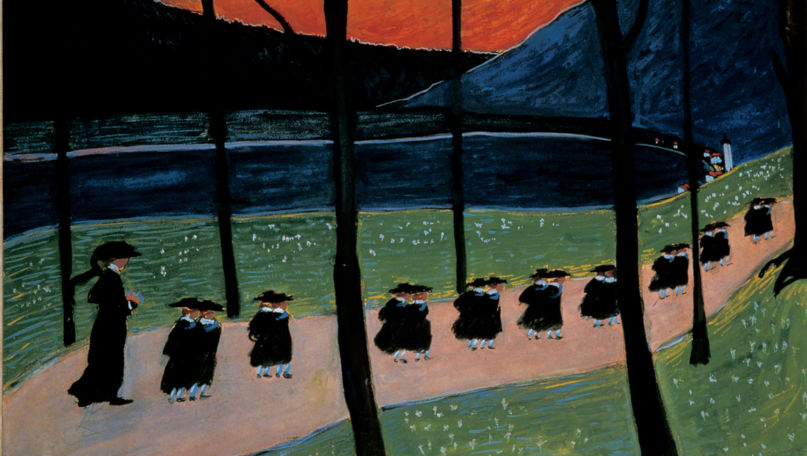
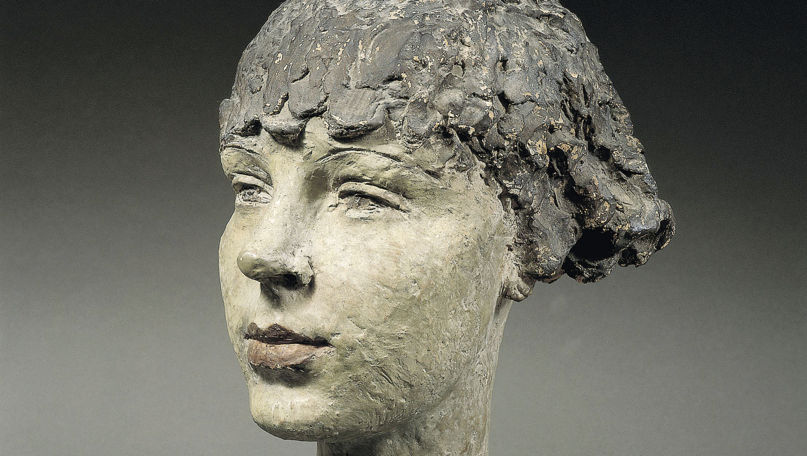
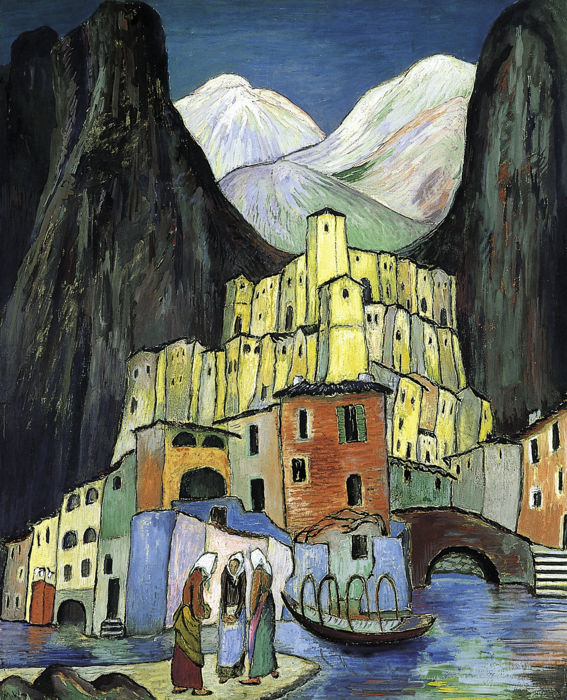
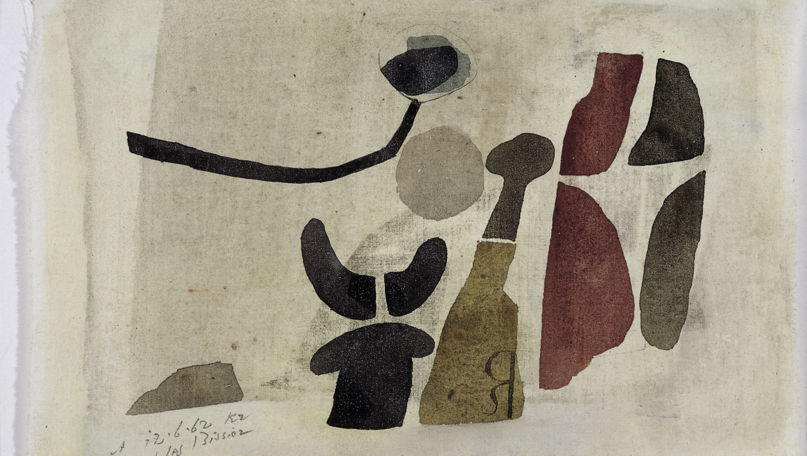
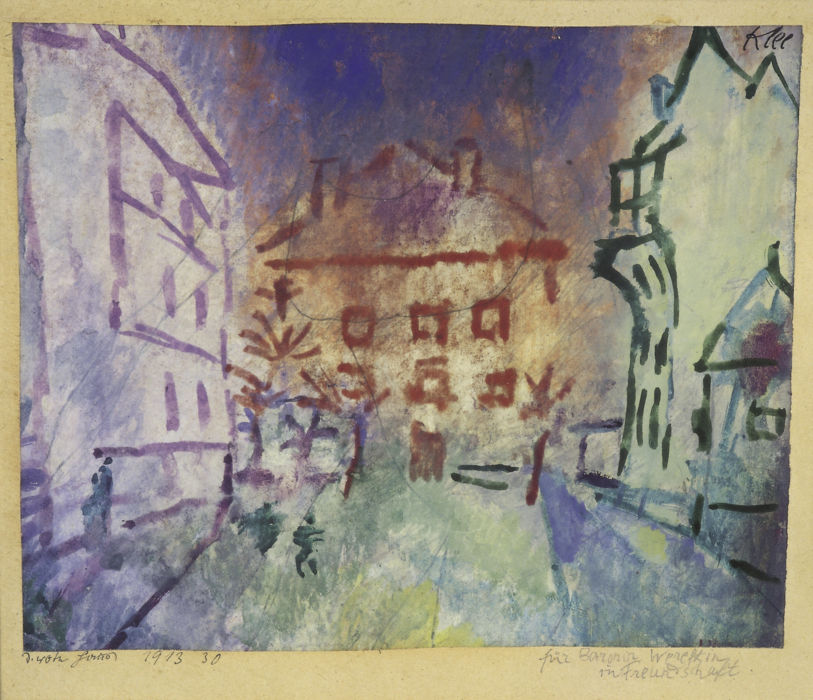
When war ravaged Northern Europe in the early 20th century, a quiet lakeside town in Ticino became an unlikely sanctuary for some of the continent's most daring artistic minds. The Museo Comunale d'Arte Moderna di Ascona (Modern Art Museum of Ascona) celebrates this extraordinary chapter, exhibiting works by the avant-garde artists who fled the horrors of World War I and found refuge on the luminous shores of Lake Maggiore, drawn by the free-spirited reputation of nearby Monte Verita. Spread across two buildings, a magnificent 16th-century palace in the heart of Ascona and the Castello San Materno at the edge of town, the museum is especially renowned for hosting the Collection of the Marianne Werefkin Foundation, honouring the Russian-born painter regarded as one of the most important figures of German Expressionism.
The exhibit in the main building
Founded in the 1920s thanks to the generosity of the artists living in Ascona and their circle of friends, the museum immediately assembled an impressive international collection that mirrors the breadth of Europe's Modern Art movements.
Among the works competitively selected before the museum's inauguration and now forming the core of Ascona's Art Collection are pieces by Russians Marianne Werefkin, Alexej Jawlensky and Robert Genin; Germans Arthur Segal, Walter Helbig, Otto Niemeyer-Holstein, Hans Richter and Julius Bissier; British artist Gordon Mallet McCouch; Dutch artists Cesar Domela and Otto van Rees; Swiss masters Paul Klee, Cuno Amiet, Ernst Frick, Albert Kohler and Ignaz Epper; and Italians Italo Valenti and Marino Marini.
In 1995, the Ascona municipality acquired the Carl Weidemeyer Fund. The German architect and painter settled in Ascona in 1927, bringing a fresh vision of rational architecture to the lakeside town. Among his most notable creations is the Teatro San Materno, designed in 1928 for the internationally celebrated mime dancer Charlotte Bara. Standing opposite the museum's second building, the recently renovated theatre now hosts a rich programme of cultural events.
The museum is particularly celebrated for housing the Collection of the Marianne Werefkin Foundation, dedicated to enhancing the legacy of this exceptional Russian-born artist who arrived in Ticino in 1918. The collection, comprising 90 paintings, 170 sketchbooks, hundreds of drawings and a vast archive of autographed literary documents, represents one of the most significant bodies of work dedicated to Werefkin anywhere in the world.
The Richard and Uli Seewald Foundation, also housed within the museum, gathers works by Richard Seewald, the distinguished artist and professor at the Munich Academy.
Through a dynamic programme of exhibitions, the museum places particular emphasis on valorising its heritage and staging temporary shows devoted to the artists and movements that shaped Ascona's cultural identity. With a strong focus on graphic arts, contemporary artists and collectors, it also serves as an active archive and research centre.
The exhibit at the Castello San Materno
Since 2014, the museum has occupied a second home at the Castello San Materno, located at the entrance to Ascona, where it displays the Collection of the Alten Foundation featuring works by renowned Northern European artists of the 19th and 20th centuries. Historically connected to Ascona's rich cultural milieu, these artists belong to the movements, Impressionism, Post-Impressionism and Expressionism, that bridged two eras and inaugurated the age of Modern Art.
The collection features major names including Lovis Corinth and Max Liebermann, who maintained connections with colleagues from the Worpswede colony, a community opposed to industrialised life and well represented here with works by Hans am Ende, Fritz Overbeck, Friedrich Meckseper, Walter Bertelsmann, Otto Modersohn and Paula Modersohn-Becker. Many of these artists animated Ascona's cultural scene directly or through Monte Verita. A telling thread connects the dancer Charlotte Bachrach (stage name Charlotte Bara), who trained in Worpswede and befriended architect Carl Weidemeyer, designer of her personal theatre in Ascona, the Teatro San Materno. Charlotte arrived south of the Alps and lived until her death in the Castello San Materno, the very building that now houses the Alten Collection.
The collection offers a compelling journey through the history of avant-garde art, with works of exceptional quality. Among them are paintings by German Expressionists from both the "Brucke" of Dresden (Ernst Ludwig Kirchner, Erich Heckel, Max Pechstein, Karl Schmidt-Rottluff, Emil Nolde, Christian Rohlfs) and the "Blaue Reiter" of Munich (Alexey Jawlenskij and Gabriele Munter). Jawlenskij and Munter were connected to the "Ascona experiences" of Marianne Werefkin, founder of the Museo d'Arte Moderna di Ascona and cultural luminary of the town, as well as to the artistic association "Orsa Maggiore", one of the landmark events that established Ascona as a centre for the diffusion of Modern Art in Switzerland.