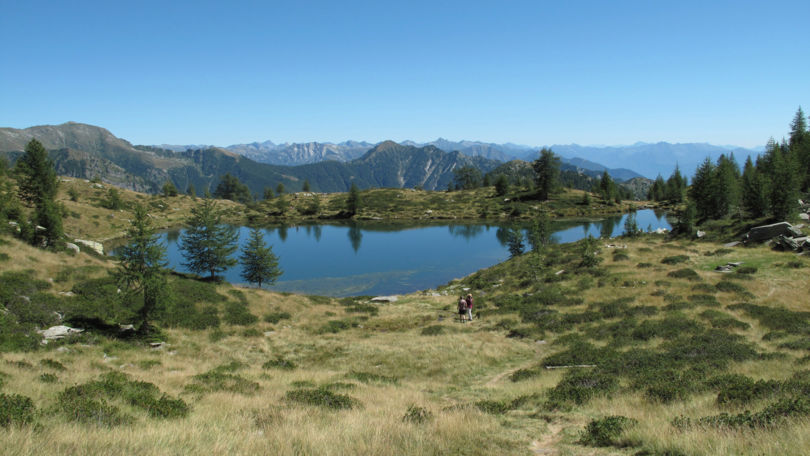
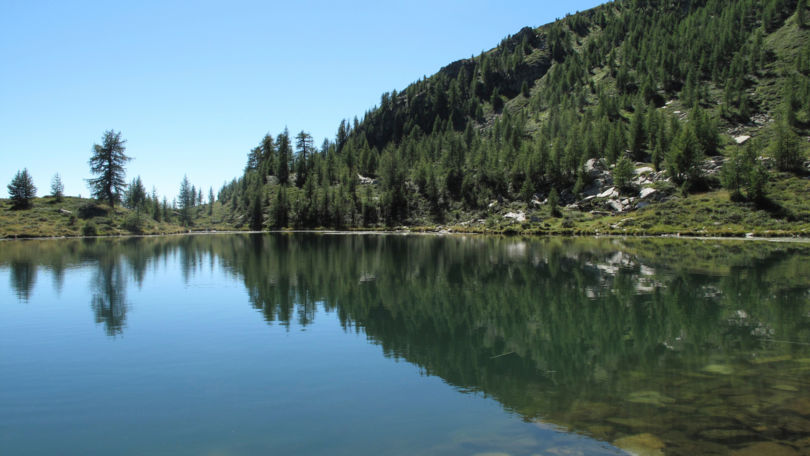
Tucked high above Vergeletto in the wild, green embrace of the Onsernone Valley, a jewel-like alpine lake awaits those willing to wander off the beaten path. The walk to Salei is easy and rewarding, but the real discovery is the valley itself: secretive, deeply forested, and steeped in a creative mystique that has drawn writers and artists for generations. Max Frisch called it the homeland of the soul. One visit, and you will understand why everyone who comes here feels compelled to return.
Itinerary: Salei (2h, see map)
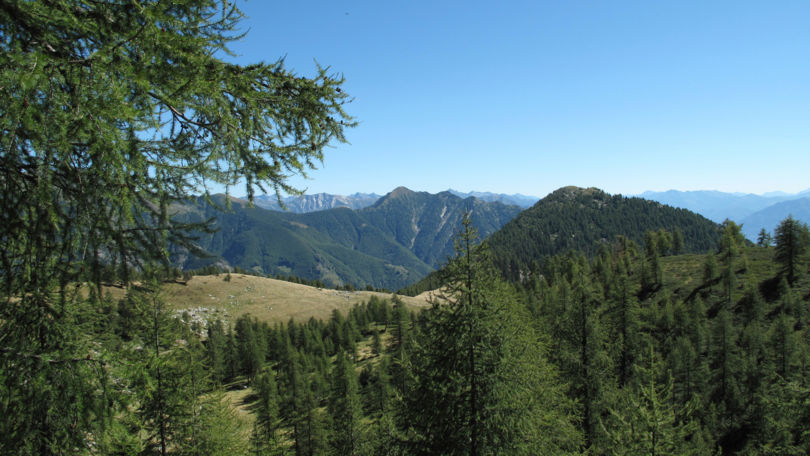
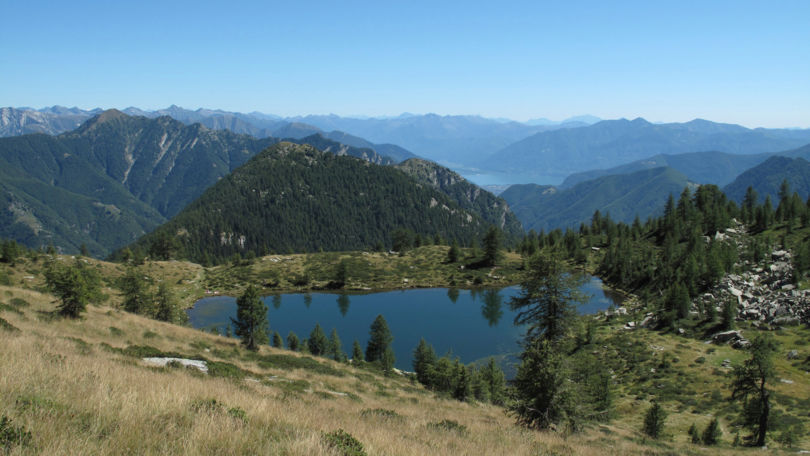
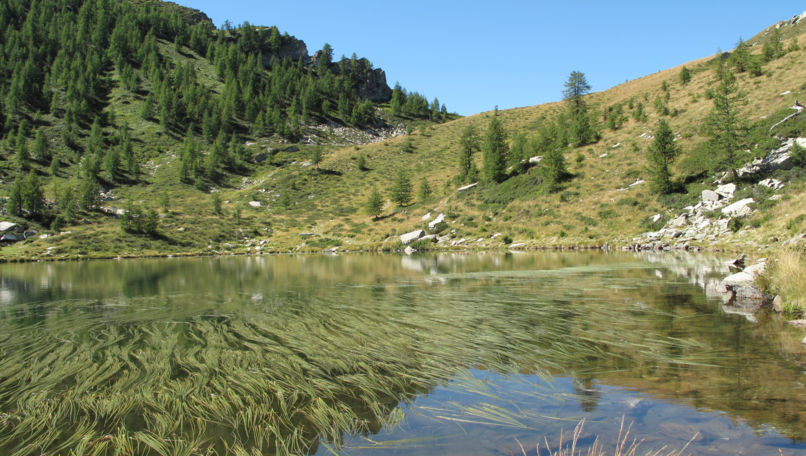
From Vergeletto-Zott, a cableway carries you up to the Salei area, where a namesake pasture and a welcoming cabin offer room and board. An easy 40-minute walk along a gently ascending trail rewards you with sweeping views over the Locarno region, stretching all the way to the glittering surface of Lake Maggiore. At the end of the path lies the little lake, still and luminous, surrounded by soft grass that invites you to spread a blanket and linger. More demanding excursions also depart from Salei, including routes to Pilone and the pastures of Porcaresc and Arena.
The Onsernone Valley
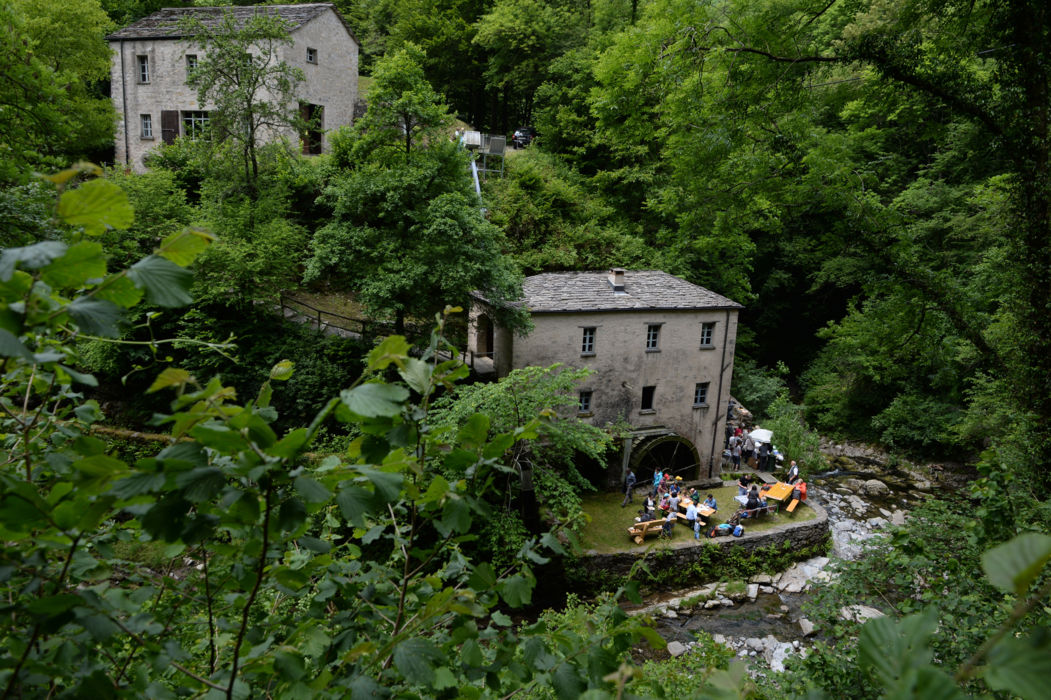
After descending back into the valley by cableway, take time to explore the distinctive character of the Onsernone. In Vergeletto, restored old mills still grind grain to produce "farina bona," a fragrant toasted cornmeal that is one of the valley's culinary treasures. Further along, the village of Comologno reveals a striking juxtaposition of rustic mountain architecture and stately noble homes, the latter built with fortunes earned by a handful of emigrants. The most famous of these is the palace known as La Barca ("The Boat"), which during World War II sheltered exiles and the persecuted, thanks to the courage and generosity of an intellectual couple, Aline Valangin and Wladimir Rosenbaum.
Another treasure is the Gamboni Palace, an elegant 18th-century building now transformed into a small boutique hotel complete with a wellness area and rooms adorned with lovingly preserved and restored period furniture.
A short journey further, just across the Italian border beyond Spruga, lie the Bagni di Craveggia, the evocative ruins of old thermal baths. The stone buildings and bathing tubs still stand, alongside crosses that bear witness to one of the darkest moments of the 20th century: the 1944 battle between Nazi-Fascist forces and the Partisans, which claimed many lives on this very ground.
To delve deeper into the history, art, and craftsmanship of this captivating region, especially the traditional art of straw weaving, a visit to the Onsernone Museum in Loco is well worth your time.