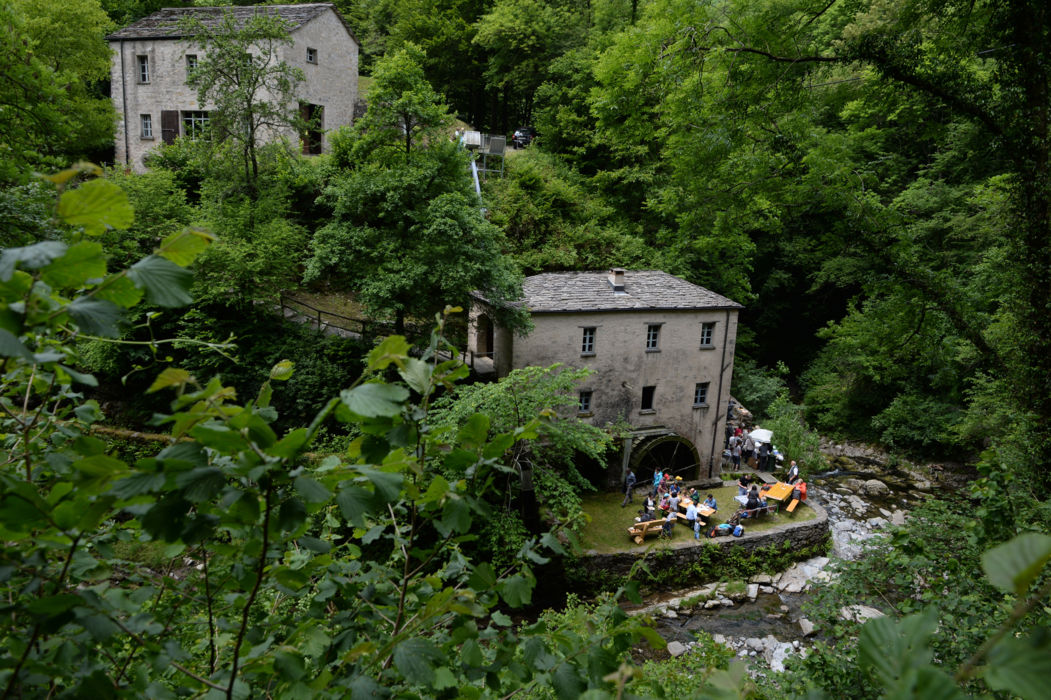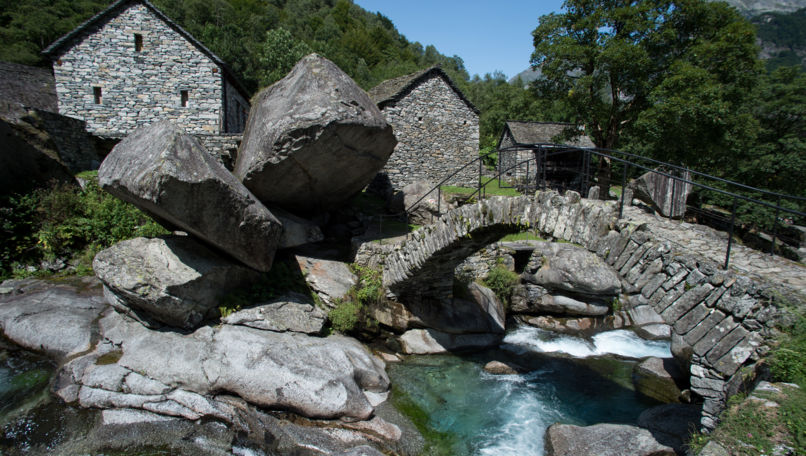
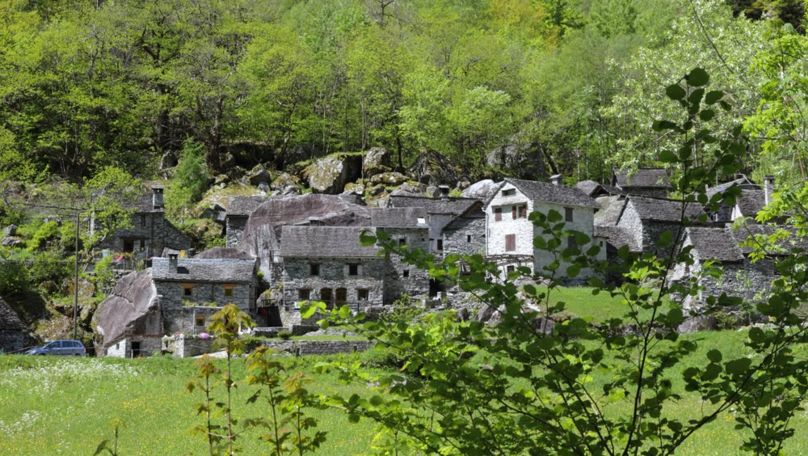
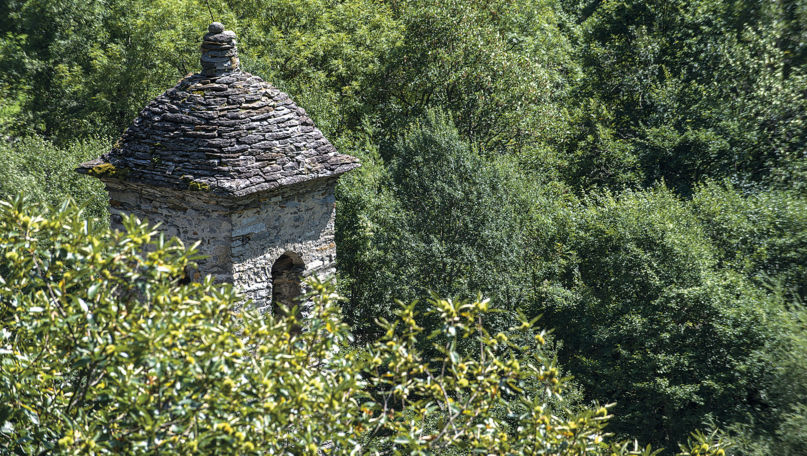
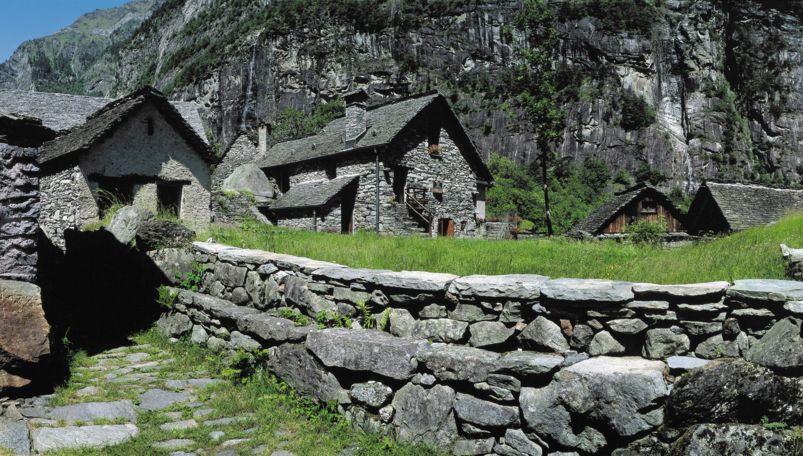
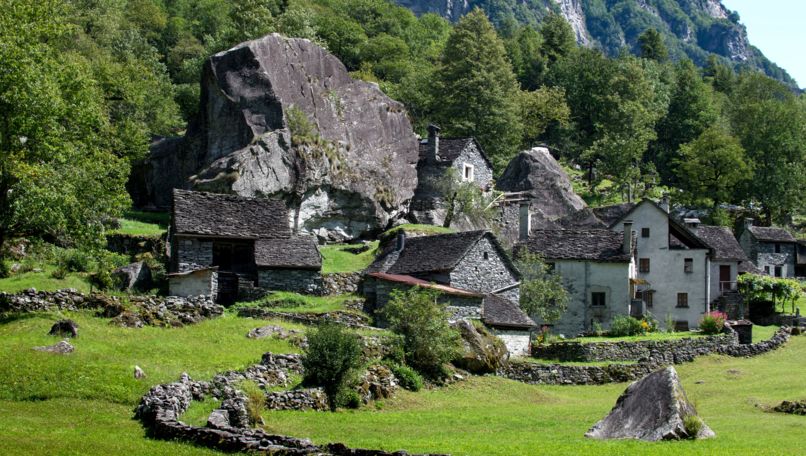
No electricity, no permanent residents in winter, and cliffs so sheer they seem to lean inward overhead: the Bavona Valley is Ticino at its wildest and most primordial. Branching off from the Maggia Valley, this is one of the steepest, rockiest valleys in the entire Alpine arc, yet the ingenious handiwork of generations past has turned even the most hostile boulders into shelters, stables, and astonishing rooftop gardens. A walk through its twelve stone hamlets, from the thundering waterfall at Foroglio to the cableway at San Carlo, reveals a landscape where nature and human resilience exist in extraordinary balance.
Itinerary: Bavona Valley (5h, see map)
The trail can begin in either Bignasco or Cavergno. From the start, evidence of human ingenuity lines the route. The remarkable splui, buildings constructed beneath massive overhanging rocks, demonstrate how inhabitants adapted the most forbidding terrain to their needs, creating shelters, homes, and stables under stone canopies. Equally astonishing is the sight of tiny gardens planted on top of boulders, elevated beyond the reach of the valley's roaming goats.
The path winds through ancient chestnut woods, trees once revered as "the tree of life" for their indispensable role in sustaining the population. In Foroglio, the valley's best-known hamlet, a spectacular waterfall plunges into the gorge beside stone houses with wide arcades and clusters of torbe (granaries) gathered around a small church. Step inside to admire the fine 16th-century altar. The excellent Grotto Froda, run by local intellectual Martino Giovanettina, serves authentic Ticino dishes in one of the most dramatic settings in the canton.
Further along, the hamlet of Sonlerto reveals extraordinary resourcefulness: to avoid encroaching on precious pastureland, its houses were built directly among the colossal boulders of a prehistoric landslide. The graceful oratory of Gannariente, adorned with precious 16th-century frescoes, has been the destination of a traditional procession held the first Sunday of May since time immemorial.
The walk ends in San Carlo, the last village of the Bavona Valley and the departure point for the cableway ascending to Robiei, beneath the Basodino glacier. From San Carlo, a bus returns you to Bignasco or Cavergno.