Where alpine meadows unfurl beneath towering peaks and the air hums with the silence of high altitude, the Lukmanier region stands as one of Ticino's most pristine natural treasures. At the heart of this hiker's paradise, the environmental association Pro Natura has revived a 1980s initiative dedicated to fostering a truly harmonious relationship between people and nature. The Pro Natura Lucomagno Centre, set in a breathtaking mountain landscape, offers accommodation, meals, and a rich cultural programme -- the ideal base from which to explore an outstanding alpine park where rare plants and wildflowers paint the meadows each summer.
The visit
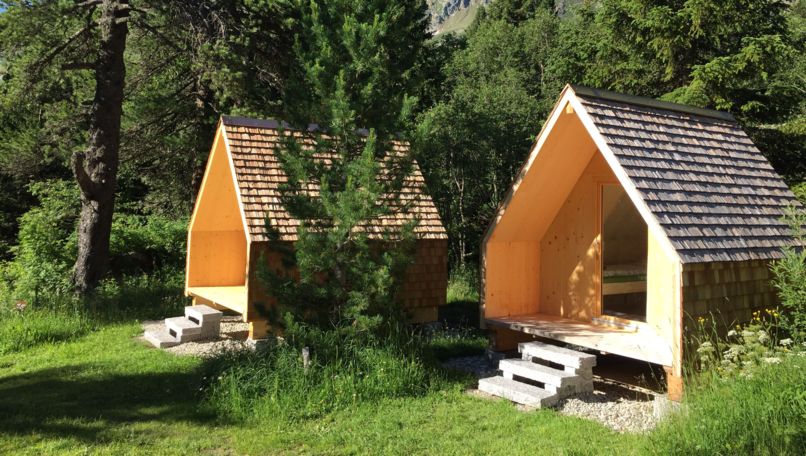
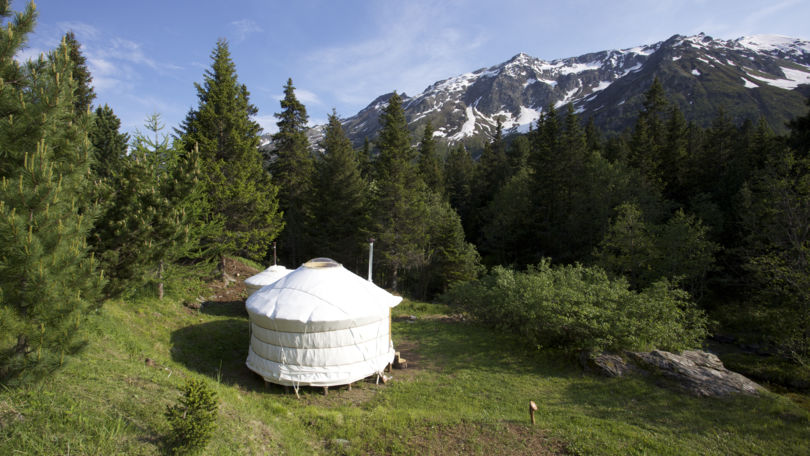
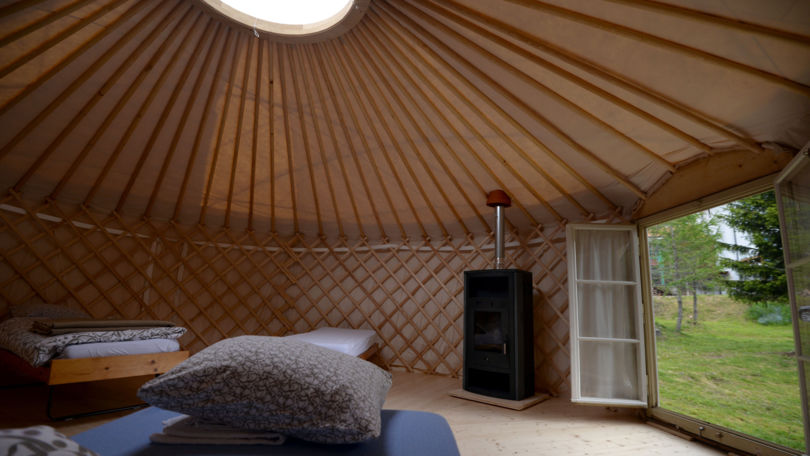
The building itself carries a story. Originally a lodging house for travellers crossing the Lucomagno Pass, it was transformed into a hotel in the 1950s following a design by Rino Tami, the father of Ticino's modern architecture. Today it houses seven comfortable rooms, two dormitories, and a camping ground with three yurts -- Mongolian-style tents from which guests can gaze up at the stars on clear alpine nights. A restaurant serves local products, including the excellent alpine Lucomagno cheeses that have been made in these pastures for centuries.
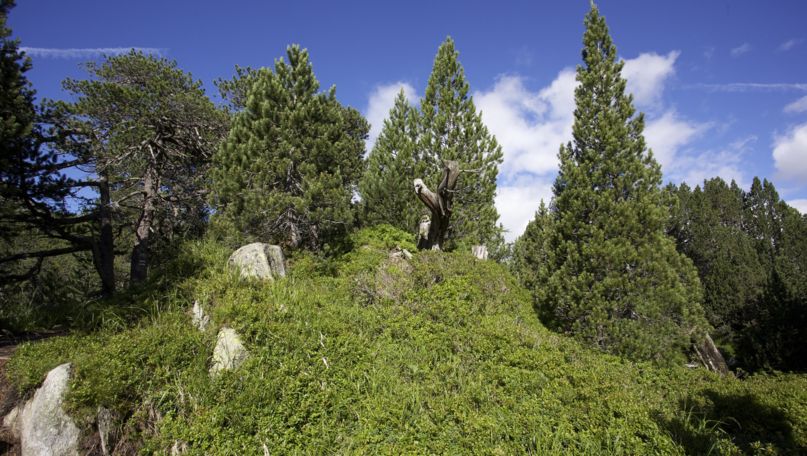
The Centre's true value, however, lies beyond its walls. The Lucomagno -- from the Latin Lucus Magnus, meaning "great sacred forest" -- is a place where human labour and wild nature have shaped one another over millennia. Centuries of alpine farming replaced dense forest with fields and pastures to sustain livestock, creating the open, flower-rich landscapes that visitors marvel at today. Behind the hotel, the cantonal forestry reserve of Selvasecca shelters a significant population of Swiss stone pine. All the information needed to discover the region is available at the Pro Natura Centre, which also organises a rich programme of guided tours and cultural events.
If you have more time... Itinerary: Acquacalda - Dotra (2.5h, see map)
Among the many walks accessible to all in the Lucomagno region, the path to Dotra stands out for its effortless beauty. This gentle route leads through meadows that burst into bloom each summer, enveloped in a kaleidoscope of wildflower colour -- a spectacle that has earned the area a place in the Federal Inventory of Landscapes and Natural Monuments worthy of protection.
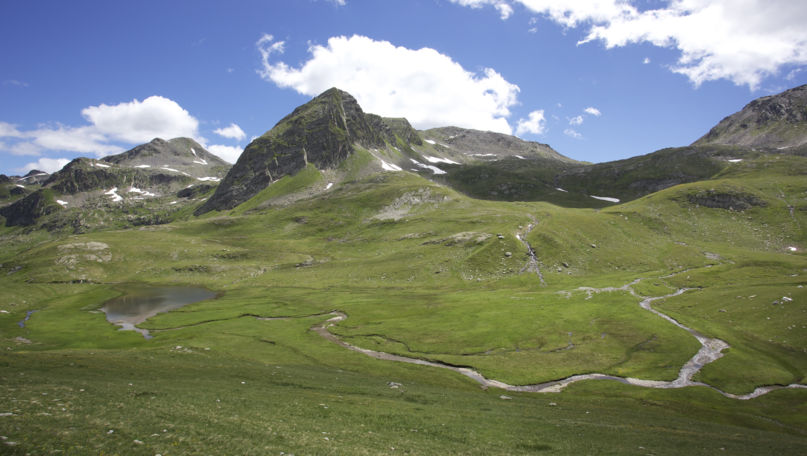
The itinerary begins in Acquacalda, where the Pro Natura Centre is located, at approximately 1,750 metres. The path winds through pine forests and quickly reaches the Croce Portera plain (1,917 metres), where a large cross invites a moment of quiet reflection. From here, a delightful trail through flowering meadows leads to the settlement of Dotra. Daisies, lilies, gentians, arnica, buttercups, wild orchids, anemones, and countless other species compose unforgettable sceneries, particularly between June and July. The area is also alive with butterflies, other insects, and around fifty species of nesting birds. The landscape is majestic -- high mountain peaks, flowered basins, and pale rocks emerging from luminous green surroundings.
Alongside the celebrated "prati magri" (lean meadows) -- where nutrient-poor soil paradoxically supports extraordinary plant diversity -- the region also harbours wetlands of great ecological interest. In Dotra, an alpine cabin is open year-round and serves as a launching point for more demanding excursions. A grotto nearby offers traditional dishes. The trail continues towards Anveda, a tiny cluster of houses perched in a panoramic setting.
The return can follow the same path, or from Dotra you can take an alternative trail that climbs higher before looping back to Croce Portera and descending to the starting point.
The Blenio Valley
This excursion provides the perfect occasion to explore the beautiful Blenio Valley, affectionately nicknamed "Valle del Sole" (Valley of the Sun). For the best experience, climb the valley along the road on the left bank of the river Brenno and descend along the right bank.
On the way up, the 15th-century House of the Landfogti in Lottigna deserves a stop. This striking building houses the History Museum of the Blenio Valley, its facade displaying the coats of arms of the families that governed the valley in centuries past. The road continues through picturesque, postcard-perfect villages -- Aquila among them -- before reaching Olivone, home to the valley's ethnographic museum, housed in the elegant 16th-century Ca' da Rivoi.
Descending along the right bank, watch for the ruins of the Serravalle castle in Semione, built in the 12th century by Bleniese noblemen to control passage over the Lucomagno. The castle was destroyed in 1402. Throughout the valley, you will notice numerous noble houses from different epochs, built by Bleniese emigrants who made their fortunes abroad as chocolate makers, ice-cream makers, restaurateurs, and chestnut sellers -- a testament to the valley's long tradition of enterprise and ingenuity.