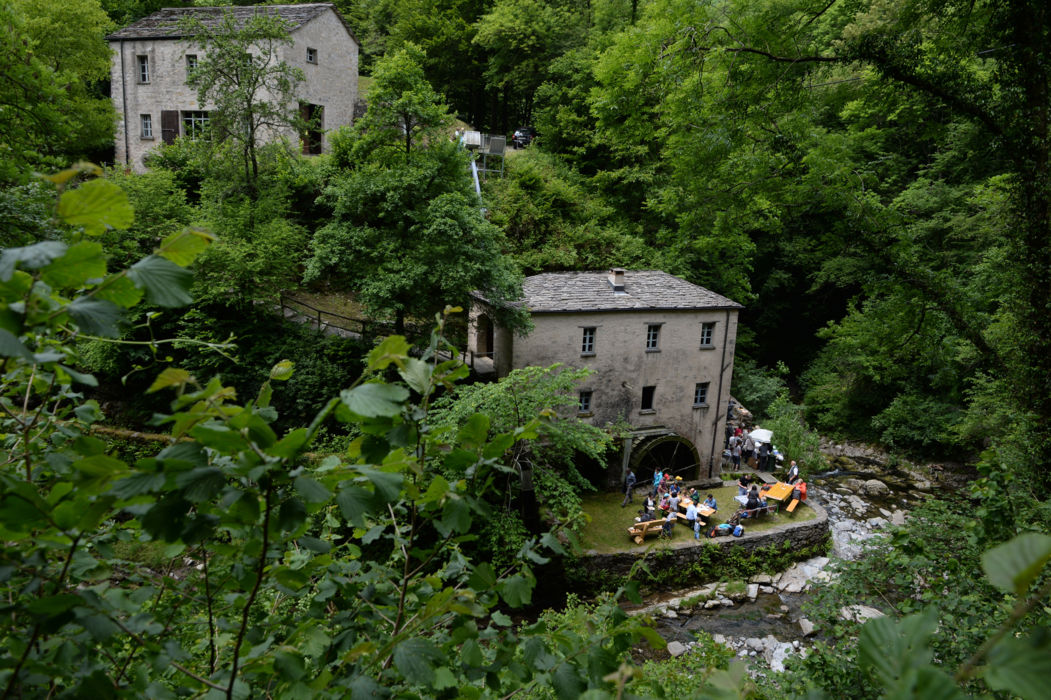
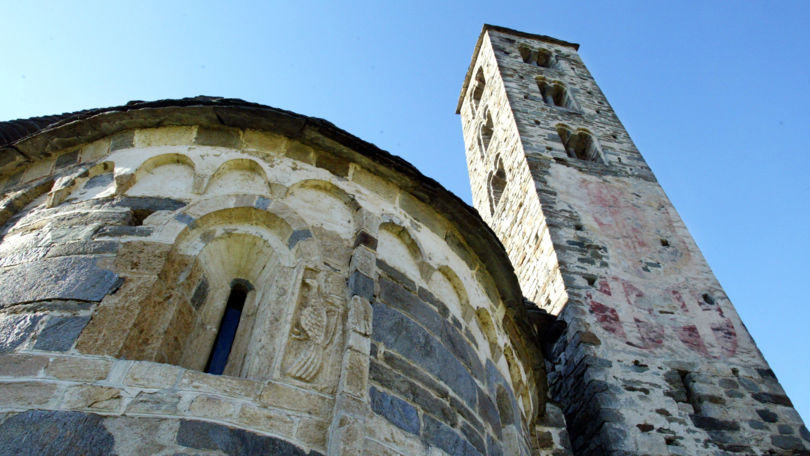
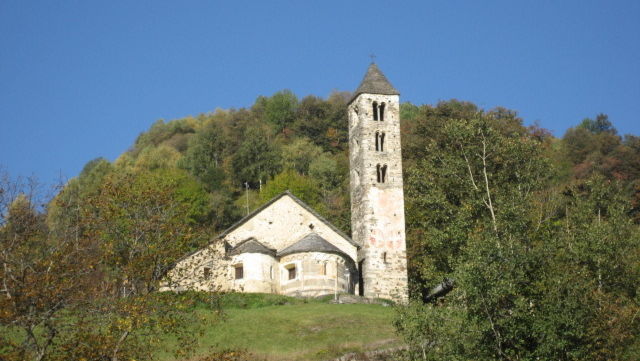
Perched on a sunlit hillside at 850 metres, surrounded by open meadows that fall away to a breathtaking panorama, the church of Negrentino is one of Ticino's most extraordinary sacred places. Originally dedicated to S. Ambrogio Vecchio (today S. Carlo), it stands in splendid isolation at the edge of a cliff, its Romanesque silhouette and Lombard architecture radiating a timeless serenity that few other buildings in the region can match. The blissful setting, the elegance of the stonework, and the richness of the painted interiors combine to make Negrentino utterly unique. A visit here also offers a wonderful introduction to the Blenio Valley, affectionately nicknamed the valle del sole (Valley of the Sun).
The visit
The graceful church is accessible on foot in a few minutes from Leontica, via a modern gangway installed to ease access to this important monument. Keys are available at the restaurants in the village of Acquarossa.
Built in the 11th century and first documented in 1224, the church sits on the ancient transit route of the Nara Pass, which once connected the Blenio and Leventina valleys. The bell tower, standing apart from the main body, likely dates from the following century.
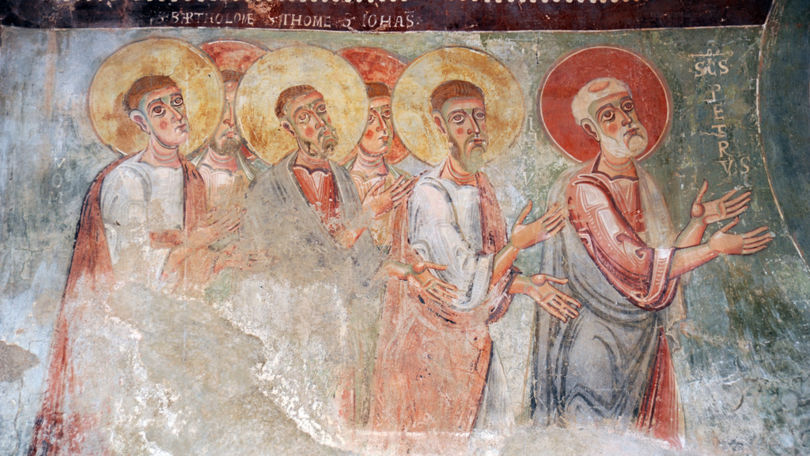
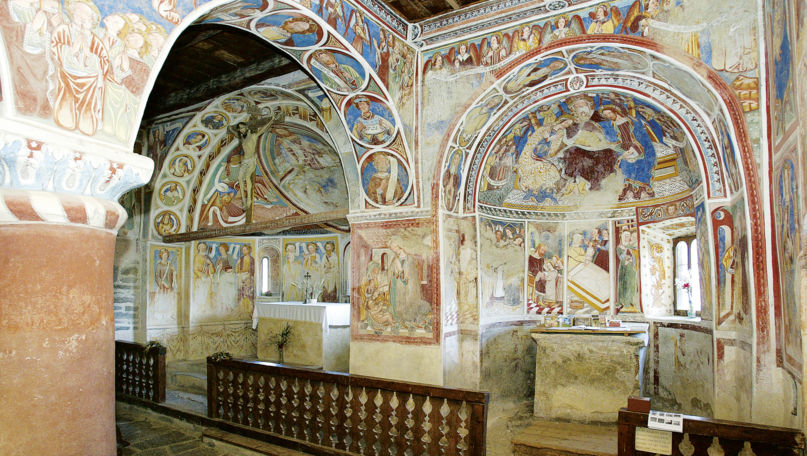
Inside, painted decorations cover most of the walls and belong to three distinct periods. The extraordinary fresco on the counter-facade of the main apse is believed to be original to the church: at its centre, Christ appears within a series of concentric circles symbolising the universe, receiving a crown of thorns. Behind him stand the instruments of the Passion -- spear and stick -- with the Apostles on either side. Above, a Greek fret is interrupted by two lambs and a marine animal; below, a tendril unfurls. This singular composition has been interpreted variously as the Resurrection, the Ascension, or the Last Judgement. The colour palette is restrained and luminous, with prevailing tones of aqua, ochre, and brick red. Widely considered an outstanding work with clear Byzantine influence, the fresco's exact date remains uncertain (1010-1100), yet it ranks among the most ancient in Ticino and continues to draw researchers of the great Romanesque paintings of Northern Italy.
The other paintings in the oldest part of the church are the work of the Seregnesi, fresco painters active in Ticino and the Grisons from the mid-1400s. In the main apse they depict the classic themes of medieval churches: Christ in vesica piscis, the Four Evangelists, and the Apostles. In the lower register, painted curtains conceal the original decoration, from which an emerging dragon's head still peers out. On either side stand Santo Stefano and Santa Caterina, while below the arch the King and the Prophets appear, and in the triumphal arch, the Annunciation. Votive paintings decorate the northern walls, including Sant'Ambrogio, a Virgin Mary enthroned, a second Virgin Mary between Saint Anthony the Abbot and San Bernardino, and a Crucifixion.
A third prolific workshop also left its mark at Negrentino: around 1510, Antonio da Tradate and his assistants frescoed the minor apse and the walls of the second aisle. The central thread of the apse paintings is the Life of the Virgin, unfolding around a central fresco of "Mary's Coronation." In the dividing arches, the "Assumption of the Virgin" is attended by Apostles and musician angels, while Prophets and Saint Anthony the Abbot appear beneath the arches.
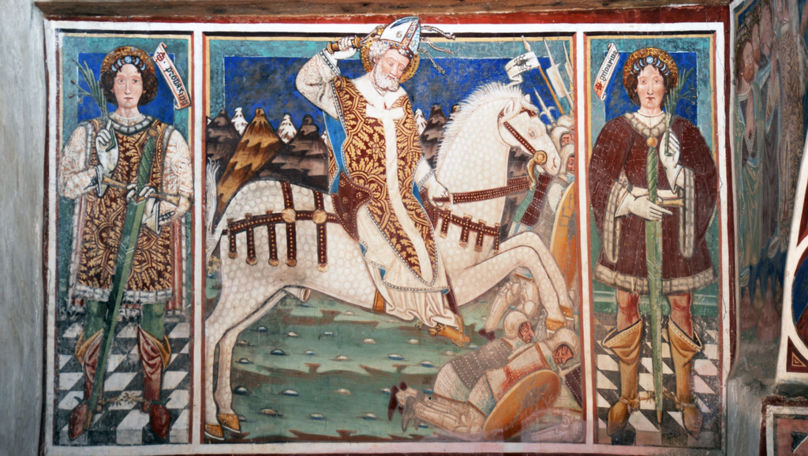
On the counter-facade, a vivid scene depicts the Miracle of Parabiago: Sant'Ambrogio on horseback appears to the Milanese during the battle of 1339 to rally their cause. Flanking the scene are Saints Gervasio and Protasio, two martyr brothers from the earliest centuries of Christianity. Further votive paintings can be admired along the southern wall.