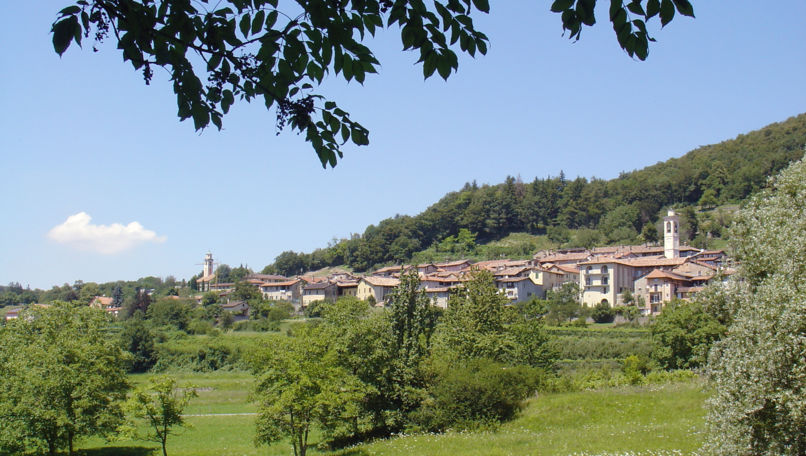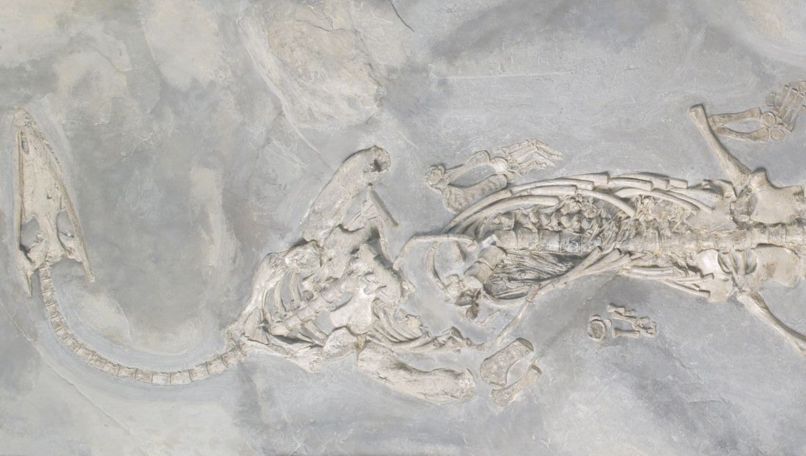
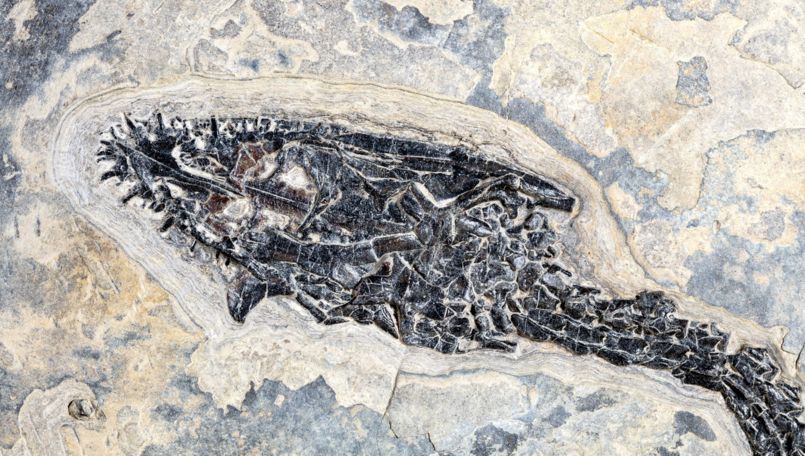
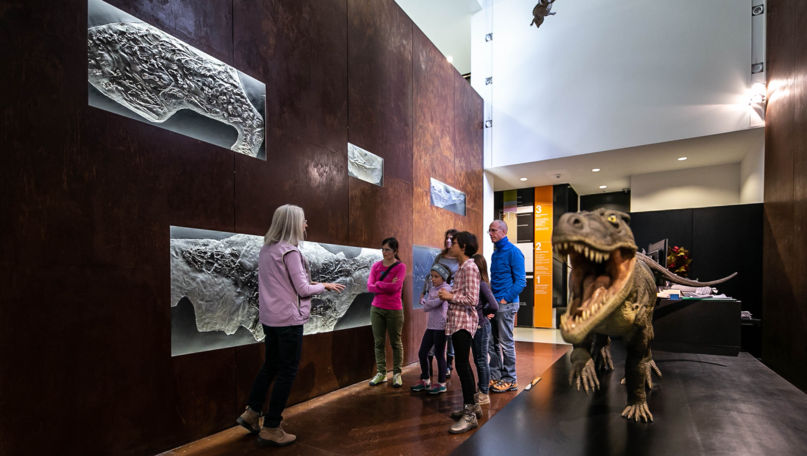
Where Ticino's gentle hills now rise beneath Mediterranean skies, a warm tropical sea once teemed with life over 200 million years ago. The Museum of Fossils of Monte San Giorgio invites you to discover that vanished world, presenting the extraordinary paleontological heritage of a site recognized as a UNESCO World Heritage Site and considered one of the most important fossil deposits on Earth. Renowned for their astonishing variety and exceptional state of preservation, the fossils of Monte San Giorgio come alive here through immersive multimedia technologies that make the complex world of the Triassic accessible to visitors of all ages and backgrounds.
The visit
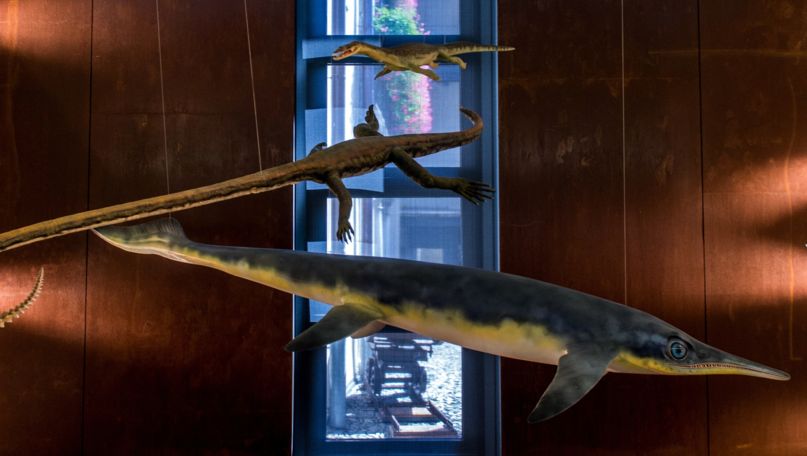
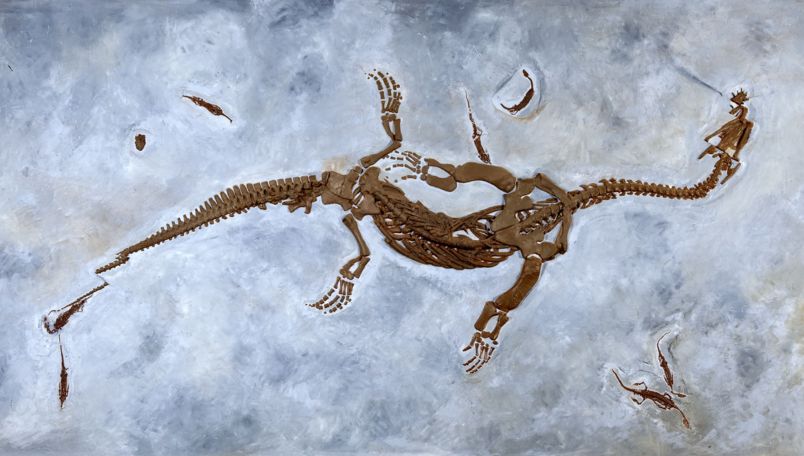
Beautifully preserved animal and plant fossils greet you at every turn, accompanied by clear explanations reflecting the latest scientific knowledge, along with three-dimensional models and vivid graphic reconstructions of the ancient marine environment. During the Middle Triassic (247-236 million years ago), Monte San Giorgio was not the wooded mountain we see today but the floor of a shallow tropical sea. Small islands and sand banks separated the coastline from open waters, creating a lagoon rich with life. What makes this site truly exceptional is its five distinct fossil levels, each containing multiple fossil associations. Unlike most world-famous deposits that preserve a single geological moment, Monte San Giorgio allows scientists to trace the evolution of entire groups of organisms across millions of years within the same environment. More than 20,000 fossils have been extracted from these layers, representing 25 species of reptiles, 50 species of fish, over 100 invertebrates, and numerous plant species, particularly conifers.
The exhibition follows the stratigraphic succession of the mountain itself. The first floor displays the most ancient fossils, the second floor presents more recent specimens, and the third floor features rocks and fossils from the Jurassic period, originating from the neighbouring marble quarry of Arzo and some 50-60 million years younger than the collections below. The journey concludes with the fascinating history of paleontological excavations here, which began in the mid-19th century. Augmented reality (AR) and virtual reality (VR) animations bring long-vanished creatures back to startling life before your eyes.
Housed in a striking building designed by Ticino architect Mario Botta, the museum offers multimedia audio guides, interactive touch screens with animations tracing the evolution of reptiles, fish and the transformation of seabed into mountain, and a detailed scale model of Monte San Giorgio onto which visitors can project layers of information at their command. A rich programme of conferences and guided tours rounds out the experience, and trained guides are available on request to lead explorations both inside the museum and out across the territory itself.