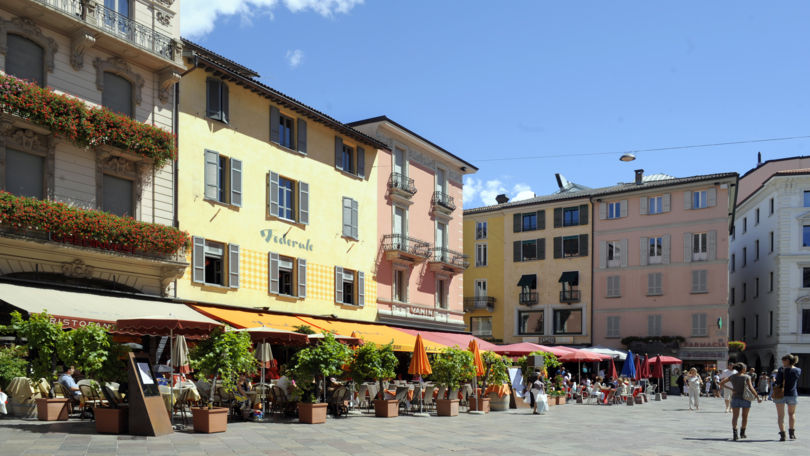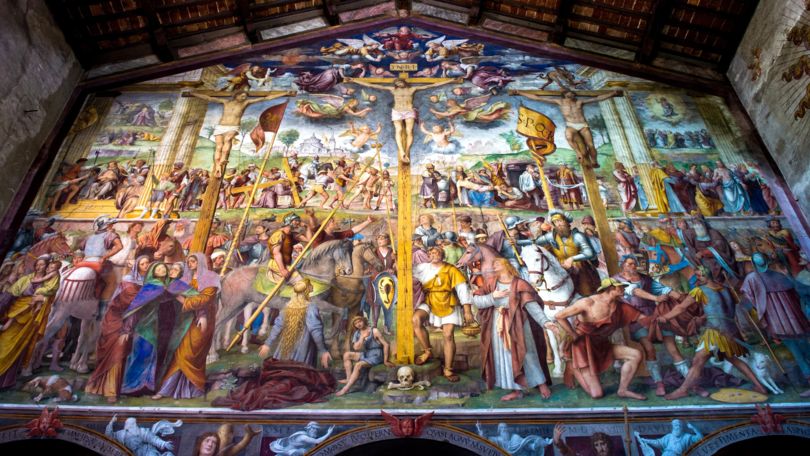
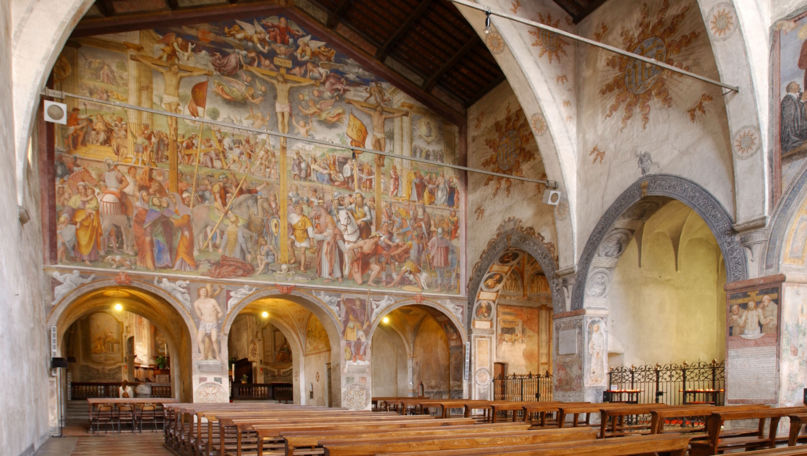
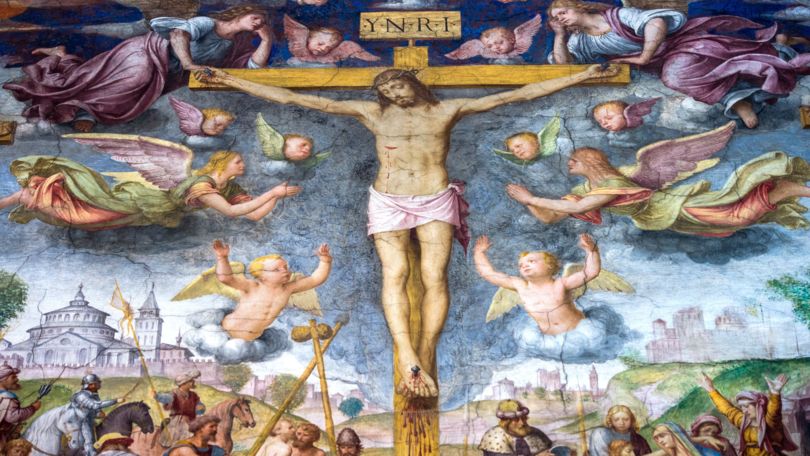
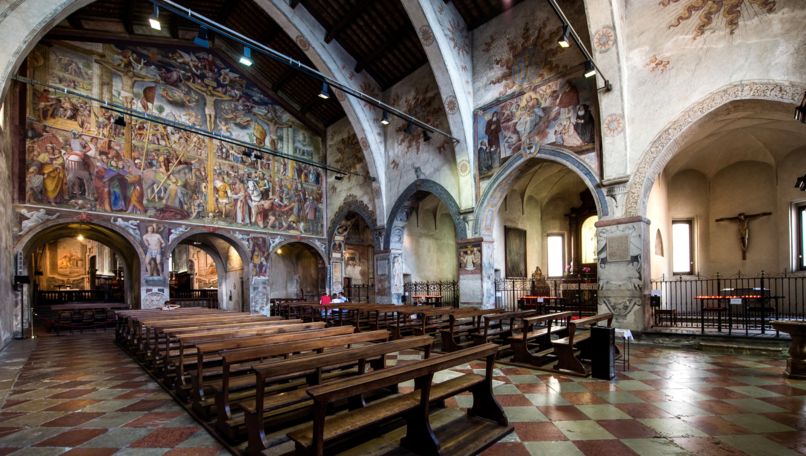
Standing on Lugano's lakeside promenade with sunlight dancing on the water beyond its sober facade, the church of Santa Maria degli Angioli holds a secret that takes your breath away the moment you step inside. Here, covering an entire wall, unfolds what is widely regarded as the most famous early Renaissance fresco in Switzerland: a monumental portrayal of the Passion and Crucifixion of Christ by Italian artist Bernardino Luini (1480-1532), a disciple of Leonardo da Vinci. With more than 150 figures -- soldiers on horseback, anguished onlookers, saints in prayer -- the scene pulses with a dramatic energy that has captivated visitors for over five centuries. A visit pairs perfectly with a stroll through Lugano's historic centre.
Built between 1499 and 1500, the church was originally part of the monastery of the Order of Franciscan Friars (Friars Minor), founded in 1490, which from 1602 became the Order of Reformed Friars Minor of the province of Milan. While its restrained lakefront facade may appear modest beside the Cathedral of San Lorenzo, the treasure within is anything but -- the fresco of the "Passion and Crucifixion" by Bernardino Luini, who began his career at the Abbey of Chiaravalle, stands among the great masterpieces of the early Renaissance.
The visit
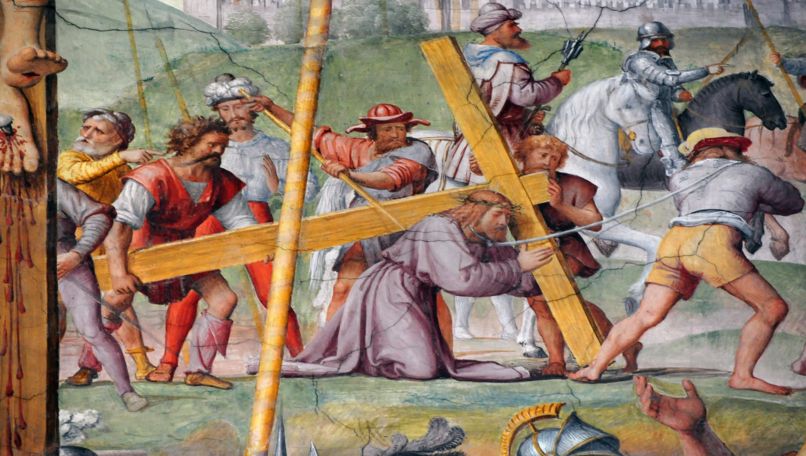
On entering, your gaze is immediately drawn to the vast wall dominated by the crosses of Christ and the two thieves. The "Guida d'arte della Svizzera italiana" (Guide to Italian Swiss art) by the Society for the Art History of Switzerland describes the scene with precision: "at the foot of the Cross, Saint John and the kneeling Mary Magdalene; to the left, a group of pious women comfort the Virgin; on the opposite side of the cross, Roman soldiers throw the dice for the garments of Christ; all around, soldiers on horseback and a large, excited crowd of people. Two loggias on columns are painted in the background depicting episodes of the Meeting with doubting Thomas and the Derision; among these, Christ Carrying the Cross and the Lamentation of the dead. In the background: on the left, Prayer in the Olive Garden; at the centre, a landscape and, on the right, the Ascension."
What makes this monumental fresco so extraordinary is its sheer vitality. Rather than a static depiction of three crosses, it teems with 153 figures -- horses wheeling, crowds surging, grief and spectacle interwoven across the wall. In the upper register, the Meeting with doubting Thomas and the Derision unfold, while the lower portion is adorned with saints. The centre vault features Saint Rocco and Saint Sebastian, and the prophets gaze down from above the arcade.
The church holds two further works by Luini: the Last Supper on the left wall of the nave (originally in the old refectory of the monastery) and a tender fresco of the Madonna and Child with Saint Giovannino in the first side chapel. Also deserving of attention is a portrayal of Saint Francis painted in 1728 by Giuseppe Antonio Petrini, displayed in the second chapel.