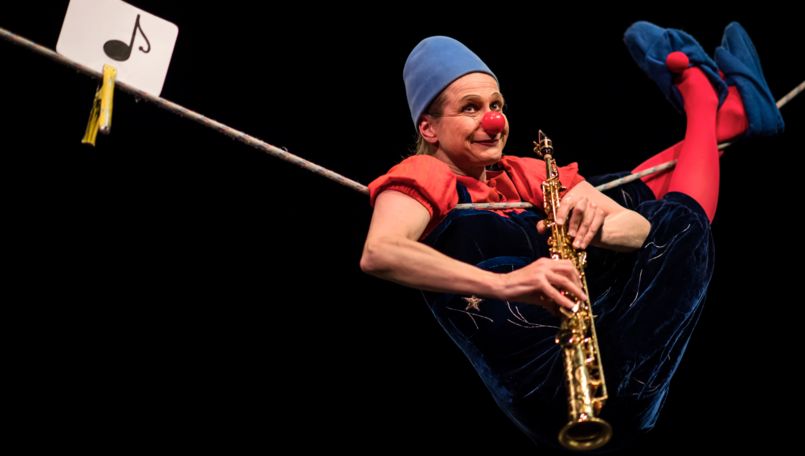
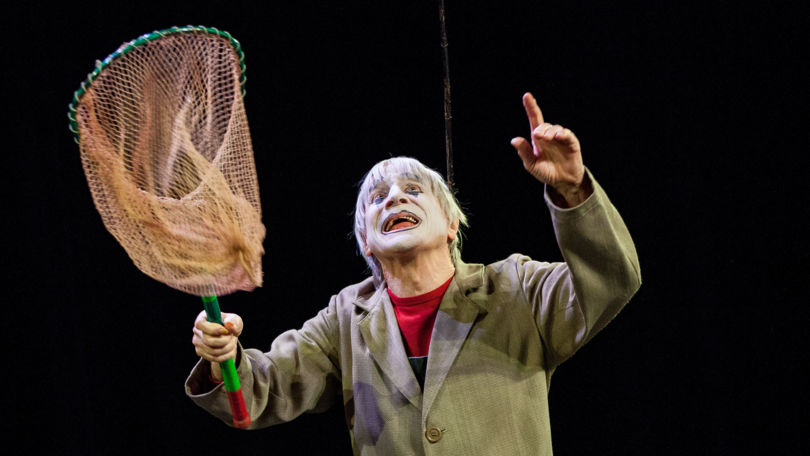
Those who saw Clown Dimitri performing with Circus Knie -- Switzerland's beloved national circus -- in the 1970s carry the memory like a treasured secret: the gentle tumbles, the sly wit, the way laughter and tenderness arrived in the same breath. For those who never had the pleasure of meeting him in person, the Teatro Dimitri in Verscio offers the next best thing -- a portal into the magical universe of one of the most celebrated clowns of modern times, who passed away in 2016. Here you can watch a performance, visit a museum and two exhibitions, and perhaps even meet the artists before or after the show.
About the character
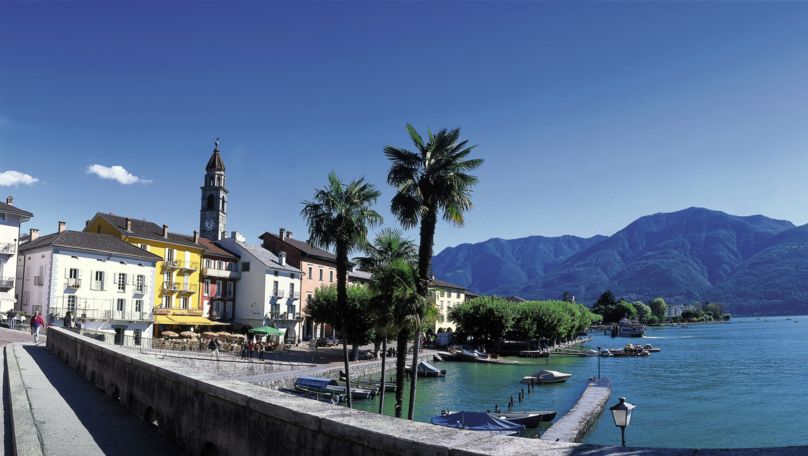
Dimitri was born in Ascona in 1935, growing up immersed in the vibrant cultural life that distinguished Monte Verita, the storied hill of utopian ideals where his family lived. His father was an artist and sculptor; his mother fashioned objects from cloth. At the age of seven, captivated by the art of Andreff the clown, the boy declared that "making people laugh is the best thing in the world." Further inspired by the legendary Grock (1880-1959), widely considered the most famous clown of all time, he chose his life's path.
His repertoire was both charming and subtle: children adored him, yet he possessed a rare gift for reawakening the hidden child within each adult, making audiences smile and laugh while simultaneously moving them to their core.
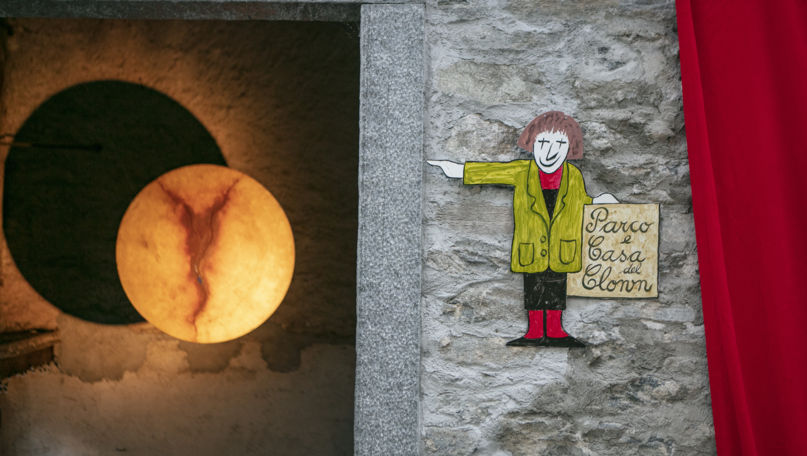
After studying with Etienne Decroux and Marcel Marceau in Paris, Dimitri gave his first performance in 1959 at a tiny puppet theatre overlooking Ascona's lakefront -- a venue that no longer exists. As his fame grew, he toured the world, and in the 1970s performed for three seasons with Circus Knie, earning extraordinary acclaim across Switzerland. Between tours, he performed at his own theatre in Verscio, just a short distance from Locarno, which he had founded with his wife Gunda in 1971. Over the years, the Teatro Dimitri expanded to include a theatre school offering a federally recognised degree in Physical Theater, a Museum of Comedy, a clown park, and an exhibition on the history and world of clowns.
Dimitri died on July 19, 2016. The evening before his death, he was still on stage, performing "Dreams of Another Life" at Monte Verita in Ascona. His wish had always been to die on the stage, and he very nearly did.
The theatre and restaurant
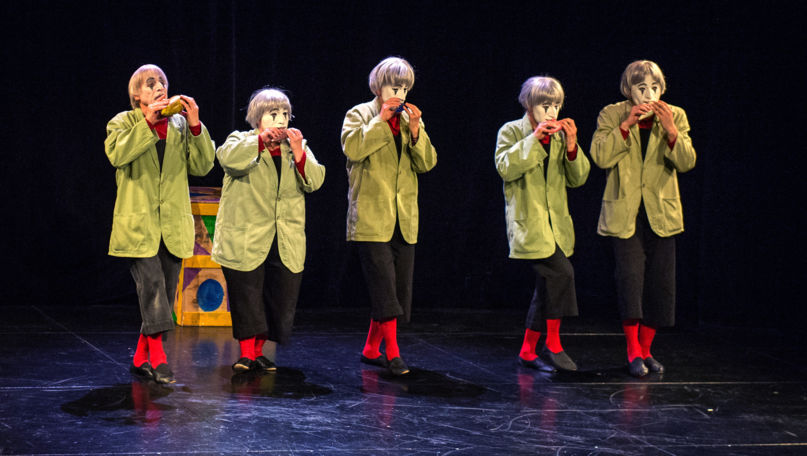
Each year, Teatro Dimitri presents a rich programme of theatrical events. The playbill features guest artists alongside productions by the Accademia Teatro Dimitri and its former students. The theatre's picturesque restaurant -- with seating indoors and in a charming courtyard -- opens at 5 PM on performance days and serves a selection of Ticino specialties prepared by students of the school. After the final curtain, guests are greeted by the artists who have just finished performing -- an intimate touch that makes each evening feel truly special.
The Comedy Museum
Located on the first floor above the restaurant, the Comedy Museum (open from 5 PM on performance days) houses a treasure trove of objects that Dimitri collected throughout his career. The entrance is framed by posters of his two revered masters, Andreff and Grock. The first room is devoted to the elephant -- Dimitri's favourite animal -- featuring a stunning collection of posters from around the world. Evocative images from one of his most famous performances in 1970 show him posing alongside Sandri the elephant in the ring of Circus Knie.
The second room celebrates another of his great passions: musical instruments. Music was always integral to his art. Rooms bathed in white and every shade of red -- the classic palette of clowns' costumes -- lead to a chamber dedicated to masks, where films of the clown's most iconic performances flicker on screen. In all, some 700 objects are displayed throughout the exhibition, curated by Dimitri's great friend, the renowned art historian Harald Szeemann, who in the 1980s "rediscovered" Monte Verita.
An exhibition on the history of the clown
In the basement of a charming 19th-century Ticino house just steps from the theatre, a dedicated exhibition traces the evolution of the art of clowning. Twelve panels in the entrance corridor chart the development of the clown figure through the ages. The central section pays tribute to Grock, "the king of clowns" and a formative influence on Dimitri's art. Curated by one of Grock's great-grandchildren, it displays his musical instruments, rare documents, evocative photographs and a film of one of the master's legendary performances.
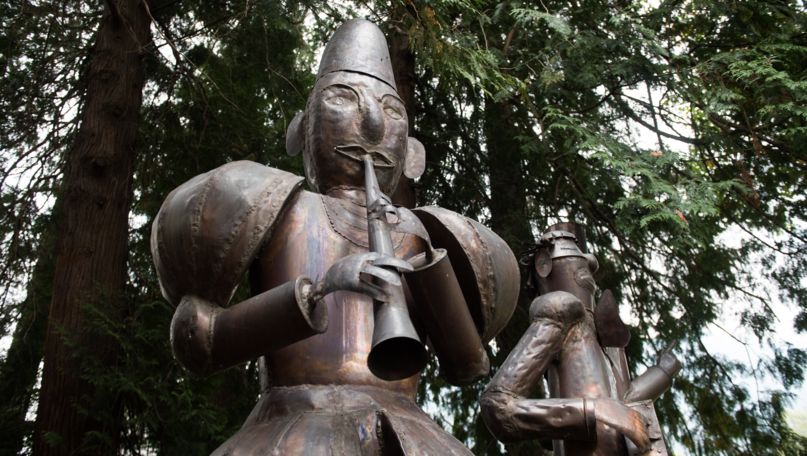
Beyond the section devoted to Dimitri himself, the museum honours other famous Swiss and international clowns with billboards and short films. Stepping outside, visitors emerge into a beautiful garden set within the historic centre, overlooking the sacristy of the church of Verscio. Sculptures by contemporary artists -- all inspired by the world of clowns -- dot this peaceful space, a fitting final note to an experience steeped in wonder and laughter.