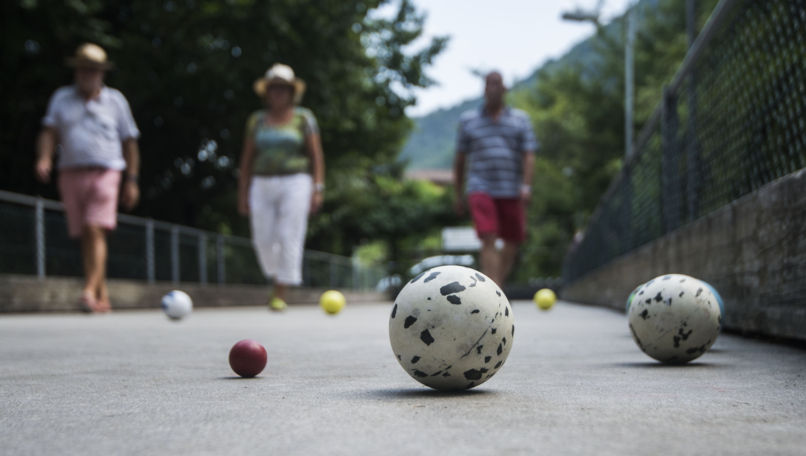
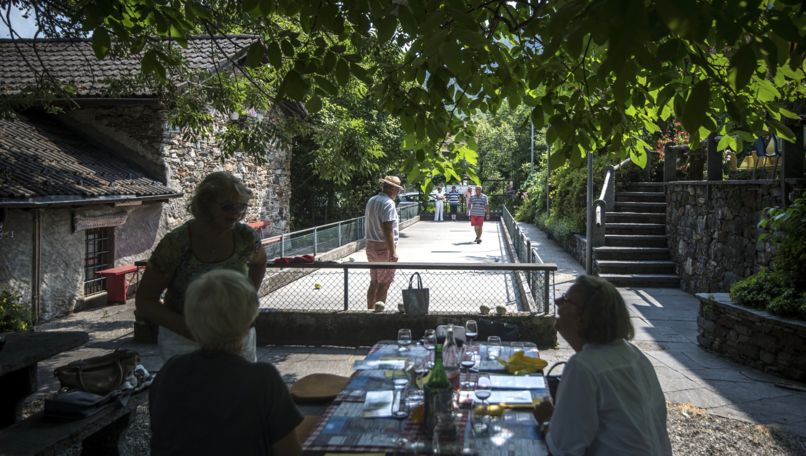
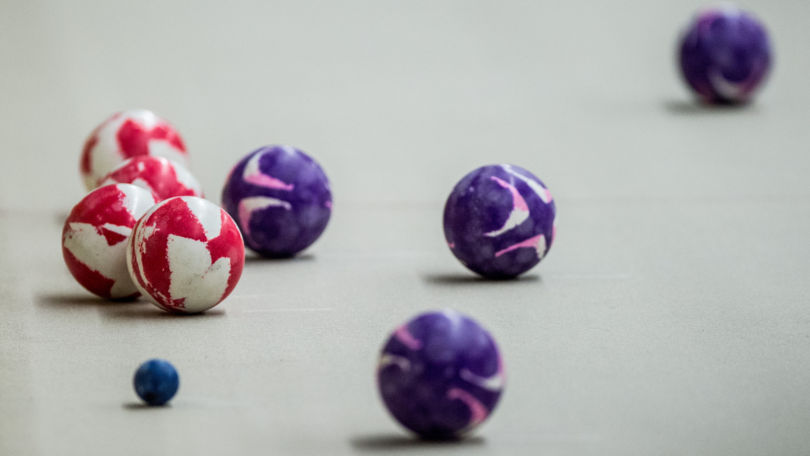
There was a time when every grotto in Ticino had a bowls pitch -- a patch of manicured turf beneath the chestnut trees where families gathered on languid Sunday afternoons, sleeves rolled up, wine poured, and friendly rivalries settled one roll at a time. This cherished pastime is woven into the very fabric of Ticinese culture, and while the tradition has grown rarer, a handful of grottos still invite visitors to experience the simple, convivial pleasure of a game of bowls in the fresh mountain air or along the sun-dappled shores of the lake.
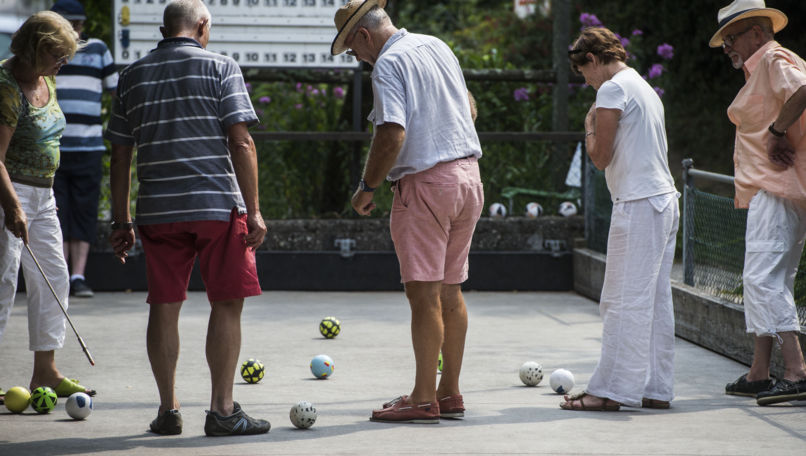
The game is played on a large rectangular turf surface measuring roughly 5 by 25 metres. Both the bowls (107 mm in diameter) and the jack are spherical and made from a synthetic material. Bowls can be played in singles, pairs, triples or four-player teams. Competitors take turns rolling one or more bowls towards the jack, the smallest ball. The aim is straightforward: place as many of your bowls as possible closer to the jack than your opponent's. A coin toss decides which team rolls the jack first; thereafter, the honour passes to the team that won the previous round. When all bowls have been rolled, the team whose bowl sits closest to the jack scores one point -- plus additional points for every consecutive bowl nearer than the opponent's nearest. The first team to reach 15 points wins. Two fundamental deliveries govern the game: the "draw shot," a gentle roll aimed at nestling close to the jack, and the "running shot," a more forceful throw designed to knock an opponent's bowl out of the way.
Historical Notes
The game of bowls has remarkably ancient roots: stone spheres dating to around 7000 B.C. and resembling modern bowls have been unearthed in Turkey. The modern version of the game spread widely from the late 17th century onward, played in village squares, private gardens and aristocratic parks alike. As Ticino academic Ottavio Lurati has documented, several monarchs fell completely under its spell -- at the court of Queen Elizabeth I, it ranked among the most popular pastimes.
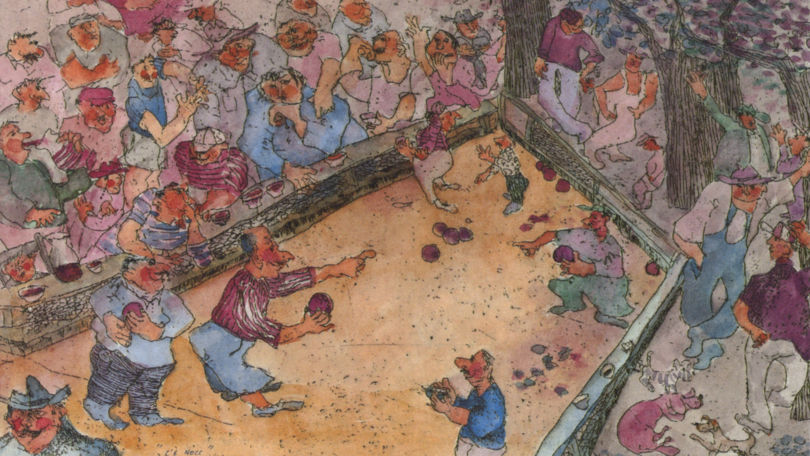
The game subsequently flourished in Italy and, propelled in part by Italian emigrants, spread across the globe. Today bowls is played on five continents in more than 110 countries. In Ticino, the sport gained particular momentum at the start of the 20th century, becoming enormously popular. Lugano-born artist Emilio Rissone (1933) immortalised the tradition in numerous paintings, leaving behind vivid scenes of families challenging one another at the grottos on summer Sunday afternoons.
While the game now survives primarily as a competitive sport played on professional pitches, a few atmospheric grottos still maintain their bowls pitches and welcome curious visitors. For information, enquire at local tourist offices.
You might also like
Experiences
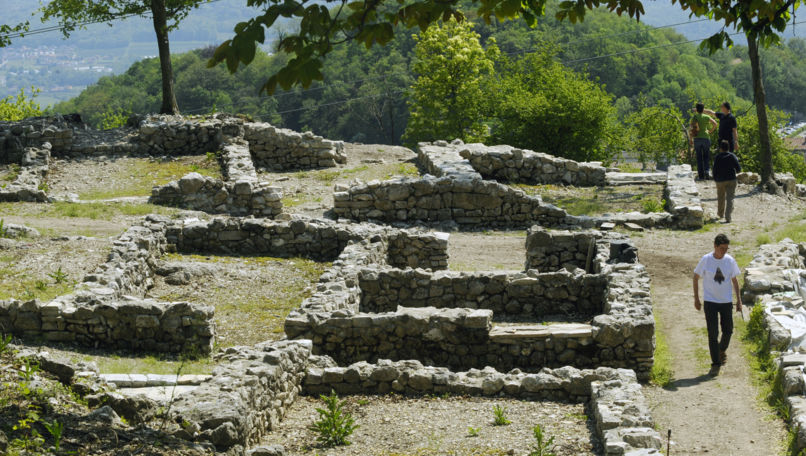
6,000 Years of History in 3D
On the hill of Tremona, in the district of Mendrisio, you can discover what life was like in an ancient medieval village.
Experiences
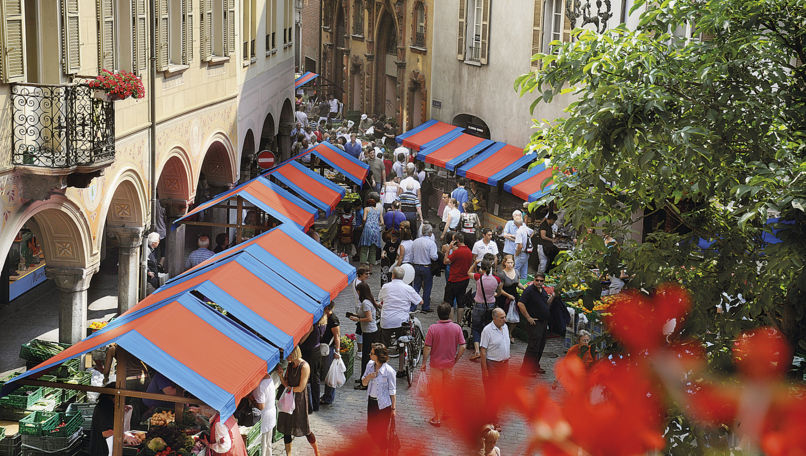
Bellinzona's Market
It is not necessary to travel to faraway exotic places to unearth animated and colorful markets whose roots date from ancient times.

Experiences
Centovallina Amazing Journey
According to Lonely Planet, the Vigezzina-Centovalli Railway is one of the most beautiful in the world.