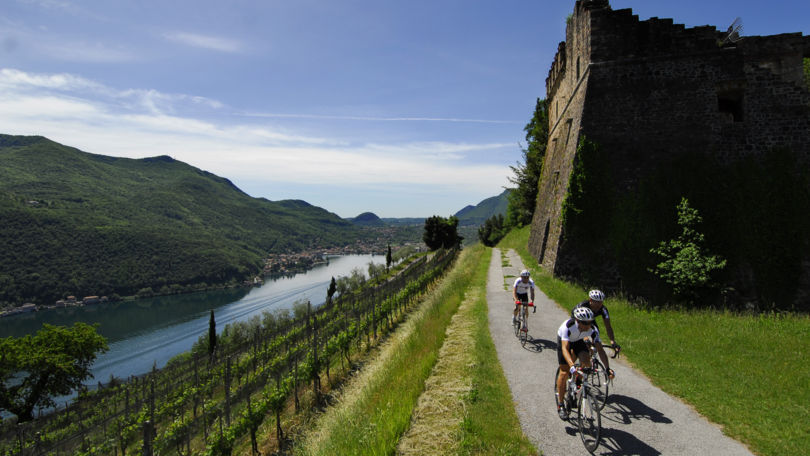
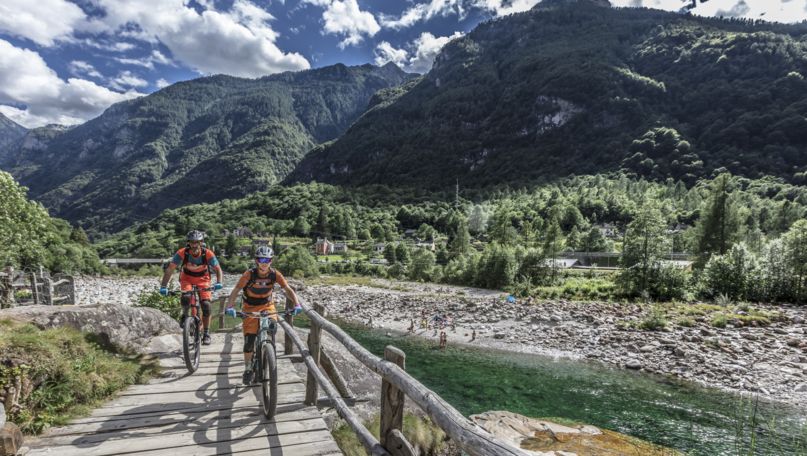
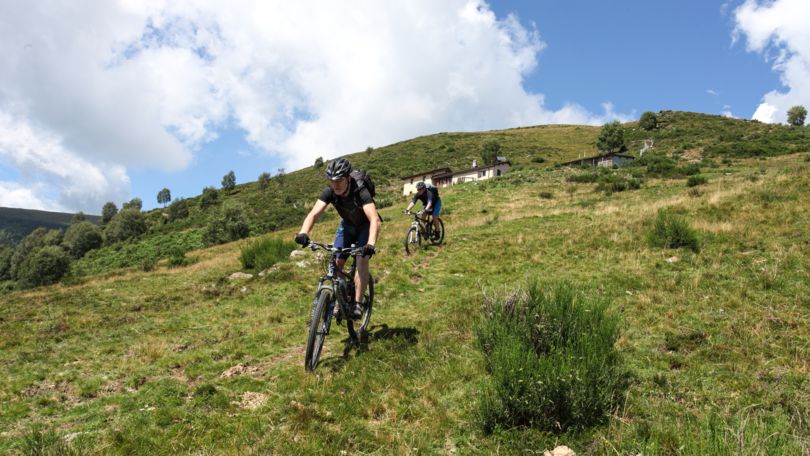
From gentle lakeside paths that shimmer in the morning light to adrenaline-charged mountain descents through ancient forests, Ticino is a cyclist's dream on two wheels. The canton offers an extraordinary range of biking experiences: relaxed family-friendly cycling trails, challenging mountain bike routes through wild valleys, and extreme downhill tracks for gravity-hungry riders. We have selected two routes accessible to cyclists of all levels, each with convenient bike rental options. The first winds along a dedicated cycling path from Ascona to Bellinzona, passing the lakeside of Locarno and crossing the fertile Piano di Magadino. The second, from Airolo to Biasca, is a spectacular all-downhill journey through the Leventina Valley, studded with historic landmarks.
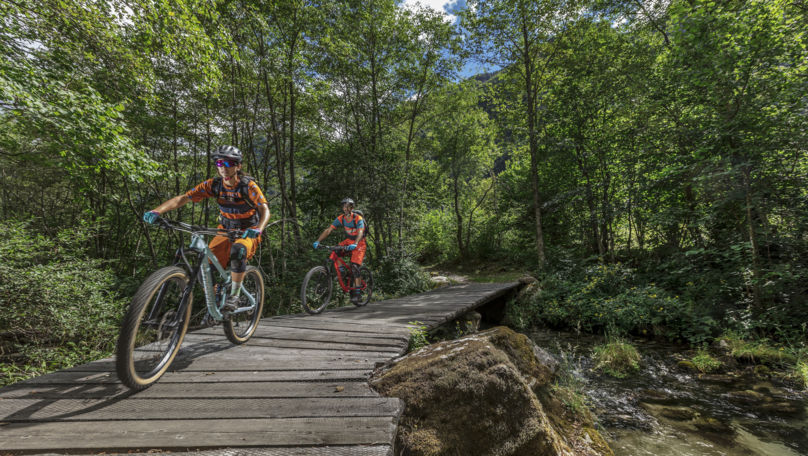
Mountain bike enthusiasts will find a wide variety of marked trails around the cities, through the valleys and into the high mountains, all detailed on the Ticino Turismo website. Downhill devotees can explore the Airolo Bike Park in the Leventina Valley and the Bike Park Nara in the Blenio Valley, while breathtaking summit-to-valley descents with cable car ascents are available from Monte Generoso in the Mendrisiotto, Monte Lema and Monte Tamaro in the Lugano region, and Cardada-Cimetta near Locarno, among others.
Option 1: From Ascona to Bellinzona (approx. 3 hours)
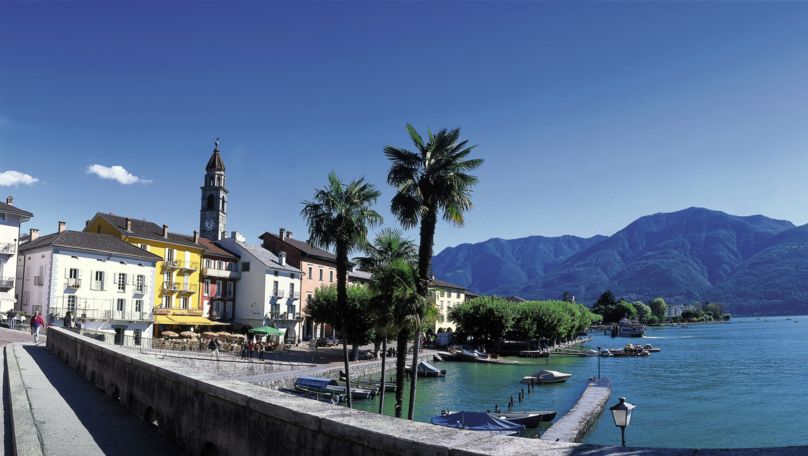
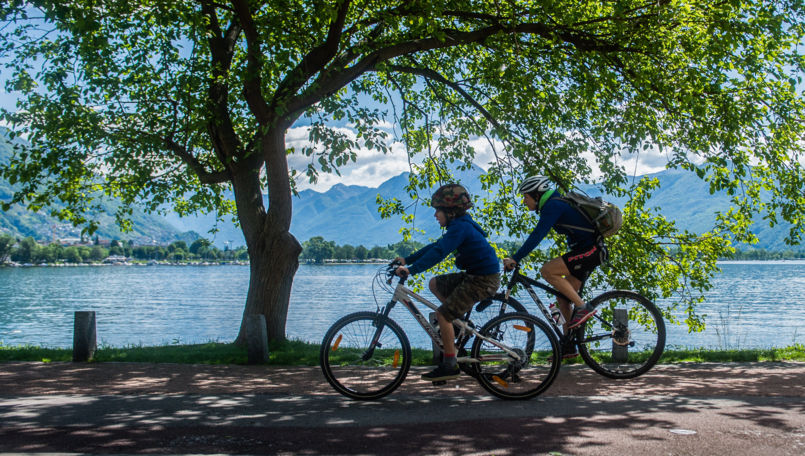
This leisurely, family-friendly excursion departs from the sun-drenched waterfront of Ascona and ends in Bellinzona, Ticino's capital and a UNESCO World Heritage site celebrated for its magnificent castles. Bicycles can be hired from the railway stations of Locarno and Bellinzona.
The ride begins along Ascona's elegant lakefront promenade. After gliding past the shores of Lake Maggiore and a golf course, you reach Locarno, where the route follows the banks of the Maggia River. Passing the Lido and continuing along the lakeside cycling path, you arrive in Tenero. Beyond the national Sports Centre, the landscape opens into the Magadino Plain. Between the mouths of the Ticino and Verzasca rivers lies the Bolle di Magadino, a wetland of national importance. Following marked cycling routes toward Bellinzona along tranquil country roads, you cross this fertile flatland known as the orchard of the canton, winding through meadows, cultivated fields and vineyards. Small farms and agritourisms dot the route, inviting cyclists to stop and sample or purchase locally grown products. Upon reaching Bellinzona, explore its charming historic centre, where a lively market fills the streets on Saturdays, and visit its three iconic castles.
Info: Tourist Office Ascona-Locarno, Viale Papio 5, Ascona - Tel. +41 (0)848 091 091
Option 2: From Airolo to Biasca (approx. 5 hours)
A glorious, all-downhill ride of 40 km from Airolo (1,160 m) to Biasca (301 m), following the valley floor on secondary roads along the River Ticino. Rent your bike in Airolo and return it in Biasca, savouring the beautiful itinerary and a string of remarkable landmarks along the way, including the Dazio Grande at the mouth of the dramatic Piottino Gorge, the village of Giornico with its splendid Romanesque church of San Nicola, and the outstanding churches of SS. Pietro e Paolo and Santa Petronilla in Biasca.
Info: Tourist Office Leventina, Via Stazione 22, Airolo - Tel. +41 (0)91 869 15 33
The Dazio Grande and the Piottino Gorge
Descending the cantonal road from Airolo toward Quinto/Piotta, you soon encounter the Dazio Grande just outside Rodi-Fiesso, an old customs checkpoint where travellers once halted to pay tolls on merchandise and people, with the option of refreshment and rest. Just beyond lay a formidable natural obstacle: the narrow gorge carved by the River Ticino through Monte Piottino's rock.
From the Dazio Grande, a well-signposted walk of approximately 1.5 hours loops through the gorge. Along the way, you pass the ruins of the Dazio Vecchio, a customs house erected by the Milanese in the early 1300s. Proceeding through the woods to the signpost for Ponte di Mezzo, a gangway just after the bridge opens access to the gorge and the "Uri road", a 16th-century engineering marvel chiselled directly from the living rock. The path loops back to the starting point.
Alternatively, you can access the Piottino Gorge directly from the Dazio Grande by walking down the cantonal road to the trail leading to the old mule track.
Continue the bike itinerary to Faido, then follow the peaceful road toward Nivo, where you can admire the handsome hydroelectric power plant built by Milanese architect Giovanni Greppi in the Lombard industrial style of the early 1900s.
The Biaschina
The descent continues down the dramatic zigzags of the Biaschina, a true crossroads of the great North-South transit route. Here, the A2 motorway soars on its impressive viaduct inaugurated in 1983, the railway line from 1882 threads through the valley, and the winding cantonal road hugs the slope below. Above this bottleneck, you can watch Gottardo line trains enter and exit the spiralling tunnels engineered to overcome nearly 200 metres of altitude.
Giornico and the Church of San Nicola
Continuing to Giornico, pause to visit the modern Ethnographic Museum of the Leventina Valley and the Church of San Nicola, considered one of the finest expressions of Romanesque architecture in Ticino. Built in the 12th century in a plain, rigorous style, its stone presence rises above the surrounding vineyards, sturdy, simple and noble. Remarkable features include the portal, the southern facade with its small sculptural reliefs, the main facade, the crypt with its enigmatic capitals, the apse frescoes and the baptismal font at the entrance.
The Churches of SS. Pietro e Paolo and of S. Petronilla in Biasca
At the ride's end, you arrive in Biasca, a town of considerable historic importance that still preserves significant monuments. Behind the 16th-century Casa Cavalier Pellanda, today a cultural centre and home to the tourist office, stands a parish church dedicated to San Carlo, built in the late 1800s. From here, a stairway leads up to the beautiful 12th-century Romanesque Church of SS. Pietro e Paolo, which contains precious frescoes spanning the 12th to 17th centuries. A trail along the old cemetery connects to the Via Crucis, blessed in 1779. Shaded by chestnut trees, 14 chapels display mosaics by contemporary artists. In about twenty minutes on foot you reach the stone bridge over the Froda stream, the beautiful waterfall, and the Santa Petronilla Oratory, adorned with frescoes by an unknown artist dating from 1638-1651.