History runs deep in Giornico, a village in the Leventina Valley where the echoes of a legendary battle still resonate through medieval streets and ancient stone churches. It was here, in 1478, that the Battle of Giornico -- the "Battaglia dei Sassi Grossi" -- saw the Confederates triumph over the Milanesi and seize control of the St. Gotthard pass, a pivotal moment in Swiss history. A river splits in two as it passes through the village, forming a whimsical little islet, while Giornico's most precious treasure lies within the Romanesque church of San Nicola. The Leventina Museum, housed in historic buildings at the village centre, brings the valley's past vividly to life through interactive exhibits, documentaries, and photographs.
A monument by Ticino sculptor Apollonio Pessina honours the Battle of Giornico at the northern entrance of the village. The cantonal road divides the historic centre in two, yet both halves preserve their medieval character. The upper section clusters around the squared Tower Attone, a 14th-century fortification that has stood scaffolded for years, awaiting restoration. In the lower section, between the road and the left riverbank, traces of the ancient road remain visible underfoot.
Itinerary: Giornico (2h, see map)
Begin your walk in front of Casa Stanga and the adjacent Casa Clemente, home to the Leventina Museum, where the valley's history is told through its objects with a focus on the people who shaped it. These buildings form an architectural complex of considerable historical and artistic interest. On the facades of Casa Stanga -- which served for centuries as both residence and tavern -- you can still make out the coats of arms of distinguished European travellers who stopped here while journeying along the Via delle Genti, as the old Gotthard Route was known.
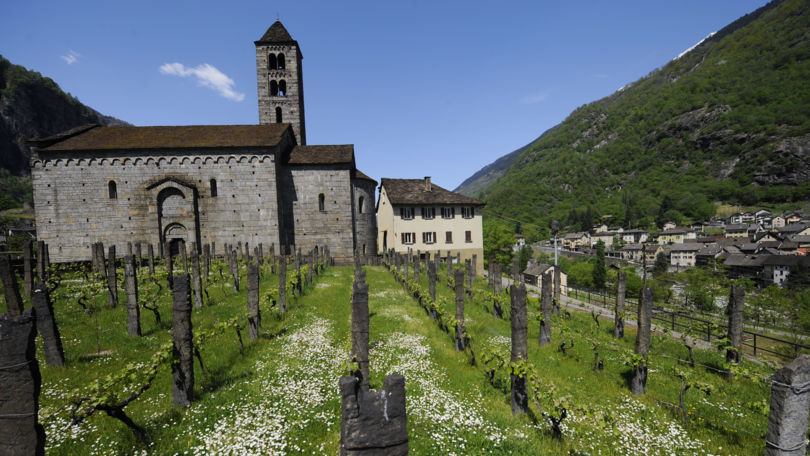
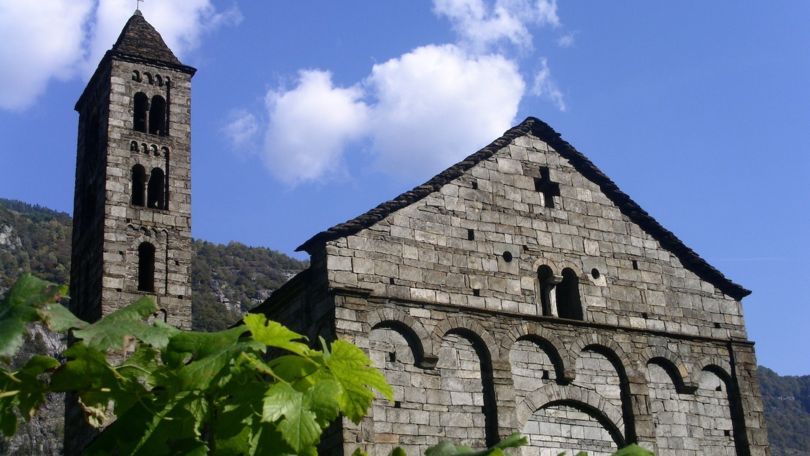
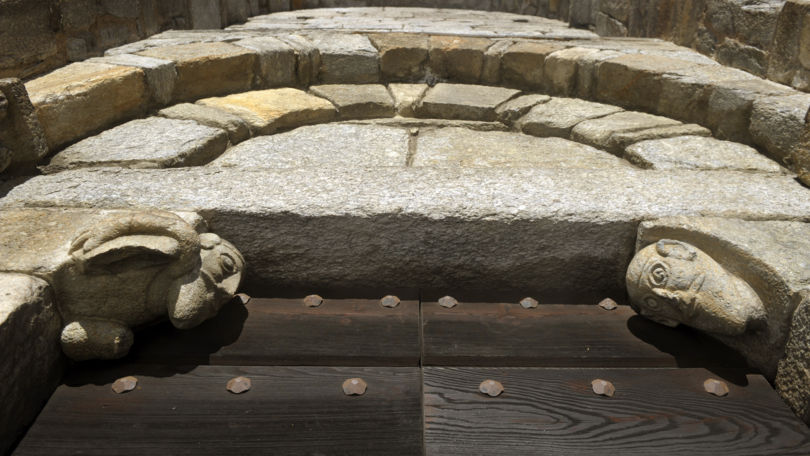
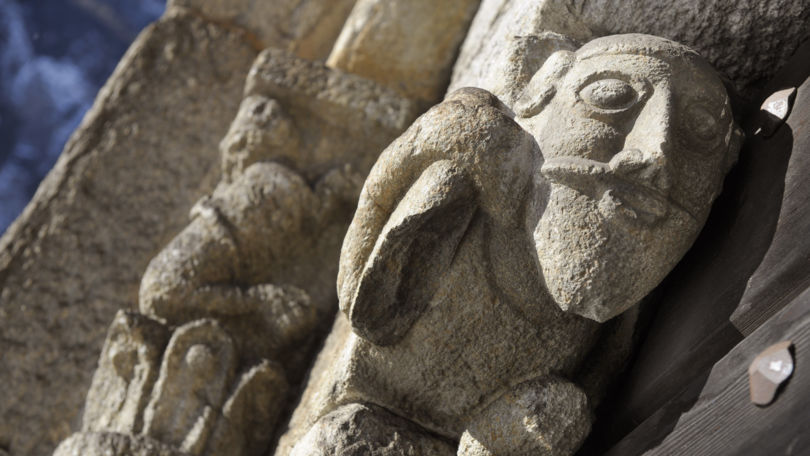
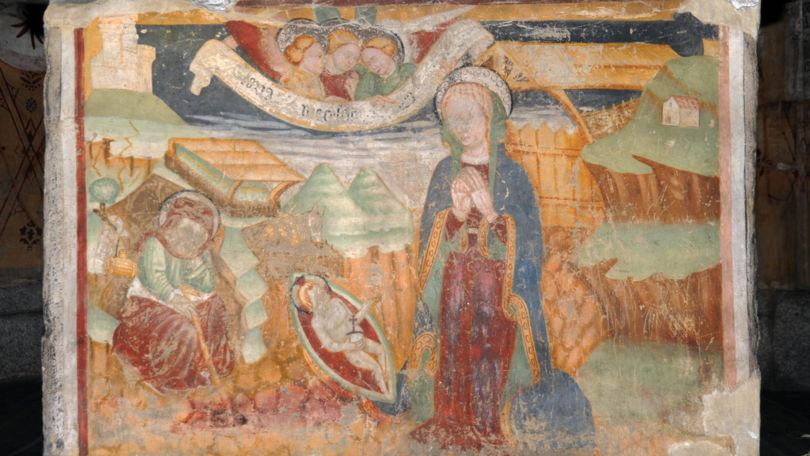
After visiting the museum, turn left. A short distance ahead, two ancient humpback bridges offer a lovely vantage point over the islet created by the river's branching -- a picturesque spot that is also home to a charming grotto. Turn left again and follow the delightful lane, the river murmuring on one side and vineyard rows climbing on the other, until you arrive at the church of San Nicolao (12th century). With its austere, essential architecture, this is one of the most significant Romanesque testimonies on Ticinese soil -- a strong, simple, noble presence rising from the vines. Take time to study the southern facade door with its small sculptures, the main facade, the crypt with its enigmatic capitals, the frescoes of the apse, and the baptismal font at the entrance.
Just beyond San Nicolao stands the parish church dedicated to San Michele, which preserves a noteworthy 16th-century altar with door flaps of Nordic origin.
From the churchyard of San Nicolao, look to the right beyond the railway and you will see the striking church of Santa Maria del Castello crowning a hill. Its northern chancel, entirely frescoed in 1448, is the highlight. Beside the church, a few scattered ruins are all that remain of the ancient fortress that once commanded this hilltop. To visit Santa Maria del Castello, request the keys from Osteria Giornico (tel. 091 864 22 15), or download the free app 'Chiavi della Cultura' to unlock the electronic lock.
Giornico is also celebrated for its vineyards and excellent wines. Before leaving, pause in Rodai at the southern entrance of the village (follow the signpost), where a charming cluster of private grottos with leafy arbours nestles at the foot of the mountain.
Museum of Leventina Valley
The permanent exhibition, spread across the first floor and part of the second, takes an anthropological approach that transforms a museum visit into an immersive journey. Identity, ritual, and daily life are explored through objects, videos, and reproductions along an interactive course.
You will listen to old vocal testimonials in half-darkness, step into the Belle Epoque atmosphere of Faido, examine amulets once carried by travellers, and discover the role of women in ancient statutes. A narrow corridor opens dramatically onto a room dedicated to the arrival of the railway, confronting you with the economic constraints that shaped the valley's destiny. These are just a few of the evocative moments that animate the history of the Leventina Valley. Throughout, the exhibition poses questions and lets the museum's collection -- all sourced from the valley -- provide the answers.
The visit concludes on a panoramic terrace where the view unfolds across the valley, the river, and the churches of San Michele and San Nicola. After everything you have absorbed inside, this lookout invites you to see the Leventina's present with fresh eyes and deeper understanding.
In the conference hall, the "Totem Leventina" station offers a particularly innovative experience, developed in collaboration with the Swiss-Italian Broadcasting Company (RSI) and the University of Applied Sciences and Arts of Southern Switzerland (SUPSI). It provides research and visualisation of audio-visual documents from the RSI archives and other digital material produced by the Leventina Museum -- interactive mediation at its finest.