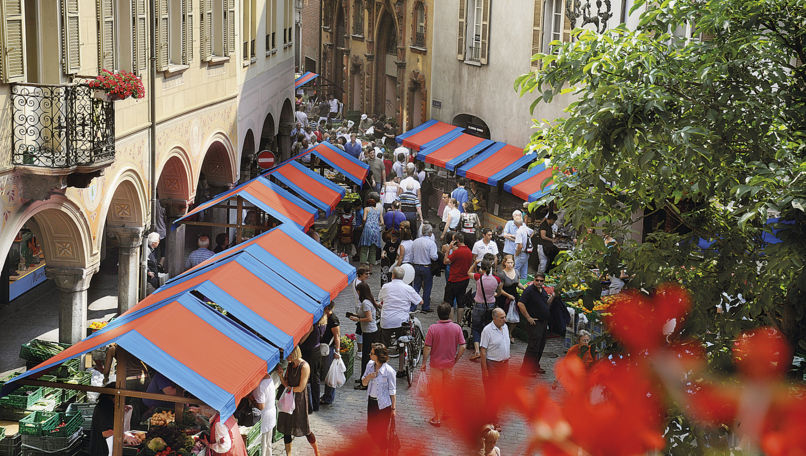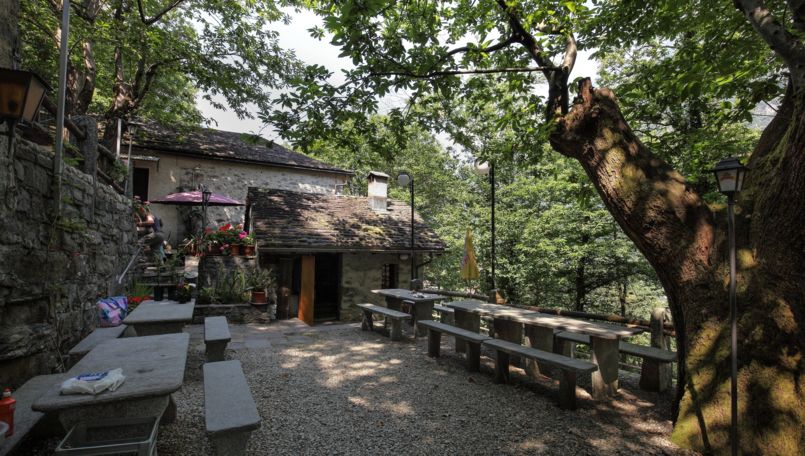
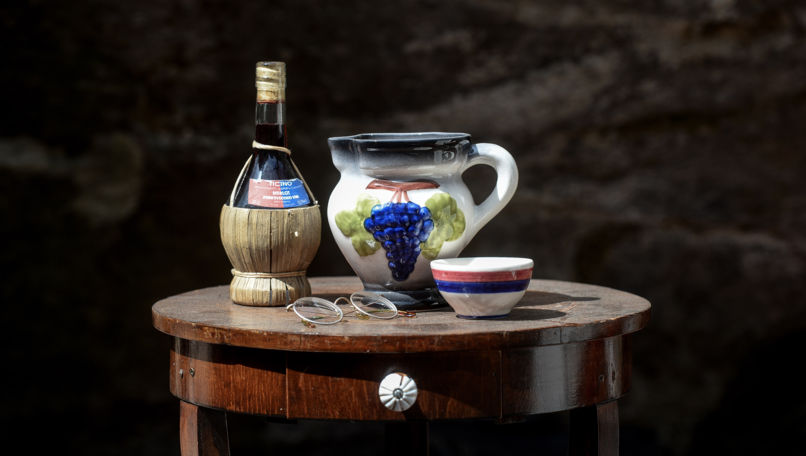
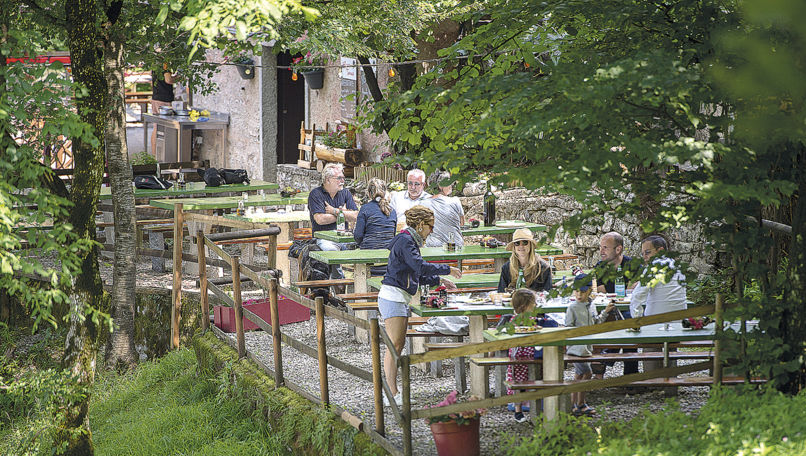
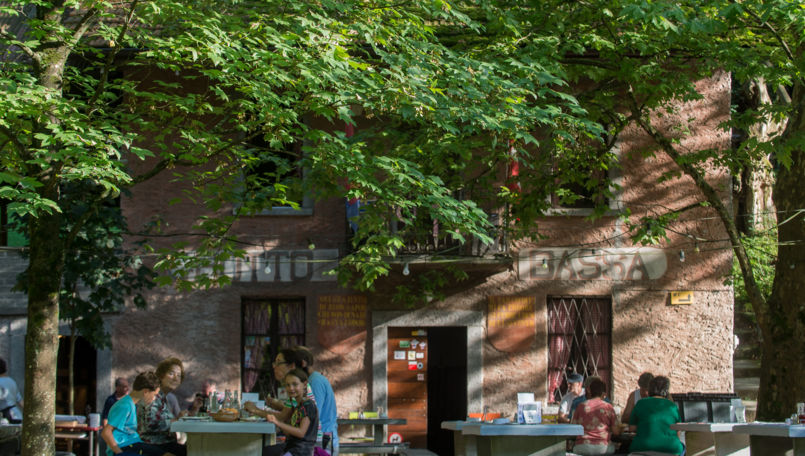
"Everybody to the grotto!" -- the cheerful rallying cry of warm Ticino evenings, when the air cools and the appetite sharpens. In Ticino, a grotto is far more than a rustic eatery: it is a state of mind. Picture a shaded granite terrace beneath the chestnut trees, a carafe of Merlot catching the last slant of sunlight, a platter of cured meats and pasture cheese, a steaming bowl of polenta, the satisfying clack of bowls on a nearby pitch, and perhaps the lazy wheeze of an accordion drifting from a neighbouring table. This is Ticino at its most authentic -- beloved by tourists and deeply rooted in local life.
Alongside public grottos open to all, many private ones still exist. Mendrisio harbours an entire neighbourhood of them, as do Giornico and Cevio. The itinerary below leads to Cama, in the canton of Graubunden, where a remarkable enclave of grottos has been lovingly recovered.
Private and public grottos
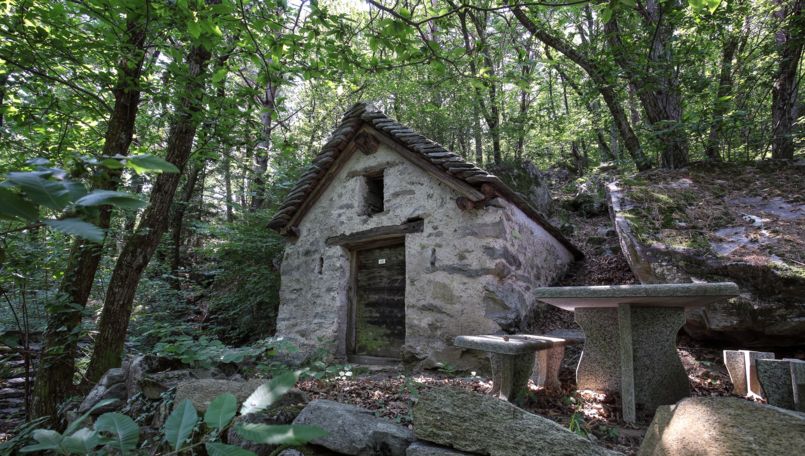
Cantina, grotto, canvetto -- these structures were originally built to preserve wine and food. Sometimes hewn directly into the rock, they are always set in cool, shaded spots, often on the edge of a forest or along the banks of a river or stream. Some still serve their original purpose, storing wine, cured meats and cheese, and hosting private convivial gatherings. Others have evolved into welcoming public meeting places where, in a refreshingly informal atmosphere, regional food and wine are served. Usually open from April to October, the grottos are especially cherished in summer for the simple pleasure of savouring local specialties at outdoor tables surrounded by greenery and stone.
Itinerary: Grottos of Cama (2h, see map)
Forty-six of them form a dense, atmospheric cluster beneath a canopy of ancient chestnut trees: these are the grottos of Cama, a village in the Italian-speaking part of the canton of Graubunden, just 17 kilometres from Bellinzona and easily accessible by public transport.
The origins of these cellar-pantries are inextricably linked to the arrival of viticulture in the region, reaching back to the Roman era. Here, wine, cheeses, cured meats, fruits, vegetables -- even fresh milk awaiting processing -- were kept at the perfect temperature. Situated on the river's right bank, the grottos vary in form: some are entirely subterranean, others are simple buildings with double-pitched roofs, and still others feature a second floor.
To prevent these remarkable structures from sliding into neglect, a foundation was established in 2004. After years of historical research and careful restoration, an educational trail with explanatory panels has been open to visitors since 2009.
The itinerary follows an old path through the medieval heart of Cama, passing the church dedicated to San Maurizio (1219) and numerous vineyards before reaching the prehistoric landslide and the fallen boulders among which the grottos stand -- most of them still privately owned.
Research carried out during the restoration revealed how the grottos, often situated on terrain created by prehistoric landslides, benefit from natural drafts of cool air flowing through the mountain's clefts between the boulders. You can feel this refreshing current today by placing your hand near a cave opening; it maintains a stable cellar temperature year-round, between 3 degrees C and 12 degrees C.
Three grottos are open to the public: the Grotto del Paulin, the Grotto Milesi-Belloli and the Grotto Bundi alla Bellavista. The first has been run by the Prandi family for generations. The Grotto Milesi-Belloli is likewise steeped in long tradition. The Grotto Bundi alla Bellavista reopened in 2018 after an extensive renovation that carefully preserved the old section where cheeses, wines and dried meat are still aged. All three serve a renowned selection of cured meats -- including the remarkable raw ham of the Mesolcina valley -- fresh and cellar-seasoned cheeses, and classic dishes such as polenta, rabbit and kid, with game featured in autumn. Everything is accompanied by fine Swiss-Italian wines.