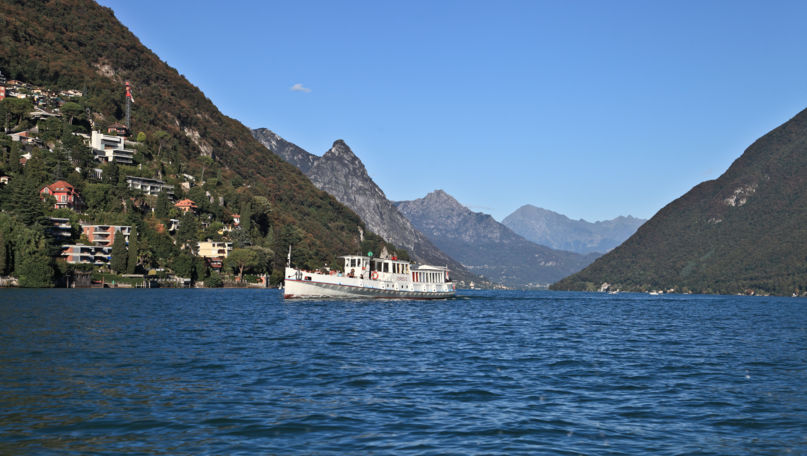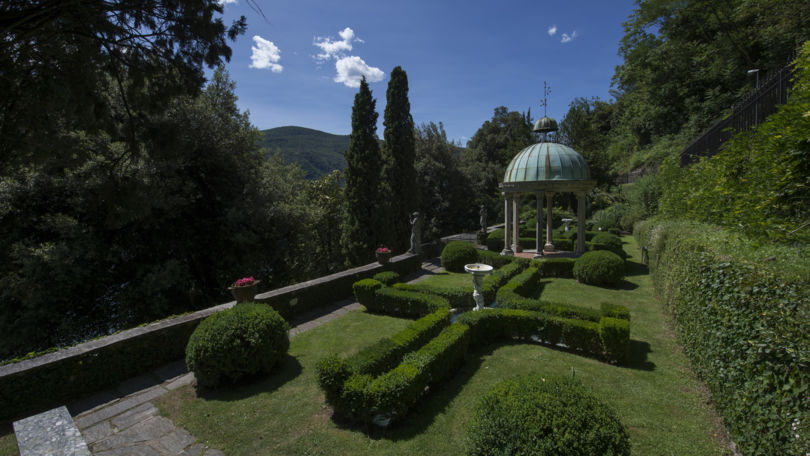
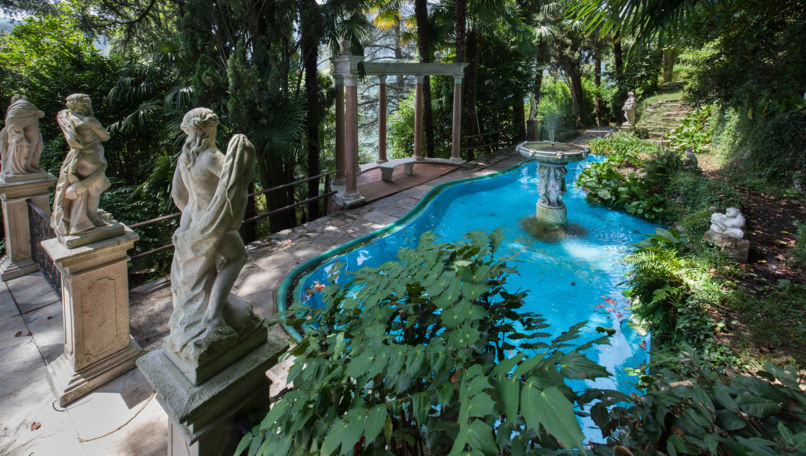
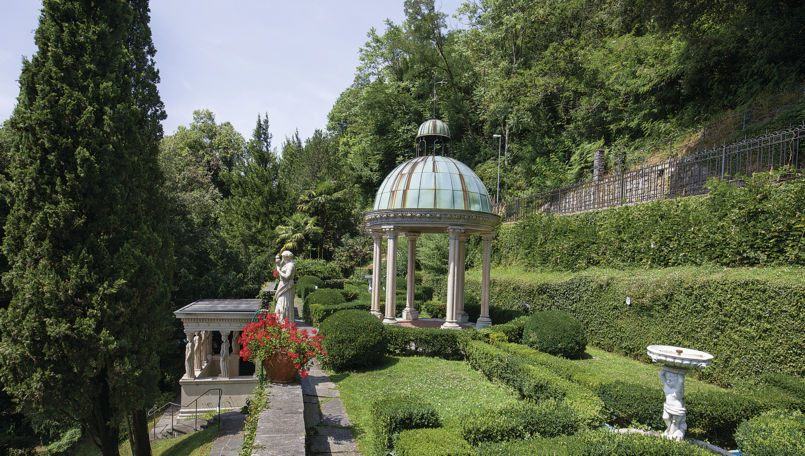
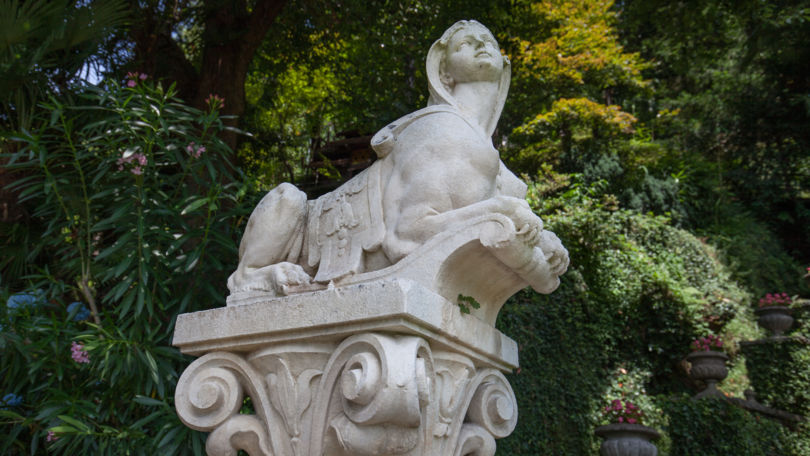
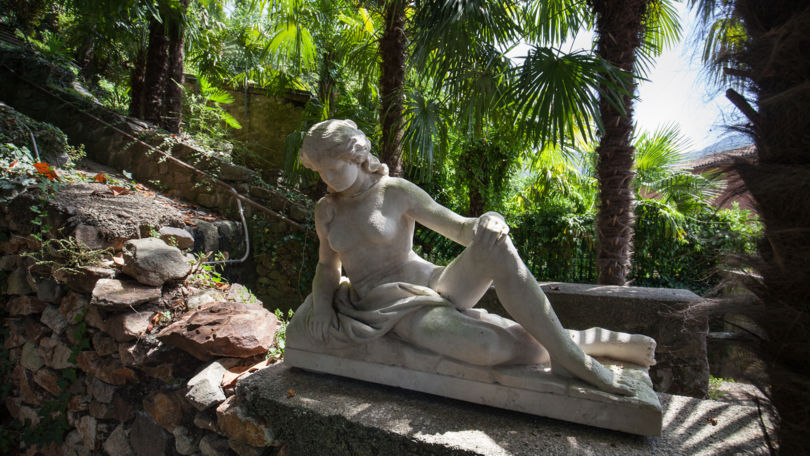
Tucked into the hillside above Morcote on Lake Lugano, Parco Scherrer is a place where East meets West beneath a canopy of subtropical green. A Siamese tea house peers through bamboo fronds, an Egyptian temple rises among oleanders, and Greek sculptures stand sentinel beside fragrant lemon trees. This extraordinary garden is the lifelong creation of Hermann Arthur Scherrer, a textile merchant and art lover who, from the 1930s onward, set about recreating the distant cultures he had encountered on his travels -- all within a single hectare of Ticinese hillside, perfumed by palm trees, eucalyptuses, cedars, and camellias.
The Visit
Where vineyards and chestnut trees once covered these slopes, Scherrer saw the canvas for his vision. In 1930, he purchased an old lakefront house and a hectare of hillside land. Over the following years, cypresses, camellias, camphor trees, eucalyptuses, cedars, araucarias, palm trees, and bamboo woods gradually replaced the original vegetation -- each species chosen to mirror the exotic and oriental plants Scherrer had admired during his travels abroad. Many plants are now identified by their scientific nomenclature.
Yet Scherrer's ambition extended far beyond horticulture. The garden was to serve as a living stage for masterpieces of oriental sculpture and architecture. Year after year, he reproduced in reduced scale temples and monuments from Mediterranean and distant lands, weaving them seamlessly into the lush vegetation.
The park unfolds across two distinct areas. The Mediterranean section comes first, adorned in Renaissance and Baroque styles, its paths lined with classical statues and framed by formal plantings. The trail then plunges into a bamboo wood, emerging into an oriental landscape where Siamese, Arab, and Indian constructions surprise visitors at every turn, accompanied by the flora characteristic of those far-flung regions.
Along the way, shaded corners invite you to pause, sit, and drink in the panoramic views of Lake Lugano stretching out below -- a perfect marriage of botanical wonder and cultural imagination.