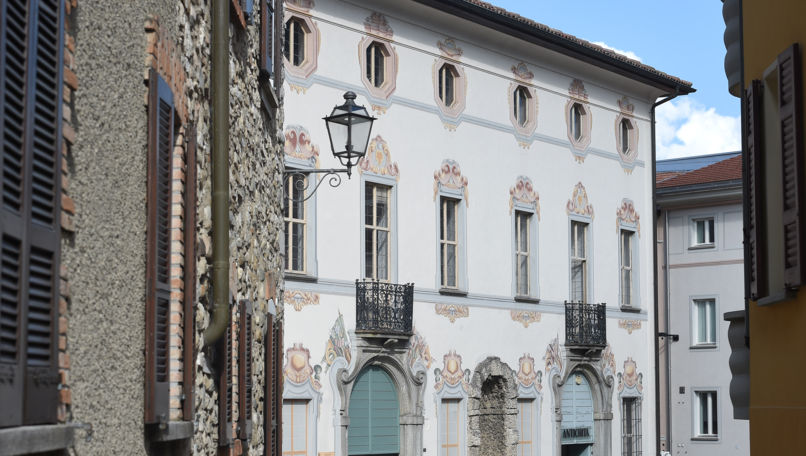
Wander into Mendrisio's old town and you will feel as though you have slipped through a fold in time. Ancient buildings and churches adorned with stuccos and frescoes line narrow alleys where sunlight filters through stone archways and the scent of wisteria drifts in the warm air. The centre of this "magnificent burg" remains largely untouched by modernity and grows especially enchanting at Easter, during the Holy Week processions (UNESCO World Heritage), and in September, when the wine festival fills the streets with celebration. Mendrisio is the capital of a region often called "Switzerland's Tuscany" for its rolling hills draped in vineyards and its clusters of brick-and-shingle villages. Just 5 km away lies the Baptistery of Riva San Vitale, the oldest Christian monument in Switzerland.
Itinerary: Mendrisio's Historic Centre (2h, see map)
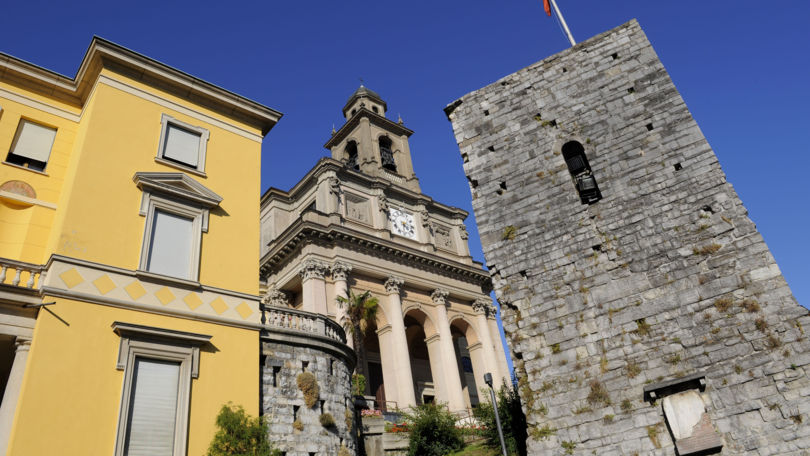
Begin your discovery at Piazza del Ponte, presided over by the imposing parish church of Saints Cosma and Damiano, a Neoclassical building (1863-75) designed by architect Luigi Fontana. Nearby, a medieval tower from the 13th century recalls one of three castles that once fortified the city; originally military in purpose, it was later raised and converted into a bell tower before being returned to its original form in 1908. The square is also graced by the elegant Palazzo Torriani, built over the centuries around the town's first 13th-century civic nucleus.
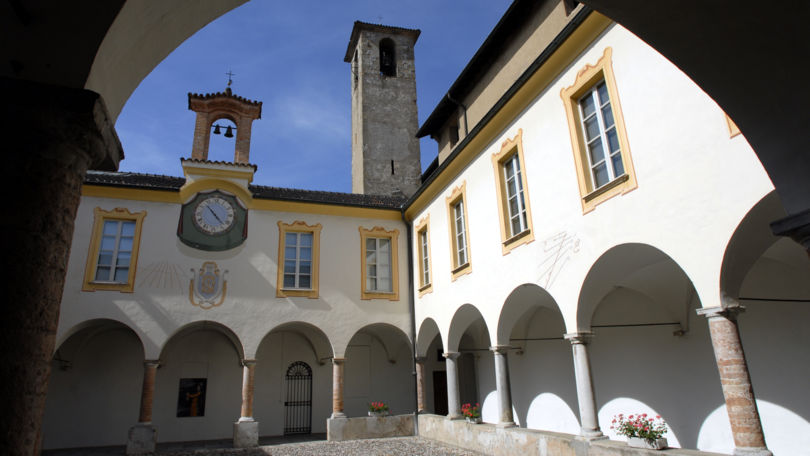
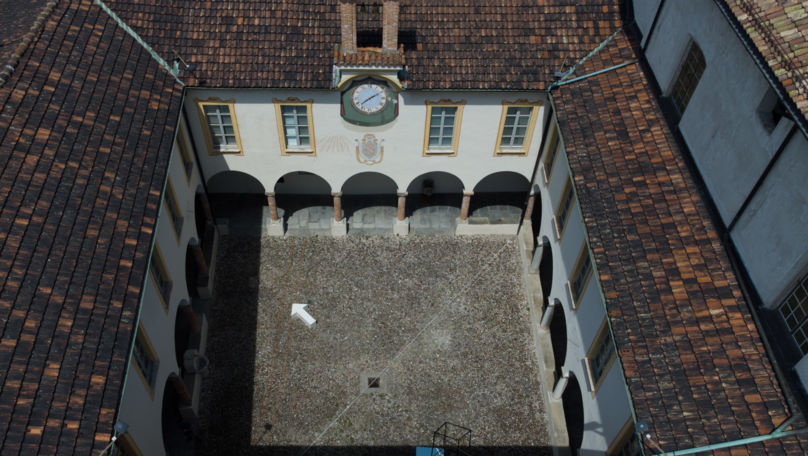
Walk up Via Torriani (beside the parish church) and Via Santa Maria to reach the church of Santa Maria (Saint Mary), the oldest in the centre. This medieval structure was erected on the ruins of a Roman villa and rebuilt in the 16th and 17th centuries; its Romanesque bell tower dates to the 12th century. Continue along Via Vecchio Ginnasio to the church of San Giovanni Battista (Saint John the Baptist), richly decorated and regarded as one of the finest expressions of late Baroque in Ticino. Adjoining it is the Museo d'arte (Art Museum), housed in the ancient convent of the Serviti, where a beautiful cloister invites quiet contemplation.
Upon leaving the museum, turn right to discover the graceful chapel of the Madonna delle Grazie (Madonna of Graces), which shelters a fresco of the Virgin Mary attributed to Giovanni da Milano. Proceed down Via Carlo Pasta, and after 300 metres the charming Via delle Cantine (Cellar Way) appears on your right. The Mendrisiotto is a region with a deep winemaking tradition, producing excellent and elegant Merlots. For centuries, residents here have used the cool currents descending from Monte Generoso to keep their cellars at a stable temperature year-round. Most cellars remain private, but a handful of restaurants still welcome visitors to savour Ticino's culinary specialties alongside superb regional wines.
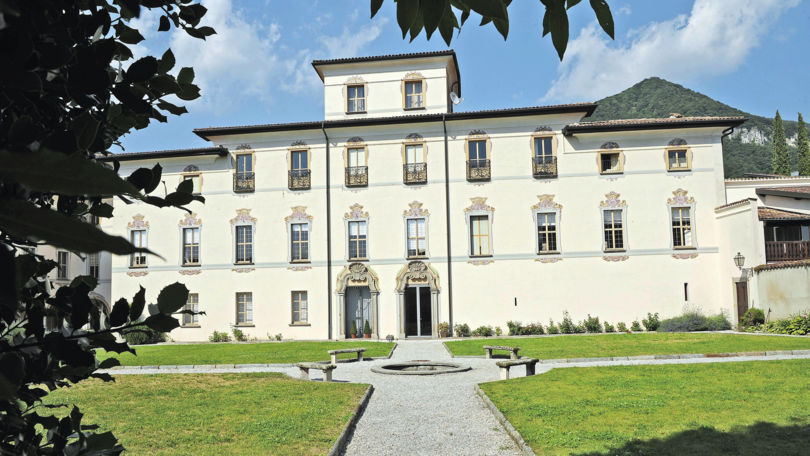
Return to the chapel of Madonna delle Grazie and follow Via Stella back to Piazza del Ponte. Cross the square and enter Corso Bello, the heart of the historic centre, strolling to the widening where the magnificent 17th-century Palazzo Pollini stands as a fine example of late Baroque architecture from Italy's Lombardy region.
Continue along the same road to Piazzetta Borella, then turn into Via Gismonda to reach the architecture faculty founded by renowned Ticino architect Mario Botta. The Academy is housed within the imposing Turconi Palace and the charming Villa Argentina, both from the second half of the 19th century, as well as the more recent Canavee Palace, completed in 2000 by the Soliman & Zurkirchen studio. Clad in dark brick, the striking structure draws inspiration from the Neoclassical Turconi Palace while opening through a sweeping glass window onto the lush park of Villa Argentina, a treasured green oasis in the heart of Mendrisio.
Adjacent to Palazzo Turconi, the Architecture Theatre was inaugurated in 2018. This singular work, also designed by Mario Botta, takes its cue from ancient anatomical theatres -- a central space surrounded by tiers where students gather. The circular building rises across 5 levels spiralling around the central area, hosting temporary exhibitions and public events throughout the year to foster cultural dialogue between architecture and the visual arts.
Guided Tours
Audio-guided and accompanied tours are available to help you uncover the historic centre and the distinctive character of Mendrisio. For information and reservations, contact the Mendrisiotto Tourist Office (tel. +41 (0)91 641 30 50 - [email protected]).
Feasts and processions
Three landmark events rooted in Mendrisio's agricultural and religious heritage animate the city each year. On the Thursday and Friday before Easter, the atmospheric narrow streets become the stage for the historic Processions of the Holy Week, a tradition stretching back to the late 17th century. In 2019 the processions were inscribed by UNESCO as "Intangible Cultural Heritage of Humanity," recognising a spectacle unmatched anywhere in the world -- one where history becomes living theatre through solemn processions and the famed trasparenti. These large translucent canvas paintings, created and restored using techniques dating to the 18th century, are hung along the streets to mark the ceremonial route on Thursday and Good Friday evenings: breathtaking and extraordinarily moving in equal measure.
The historic centre also comes alive during the "Sagra del Borgo" at the end of September, a vibrant celebration of the region's winemaking vocation. And on November 11th, San Martino -- Ticino's most ancient agricultural fair -- fills the area around the namesake Romanesque church that stands in an open field near the city centre.
If you have more time...
Discovering Mendrisiotto Region through its five art museums
Download the audio guide on the smARTravel application and embark on a journey through time and space across five art museums of the Mendrisiotto -- a territory rich in historical, artistic, and landscape treasures, and the homeland of many artists, architects, collectors, and patrons whose legacies the museums preserve. Rather than focusing on current exhibitions, the guide offers narrative approaches and thematic cards filled with stories and anecdotes linked to the Vincenzo Vela Museum in Ligornetto, the Giovanni Züst Art Gallery in Rancate, the Art Museum of Mendrisio, the m.a.x museum in Chiasso, and the Teatro dell'architettura Mendrisio. With photographs and an interactive map of the area, you can follow the itinerary both on foot and virtually. The audio guide is available in four languages: English, Italian, German, and French.