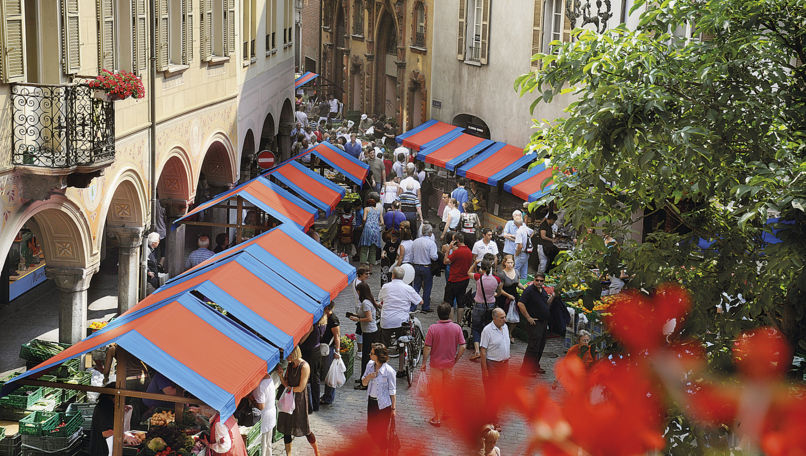
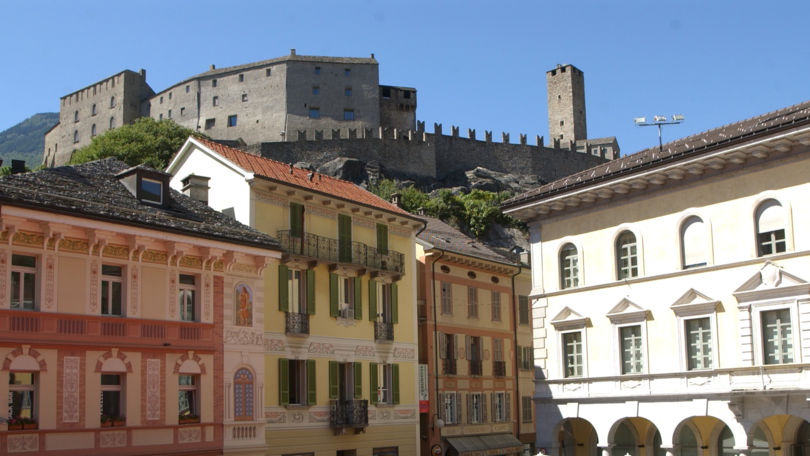
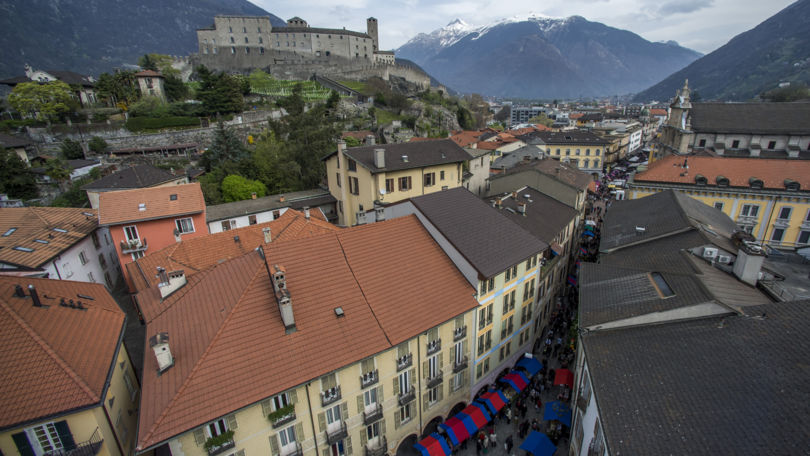
With three UNESCO-listed castles crowning the hills above and a web of intimate streets and sun-drenched piazzas below, Bellinzona is Ticino at its most authentic. While the medieval fortress complex rightly draws visitors from around the world, the old town beneath it holds its own quiet magic -- centuries-old facades, arcaded walkways, and the 15th-century church of Santa Maria delle Grazie, whose magnificent Renaissance fresco stretches across an entire wall. Time your visit for a Saturday morning, when the lively weekly market transforms the streets with the finest of Ticino's gastronomic offerings: cured meats, artisan cheeses, seasonal vegetables, and bread baked from ancient recipes.
Itinerary: Bellinzona's Historic Centre (2h, see map)
The walk begins along the city's most animated thoroughfare, Viale della Stazione, stretching from the railway station into the heart of town. This is the very avenue that, during the Rabadan carnival, becomes the stage for the spectacular masked parade. On your left, note the Postal Palace, built in the 1980s by Aurelio Galfetti -- the architect behind the Castelgrande restorations and a leading figure of the "Ticino modern school."
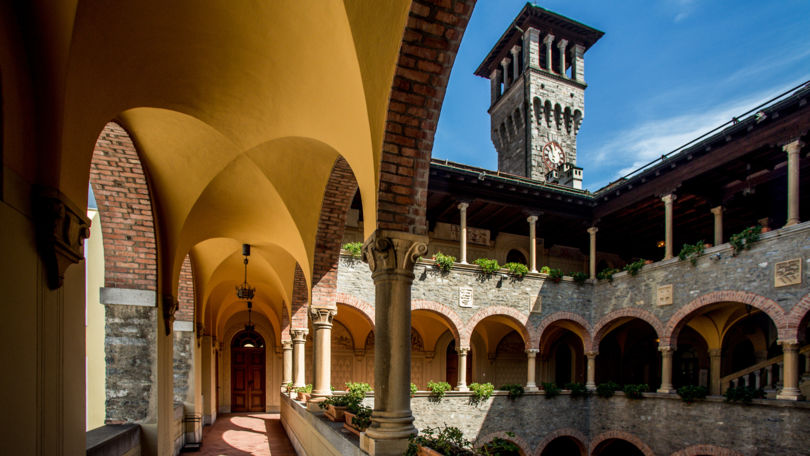
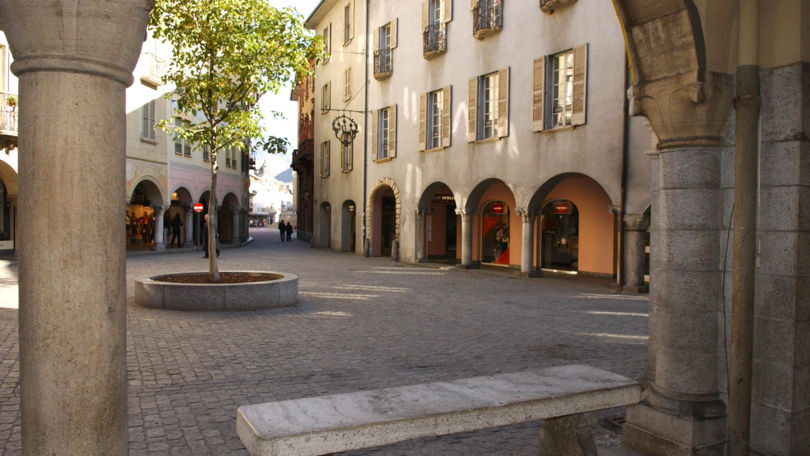
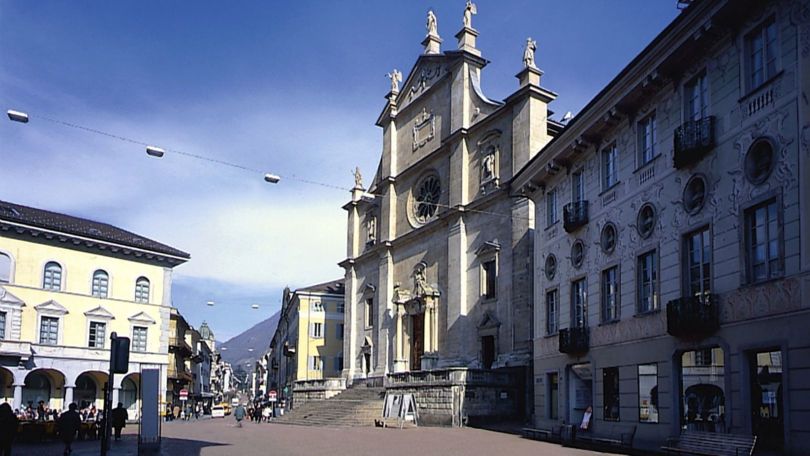
The Viale leads to Piazza Collegiata, framed by beautifully restored old palaces and the namesake Renaissance church with its imposing marble facade. From the Collegiata, follow the arcades to Piazza Nosetto, dominated by the stately Palazzo Civico (Municipal Palace). Despite its Renaissance appearance, it was constructed at the beginning of the 1900s using materials from its predecessor, a 15th-century building. Continue to Piazza Indipendenza (Independence Square), where an obelisk erected in 1903 commemorates the 100th anniversary of Ticino's accession to the Confederation.
Turn right into Via Dogana, crossing a surviving segment of the medieval walls before arriving at Piazza Governo, the seat of Ticino's Executive and Legislative offices. The 19th-century square is anchored by the former Ursuline convent, built between 1738 and 1743, which served as the Government seat before becoming home to the Legislative office. At the centre of the square, a fountain bears a seal sculpted by Ticino artist Remo Rossi (1909-1982). Facing it stands the Teatro Sociale, built in 1847 and restored in 1997. Follow Via Teatro under the porticos back to Piazza Nosetto and Piazza Collegiata, then turn left along the harmonious Via Codeborgo to reach Piazza del Sole. Designed by Livio Vacchini (1933-2007), another distinguished Ticino architect, this square was conceived to celebrate the great rock on which Castelgrande stands. From Piazza del Sole, turn right into Vicolo Torre and follow it back to the intersection with Viale Stazione, completing the circuit.
The church Santa Maria delle Grazie (Saint Mary of Graces)
Just outside the historic centre, near the cemetery and easily reached by car, stands the 15th-century church of Santa Maria delle Grazie. Elegant and deeply atmospheric, the church preserves a stunning Renaissance fresco painted across a vast dividing wall in the Franciscan tradition. At its centre hangs the Crucifix, while fifteen surrounding panels narrate the life of Christ. The author is an unidentified Lombard painter from the end of the 1400s.
The frescoes dedicated to the Dormitio Mariae (front-right chapel), several saints (first chapel on the left), and the Annunciation on the choir's triumphal arch are also of fine artistic quality. A fire partially destroyed the church in 1996, but years of painstaking restoration salvaged the frescoes with remarkable results. In the cloister of the former convent -- today a retirement home -- an engaging cycle of 18th-century frescoes depicts episodes from the life of Saint Francis.
Guided Tour
From April to October, every Saturday morning, an expert guide leads visitors through the historic centre of Bellinzona and Castelgrande, bringing centuries of history vividly to life. For information and reservations, contact the Bellinzona Tourist Office (tel. 091 825 21 32 - [email protected]).